I used to wake up at 5:30am to beat traffic on the 405.
Now I wake up when I want, make coffee, open my laptop, and check sales from a house in Bali while the roosters go off outside. It sounds like a cliche. I know. But it’s my actual life, and I want to tell you exactly how it happened, because the path was a lot less glamorous than most people make it sound.
This is the real version.
The Job That Wasn’t Going Anywhere
For most of my twenties I worked at a lock and security hardware company in Van Nuys, California. Warehouse work, mostly. Picking orders, moving product, learning the inventory. I beat out around 80 other applicants for that job, which felt like a big deal at the time. I was earning $10 an hour and genuinely proud of it.
Over time I moved into sales at the same company. I got decent at it. I stayed there for roughly five years, which tells you something: it wasn’t a terrible place to work. The people were fine, the work was steady, and I learned more than I expected about business operations just by being inside one every day.
But I had this feeling that never went away. The feeling that I was building someone else’s thing. That my ceiling was fixed. That no matter how hard I worked or how good I got at the job, the upside was capped in a way I couldn’t accept long-term.
I didn’t have a plan. I just had that feeling, and eventually I started taking it seriously.
How It Actually Started
In 2009 I met my first wife Julie at a party in Hollywood. Around the same time I was taking business classes at LA Valley College, just trying to expand what I knew. One of my professors had us research an online business concept as a class project. I chose eBay.
What was supposed to be a homework assignment turned into something I couldn’t put down.
I started listing products. Made a few sales. Felt the specific thrill of money arriving in your account from someone you’ve never met, in a state you’ve never been to, for a product you never touched. That feeling is hard to explain if you haven’t experienced it. It rewired something in me.
Around the same time a customer at the lock company, a locksmith named Scott, became a friend. We started talking about going into business together. He spotted a trending product, we started selling it online through a platform called E-Creator, an eBay alternative that was popular at the time, then built our own WordPress ecommerce site around May 2013. We also listed on eBay and Amazon. By the end of 2013 we had done $100,000 in gross sales.
I remember staring at that number thinking: this is real.
Leaving the Job
By early 2014 we were doing $30,000 in a single month. That summer it settled into $7,000 to $8,000 a month, which was less exciting but still more than I was making at the warehouse.
I made a calculated decision that I’m a little embarrassed to admit now: I stopped working as hard at the warehouse job, deliberately, so I would get laid off and qualify for unemployment. It worked. I collected around $15,000 in unemployment benefits while I focused on building the online business full-time. It wasn’t my proudest strategic move, but it bought me the runway I needed.
Julie quit her job at the end of 2013 to handle customer service for the business. We were all in.
Getting the business structure right during this period was something I’m glad I didn’t skip. Registering the business properly, separating personal and business finances, understanding what I actually owed in taxes: none of it is exciting but all of it matters enormously when money starts moving. I now recommend Bizee to anyone starting out because it makes the formation process fast and affordable, and getting it right early saves a lot of pain later. My complete legal and financial foundation checklist for high-ticket dropshipping covers everything I wish I’d known at this stage.
The Mistakes That Almost Ended It
Scott and I decided to open a physical bike shop. This was a mistake.
We spent $30,000 to $40,000 or more on that shop. Wrong location, wrong timing, wrong model. We closed it, sold the inventory at a loss, and walked away with a very expensive education in the difference between ecommerce and retail.
Then things got worse online. We got kicked off Amazon and eBay for reasons I won’t get into, and sales dropped to $1,000 to $2,000 a month. I had a website that had been doing six figures and now it was barely covering expenses.
I sold that website on Flippa for $50,000. At the time I thought it was a win. In hindsight I sold it near the bottom, when it had been worth closer to $150,000 at peak. Another expensive lesson.
After the sale I tried a brief stint with an MLM selling cash value life insurance. I quit within months. It wasn’t for me.
Julie and I got married during this period. We honeymooned in Cancun, then Utah, then took an Alaska cruise. It was a good chapter in the middle of a chaotic one.
I drove for Uber and Lyft for a while to keep money coming in while I figured out my next move. Nothing humbles you quite like driving strangers around the city where you used to think you were building something.
The Pivot That Changed Everything
When my non-compete expired I re-entered ecommerce, this time with a clearer head and a better strategy. I took a course called Dropship Lifestyle, which introduced me to the framework that would become the foundation of everything I built after: high-ticket dropshipping.
Instead of selling low-margin products at volume, high-ticket dropshipping focuses on premium products priced at $500, $1,000, $2,000 and up. The economics are completely different. One sale generates real profit. You need far less traffic to build a sustainable business. And because you’re working with established brands and serious suppliers, the whole operation runs more professionally.
I sub-niched down, built a focused Shopify store, found quality suppliers, and grew it to a full-time income. Then I built another. Then another. I started tracking everything properly using FreshBooks, which gave me actual visibility into what each store was making and where the money was going. That financial clarity made every decision sharper.
According to Shopify’s commerce trends research, the shift toward higher average order values has accelerated significantly across ecommerce, with premium product categories consistently outperforming mass-market segments. I was living that reality firsthand. The high-ticket model wasn’t just working, it was compounding.
I eventually sold several of these stores. According to Empire Flippers’ marketplace data, well-run ecommerce businesses typically sell for between 30x and 45x monthly net profit. Building toward that exit changes how you think about every system you create inside the business.
Building Ecommerce Paradise
People started asking questions. How was I finding suppliers? How was I running Google Ads? How was I picking niches? I started answering those questions publicly, first on a blog, then on a podcast, then through a full education platform.
That platform became Ecommerce Paradise.
The niche selection piece was always where people got stuck first, so I put together a comprehensive high-ticket niches list that covers the categories with the best margins, supplier availability, and long-term potential. Supplier relationships were the other major sticking point, so I wrote a detailed guide on how to find the best suppliers for high-ticket dropshipping based on everything I’d learned from years of building and vetting those relationships myself.
Today Ecommerce Paradise offers a full masterclass, done-for-you store builds, one-on-one coaching, Google Ads management, SEO services, and a vetted supplier directory. The Ecommerce Paradise Community is where students connect, share progress, and hold each other accountable. If you’re just getting started, the free beginner’s guide is the right first step.
Moving to Bali
Once the businesses were running on solid systems I started asking a different question: where do I actually want to live?
I’d always been drawn to Southeast Asia. The culture, the pace, the cost of living, the food, the weather. I started traveling through the region and eventually spent serious time in Bali. It stuck in a way other places hadn’t.
The practical side of living internationally got a lot easier once I started using Wise for moving money across currencies. Traditional banks charge punishing exchange rates for international transfers. Wise handles it cleanly and cheaply, which matters when your income is in dollars and your expenses are in rupiah.
I run everything remotely using Google Workspace, which keeps my team, documents, and communications organized across time zones. According to a report from MBO Partners on the state of independence, the number of Americans living and working remotely from international locations has grown dramatically in recent years. The infrastructure to support this lifestyle has never been better.
In Bali I met Widi. We built a life here together: the businesses, the travel vlog, the slower mornings, the skate sessions, all of it. I host the Ecommerce Paradise Podcast from here. I film Paradise Skate Mag content from here. I answer student questions and review store builds and manage campaigns from here.
It doesn’t feel like what I imagined when I was loading trucks in Van Nuys at 5:30 in the morning. It feels better.
What the Portfolio Looks Like Now
Ecommerce Paradise is the education and services arm of everything I do, helping entrepreneurs build high-ticket dropshipping businesses from scratch or scale the ones they’ve already started. I also run an active ecommerce store in the electric bike and scooter space. Paradise Skate Mag is a skate media project built around filming, culture, and the community I’ve been part of my whole life. Trevor and Widi is a couples travel vlog covering expat life and cross-cultural relationships in Southeast Asia.
Every one of these businesses runs because of skills I built starting from zero. The model is learnable. The systems are replicable. The lifestyle is available to more people than most of them realize.
The Honest Version of the Advice
If you’re where I was in 2012, here’s what I’d actually tell you:
The model you choose matters as much as the effort you put in. I worked hard at the wrong things for years before I found high-ticket dropshipping. Hard work on a broken model just gets you to failure faster. Choose the model first, then go hard.
Failure is just tuition you pay in real time. The bike shop, the Flippa sale, the eBay ban, the MLM detour: I paid for every one of those lessons and I don’t regret a single one because each of them taught me something I use today. Stop trying to skip the failures. Try to get through them faster.
You need less money and more time than you think. The biggest bottleneck for most people isn’t capital. It’s attention. Getting out of the job, or at least creating protected time to build, is usually more valuable than any course or tool you could buy.
Start with a business, not a store. A store is a product and a website. A business is a system with suppliers, marketing, customer service, and financials. Build the business from day one, even when it feels premature.
The Bottom Line
The distance between a warehouse in Van Nuys and a house in Bali is not as far as it looks. It’s made up of decisions, most of them small, some of them scary, a few of them wrong. But they compound. And if you make enough of the right ones, in the right sequence, the life on the other side is real.
If you want to understand the model that made this possible, start with the free beginner’s guide or browse the high-ticket niches list to see where the real opportunities are in 2026. The path exists. You just have to decide to take it.
Trevor Fenner is the founder of Ecommerce Paradise, an education and services platform for high-ticket dropshipping entrepreneurs. He has been building location-independent ecommerce businesses since 2013 and currently lives in Bali, Indonesia.
About Trevor Fenner
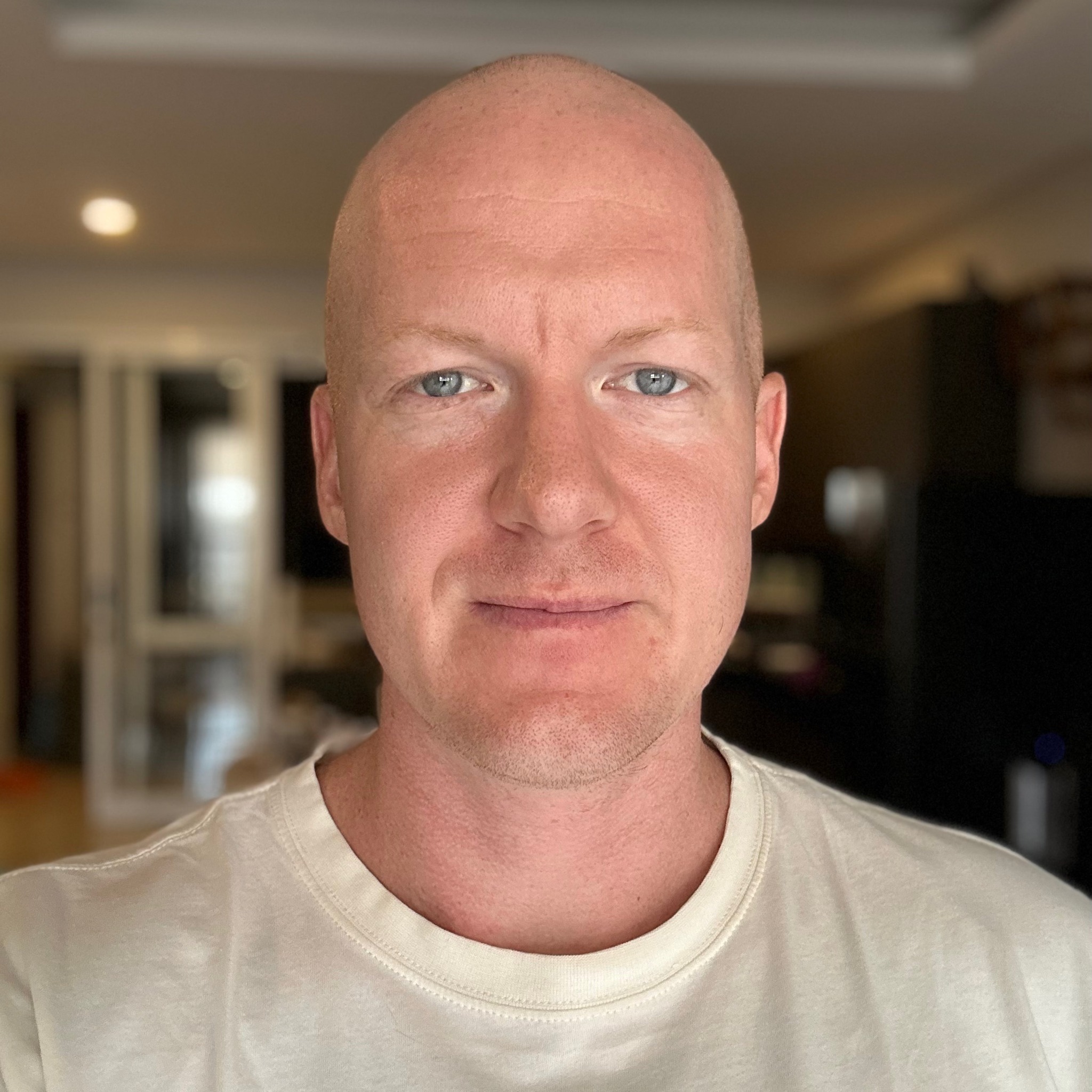
Founder of Ecommerce Paradise and publisher of Paradise Skate Mag. I’ve been building location-independent ecommerce businesses since 2013 — and living the life they pay for in Bali, Indonesia with my wife Widi.
Want to Build Your Own Location-Independent Business?
Get unstuck with a private 1-on-1 consulting call — or keep reading the honest lessons I’ve picked up building businesses from Bali.
Trevor Fenner is a Seattle-born entrepreneur, skateboarder, and expat who left Los Angeles in 2016 to build a location-independent life in Southeast Asia. After living in Chiang Mai and Bangkok, he settled in Bali in 2019, where he has been based ever since. He is the founder of Ecommerce Paradise, an education and services platform helping entrepreneurs build high-ticket dropshipping businesses, and operates Electric Bikes Paradise, an ecommerce store specializing in electric bikes, scooters, and mobility equipment. He also runs Paradise Skate Mag, a skate media project documenting the Bali skate scene and broader skate culture, and is building Bali Cat Paradise, a blog centered on the nearly twenty cats he and his wife care for at their home in Bali. Trevor writes about ecommerce and entrepreneurship, expat life in Southeast Asia, and the lessons skateboarding has taught him about business and life.