
The best accounting software is the one that helps you understand your business and keep usable records. It is not necessarily the app with the lowest introductory price or the most impressive dashboard.
If you run an online business, you need to know where the money came from, where it went, and what still needs attention. You also need a system your accountant or bookkeeper can work with. Buying software is the easy part. Keeping the information organized is the part that actually matters.
I’m focusing on two options in this guide: FreshBooks and QuickBooks Online. They serve different workflows. Through Ecommerce Paradise, I teach entrepreneurs to build an operation they understand, and that includes knowing what their records actually tell them. This is a focused shortlist, not a claim that these are the only accounting products available.
I’ll explain how I would compare them for a client-service business versus an ecommerce store, what to check before choosing a plan, and how to avoid paying for software that does not fit the way you get paid.
Disclosure: This article includes affiliate or referral links. I may receive compensation if you sign up through them. Prices and features were reviewed October 10, 2026 and can change. This is a research-based software buying guide, not a claim that I personally tested every feature. It is not personalized accounting, tax, or legal advice. Discuss your reporting and compliance requirements with a qualified professional.
Best accounting software: two options worth comparing
| Software | Suggested starting point | What to verify |
|---|---|---|
| FreshBooks | Client invoicing and project-based work | Billable-client limits, accountant access, team fees, and your required reports |
| QuickBooks Online | A broader bookkeeping workflow with your accountant | Plan features, user access, ecommerce data flow, and ongoing subscription cost |
My starting point would be FreshBooks when invoicing clients is the center of the business. I would compare QuickBooks Online first when I need to organize a broader set of transactions and work closely with a bookkeeper. Those are buying hypotheses, not substitutes for checking the exact plan.
If your accountant already has a strong preference, ask why. The answer should connect to your records and reporting needs, not just familiarity. A system your accountant can use efficiently can be worth more than a small difference in subscription price.
Choose the workflow before choosing the software
A freelance designer, a consulting business, and a niche ecommerce store all receive money, but they do not necessarily receive it the same way.
The designer might send an estimate, invoice a deposit, track time, and bill the balance. The consultant might invoice a monthly service. The store might take customer payments through a checkout, receive processor payouts later, pay suppliers, and deal with refunds or freight adjustments.
That difference matters. A great invoice screen does not automatically solve ecommerce reconciliation. A large reporting menu does not automatically make it easy to bill a client for a project.
Write down five real tasks you need the software to handle. For example: send an invoice, record an expense, match a payout, give your accountant access, and review a useful monthly report. Use those tasks to structure the demo.
Also decide who is doing the work. If you will handle the records yourself, the system needs to be understandable to you. If a bookkeeper will manage them, ask what information they need from you and how you will supply it.
Start with a proper business foundation. My business formation guide for high-ticket dropshipping helps you think through the setup. Accounting software is one part of that foundation, not a replacement for professional guidance.
1. FreshBooks: compare it when client invoicing drives the business
FreshBooks puts client billing front and center. Its published plans include invoicing, expenses, and estimates, with additional reporting and project features depending on the tier.
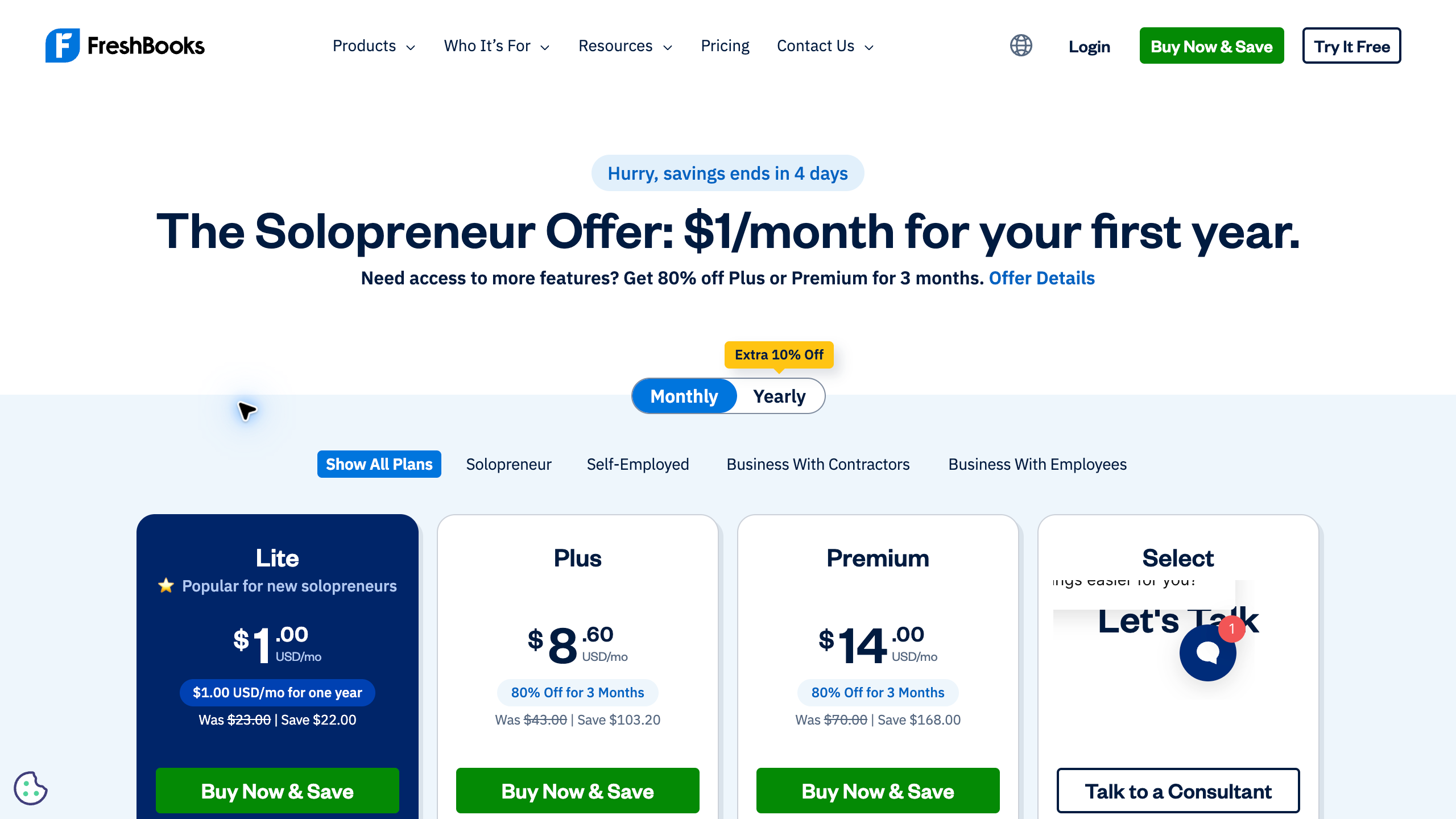
On the reviewed US pricing page, Lite allowed invoices to five clients, Plus to 50, and Premium to unlimited clients. Plus and higher listed accountant access. Published regular monthly prices were $23 for Lite, $43 for Plus, and $70 for Premium, alongside temporary offers. Team members were listed as an additional $11 per user per month on these plans.
The distinction I would focus on is the client limit. Do you have four ongoing clients, or do you send invoices to dozens of different people? Pick the plan based on the way the limit is defined, not the number of invoices you happen to send this week.
For a service business, test your full billing process. Create a sample estimate, turn it into an invoice, record a payment, and review what happens when the invoice is overdue. Use clearly labeled sample data rather than exposing real client details during a sales demo.
Then test an expense connected to that project. Can you find the supporting document? Can the person reviewing the records understand what it was for? A clean process is more important than how attractive the invoice template looks.
I would also ask about the reports you need before choosing Lite just because it looks cheaper. If you need your accountant inside the account, verify that access on the plan you are buying. Do not assume every role is included in every tier.
For an ecommerce store, slow down and evaluate the fit carefully. Client invoicing and store-checkout transactions are not interchangeable workflows. Confirm how your orders, payouts, fees, refunds, and supplier bills will reach the accounting system.
2. QuickBooks Online: compare it for a broader bookkeeping setup
QuickBooks Online is worth comparing when your priority is a broader recordkeeping workflow and collaboration with an accountant.
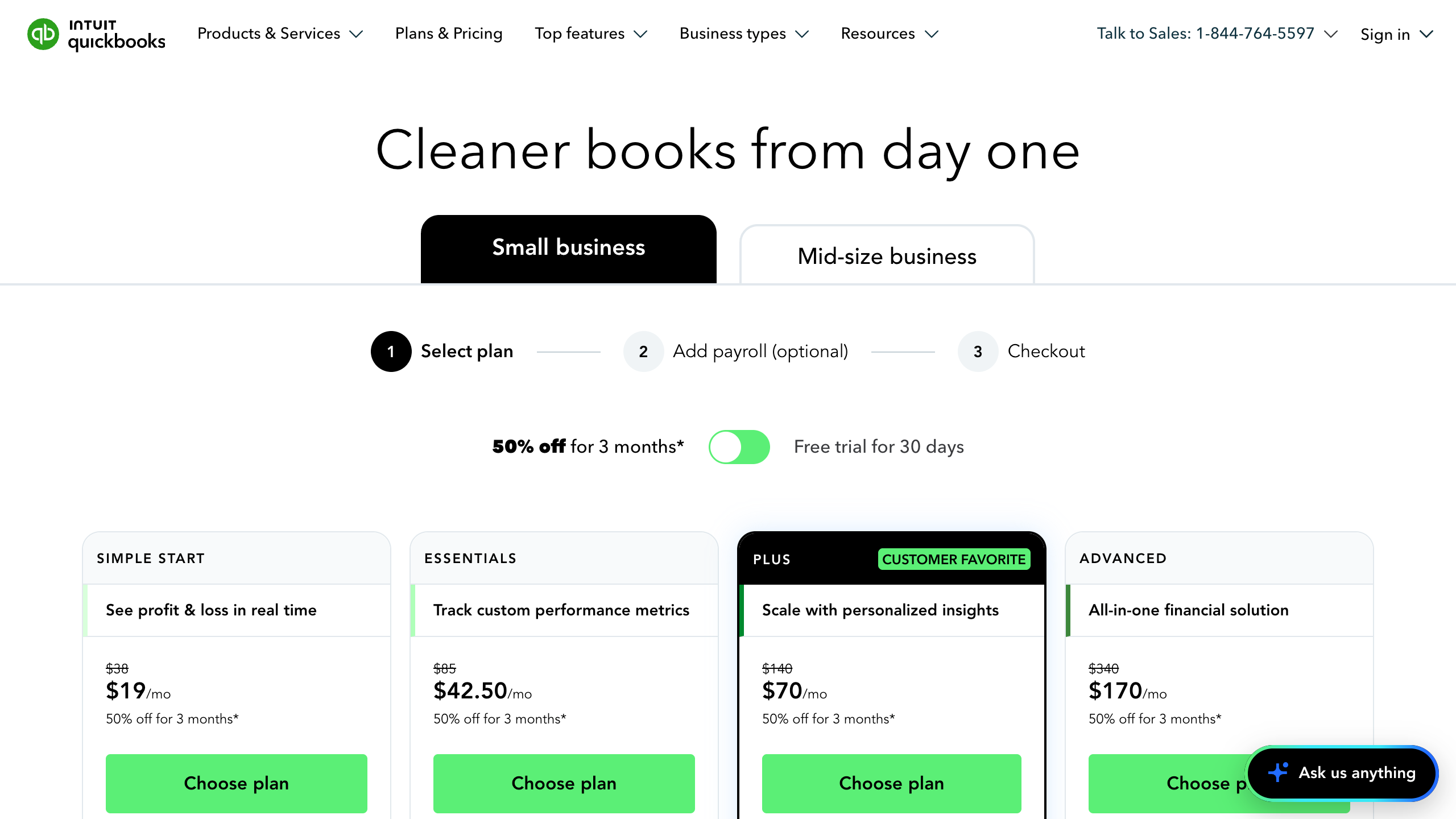
The reviewed US page listed regular monthly prices of $38 for Simple Start, $85 for Essentials, $140 for Plus, and $340 for Advanced, alongside introductory discounts. User allowances were one, three, five, and 25 respectively, with separate accountant access. Plus listed inventory and project-profitability capabilities. Check the current regional offer before choosing a plan, because pricing pages and introductory promotions can differ.
Do not read that plan ladder as an instruction to buy the most expensive one. Work backward from your required tasks. If a particular report, user role, or inventory workflow matters, confirm it on the actual plan rather than assuming it is part of the brand name.
For a store owner, I would ask the bookkeeper to help design a test transaction. Start with an order, then follow the payment, processor fee, payout, supplier cost, and any refund. The goal is to see whether the records can be understood without manually rebuilding everything every month.
Also check how information enters the system. A bank connection can show money moving, but it may not provide every detail needed to understand the underlying order. An integration might help, but you need to know exactly what it imports and how it handles adjustments.
If your setup depends on another app, include that app in the budget and trial. Confirm the subscription it requires, the accounts it can connect, and what happens if it disconnects. You are buying a working process, not just a logo on an integrations page.
Finally, ask about permissions. An assistant who uploads receipts may not need the same access as the owner or accountant. Check whether the plan supports the division of work you want before inviting the whole team.
Make the business model clear. If you are considering an ecommerce store, read what high-ticket dropshipping is and how it works. Understand the customer and supplier transaction flow before choosing software to record it.
Compare ongoing cost, not just the opening offer
Accounting software promotions can make the first payment look very small. That is useful if you qualify, but the opening payment is not the full cost of running the system.
Write down the regular subscription price, the promotional period, the renewal terms, and any extra seats. Add the tools required to connect your business, then include any bookkeeping service you plan to use.
A hypothetical owner choosing a $43 monthly subscription and adding one $11 team seat would have a $54 monthly software total before other charges. That is a simple planning example, not a quote or a recommendation to buy those exact options.
Do the same calculation for the plan you are considering in the other system. Comparing two complete setups is useful. Comparing a stripped-down starter offer with a higher-tier ongoing price is not.
Check whether a free trial and a discounted paid offer have different conditions. You might need to choose between them. Read the current checkout terms before entering a payment method, and make a note of when billing changes.
I would also consider the cost of changing systems later. Moving records, retraining someone, and checking opening balances can take time. That does not mean you should avoid switching. It means the cheapest first month should not make the decision for you.
Ecommerce owners: follow the money from order to payout
A common mistake is treating the deposit in the bank as the complete story. For an online store, there can be several steps between the customer’s purchase and the amount that arrives in your account.
Think through a hypothetical $2,000 order. The checkout shows one amount, the processor may deduct fees, a payout may combine multiple orders, and the supplier payment may happen on another day. A refund or adjustment can happen later.
Your accounting workflow needs a way to explain that sequence. Do not decide the bookkeeping treatment from this article. Ask your accountant how they want each part recorded and what supporting information they need.
Bring a small set of representative examples to that conversation: a normal order, a canceled order, a partial refund, a supplier bill, and a shipping adjustment. Those examples are more helpful than asking whether an app is generally good for ecommerce.
If the software relies on imported summaries, find out what detail you lose and where you can retrieve it. If it imports individual transactions, find out how duplicates are prevented. Either approach needs a clear explanation.
Keep the store, processor, bank, and accounting records connected through a repeatable process. When there is a difference, someone should know where to investigate. The point is not to stare at four dashboards. The point is to be able to answer a question about the business without guessing.
Choose a niche you can understand. My high-ticket niches list can help you explore categories. Product costs, supplier terms, and customer expectations all affect the records you will need to manage.
Service businesses: test the complete invoice cycle
If you sell consulting, design, or another service, start with the client journey. How do you agree on the work, request a payment, record that payment, and handle a change in scope?
Use the trial to build one realistic sample project. Include an estimate, a deposit if your workflow uses one, an expense, and a final invoice. Then see whether the resulting records are easy to explain.
If you charge for time, confirm how time is captured and reviewed. If you use fixed-price projects, check how you keep the project information organized without accidentally turning every task into a billable item.
Ask about payment fees separately from the subscription. The ability to accept an online payment does not mean that payment is free. Compare the current processing terms for the methods your clients actually use.
Keep reminders professional. A reminder system can help you follow up, but it should not send confusing messages after a client has already paid through another method. Make sure someone knows how to update the record and stop an unnecessary reminder.
Before you choose, imagine reviewing the account three months later. Can you quickly tell which invoices are paid, which need attention, and what supporting information belongs to each project? That is a useful test of whether the software fits.
Ask your accountant these questions before committing
First, ask which reports and records they need from your business. A software sales page cannot answer that for your specific situation.
Second, ask how they want your transactions organized. You do not need to invent a complicated structure yourself. The goal is consistency and useful information, not a huge list of categories that nobody understands.
Third, ask what you should do weekly and what they will do monthly or quarterly. Clear responsibilities prevent the owner and bookkeeper from assuming the other person handled something.
Fourth, ask about access. Will they work inside the software, receive exported reports, or use another process? Check the plan supports that arrangement.
Fifth, ask how to handle the unusual transactions in your business. Refunds, deposits, transfers, foreign-currency activity, and supplier adjustments can require care. Get a process you can follow rather than guessing every time.
Finally, ask how you will know the records are ready for review. Agree on what “finished for the month” means. A bank feed that has imported transactions is not necessarily a completed set of books.
Set up a simple weekly routine
Pick a regular time to review the records. You do not need to make it an all-day event, but you do need to stop letting small questions pile up indefinitely.
Gather the documents you are responsible for supplying. Check unpaid invoices, unanswered bookkeeping questions, and transactions that need explanation. Send your bookkeeper the information they requested.
Keep business records separate and organized according to the process your professional recommends. If a transaction has an unusual purpose, write a clear note while you still remember it.
Do not blindly approve suggested categories or automated matches. Automation can reduce repetitive work, but somebody still needs to review exceptions and understand what the system did.
Use the routine to spot operational issues as well. Maybe a supplier bill is missing supporting paperwork. Maybe a subscription renewed that nobody uses. Maybe a client payment needs follow-up. Clear records can help you notice those problems sooner.
Keep supplier information organized too. Read my high-ticket supplier research guide for the outreach process.
Supplier Paradise can support your supplier research. Directory entries are leads to investigate, not guarantees of approval, payment terms, or profitability.
Frequently asked questions
What is the best accounting software for an online business?
Start with your transaction workflow and your accountant’s requirements. FreshBooks is worth comparing for client invoicing and project work. QuickBooks Online is worth comparing for a broader bookkeeping setup. Confirm the exact plan, integrations, access, and reports before deciding.
Can I use the cheapest plan and upgrade later?
Often a provider offers upgrade paths, but check the features you need from the beginning. A lower plan may omit accountant access, user roles, reports, or integrations. Avoid building a process around a feature your chosen tier does not include.
Does accounting software replace a bookkeeper?
No. Software can organize information and automate some tasks, but it does not automatically resolve every transaction or determine your obligations. Decide what you will handle and where you need qualified help.
Should an ecommerce store choose the same tool as a freelancer?
Not automatically. A freelancer may prioritize invoices and projects, while a store needs to understand orders, payouts, fees, refunds, and supplier costs. Test the workflow for your business instead of copying someone else’s subscription.
Are promotional prices the same as ongoing prices?
No. Check how long the offer lasts, who qualifies, what the regular price is, and which additional charges apply. The checkout terms and your written quote matter more than a large discount headline.
My recommendation: pick the system you will actually maintain
I would shortlist FreshBooks and QuickBooks Online, show your accountant a few representative transactions, and test the required workflow before moving your records.
Choose the plan that covers what you need now, with a clear next step as the business grows. Then establish a routine. Consistently maintained records in a suitable system are more useful than an expensive subscription nobody keeps up to date.
Want help building the business around the tools? Explore my private high-ticket dropshipping coaching for guidance on the business decisions.
If you want help building and launching the store, see my done-for-you high-ticket dropshipping build and launch service. These services are not a substitute for an accountant or tax adviser.
Related guides
- Business formation for high-ticket dropshipping
- How high-ticket dropshipping works
- High-ticket niche ideas
- Researching high-ticket suppliers
Research note: Official US FreshBooks and QuickBooks Online pricing and plan pages reviewed October 10, 2026. Editions, offers, features, and prices can vary by location and change over time.

Trevor Fenner is the founder of Ecommerce Paradise. His main projects are Ecommerce Paradise, Supplier Paradise, and Review Paradise, which is currently in development. TrevorFenner.com publishes research-based reviews and practical guides to online business tools and remote-work services, with clear affiliate disclosures.