
The best keyword research tools help you decide what to publish next. That sounds simple, but it is easy to spend an entire afternoon exporting keywords and still have no idea which article would actually help your business.
I would start with the decision you need to make. Are you choosing a niche, finding topics for a small blog, comparing competitors, or figuring out the questions a buyer asks before placing an order? Those are different jobs. Your tool stack should match the work.
At Ecommerce Paradise, I teach entrepreneurs to build focused businesses. The same approach applies to content: go deep before you go wide. A useful guide for the right customer can be more valuable than another hundred generic articles.
This guide compares four options: Mangools with KWFinder, Semrush, Seobility, and AlsoAsked. I will explain where each belongs in the workflow and how I would evaluate a subscription before committing. AlsoAsked handles a different part of the job from a conventional volume-and-difficulty tool, so I would not compare them as if they were identical products.
Affiliate disclosure: I may earn a commission if you sign up through the affiliate links in this article, at no extra cost to you. This comparison uses published product information reviewed October 10, 2026. It is not a claim that I personally benchmarked every feature or that any tool guarantees traffic, rankings, or sales.
Best keyword research tools: quick comparison
| Tool | Where I would compare it | What to test | Important limitation |
|---|---|---|---|
| Mangools / KWFinder | Focused keyword and search-result research | Keyword ideas, location selection, trends, and a useful shortlist | Difficulty estimates are not ranking guarantees |
| Semrush | Keyword research connected to competitor and content planning | Topic discovery, competitor gaps, grouping, and your required exports | Confirm exactly which toolkit and limits your plan includes |
| Seobility | Related terms and domain-based keyword opportunities | Related-keyword and competitor research for a real niche | Check daily query limits and the scope of the selected plan |
| AlsoAsked | Buyer questions and relationships between questions | Question maps for a specific country, language, and topic | A question map does not replace search-volume research |
These are starting points for comparison, not a universal ranking. Someone publishing two thoughtful articles each month does not need the same account as an agency researching several clients every day.
Research a focused market first. Use my high-ticket niches list to choose categories worth investigating →
1. Mangools and KWFinder: start with a focused research job
Mangools is worth comparing when your first requirement is a clear keyword-research workflow. KWFinder supports keyword and domain searches, search-volume information, difficulty metrics, trends, and location-specific research.
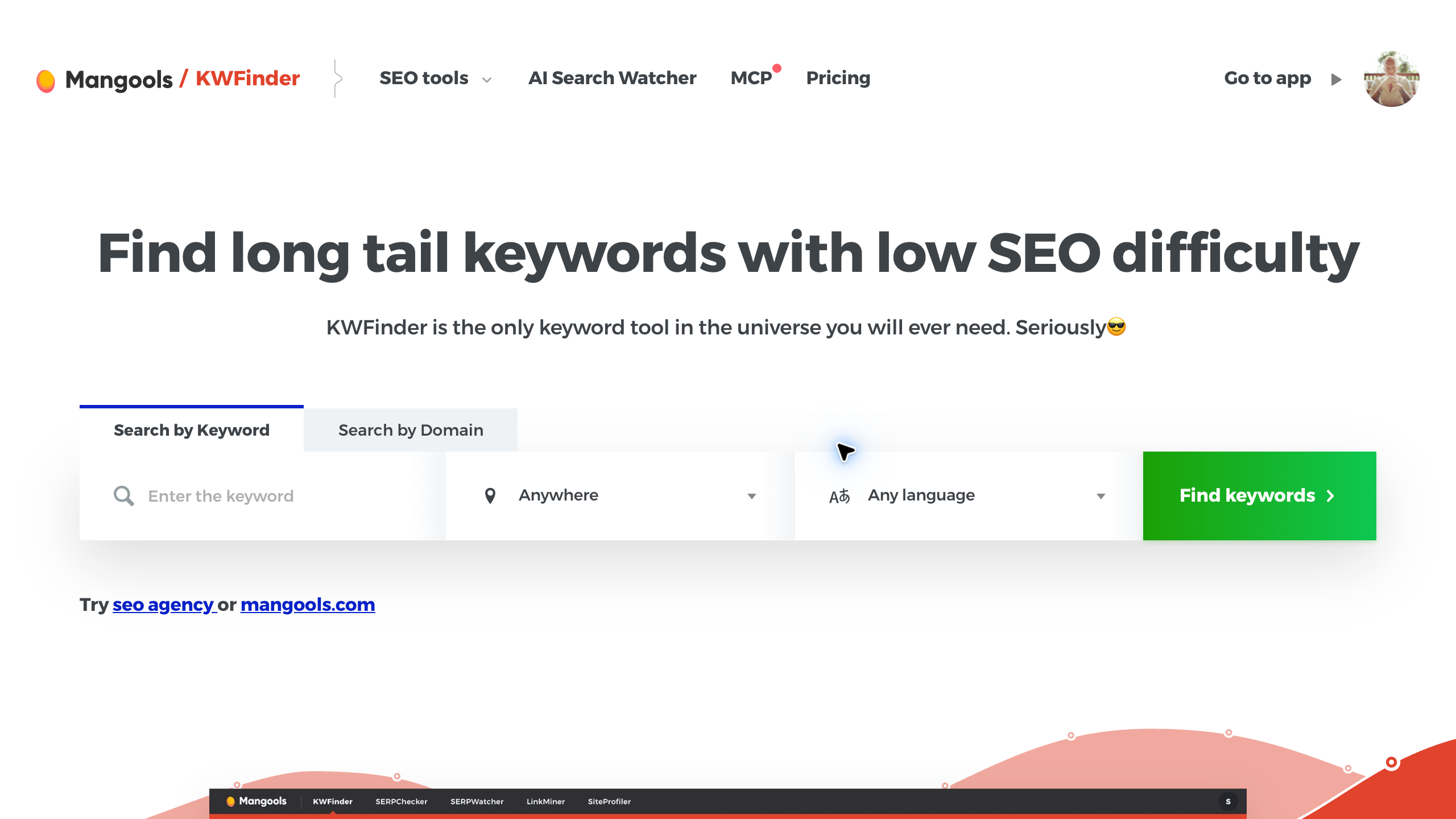
Its surrounding package includes separate tools for search-result analysis, rank tracking, backlink analysis, and site metrics. Check the current plan limits rather than assuming every tool has unlimited usage.
My evaluation would begin with one product category I actually intend to cover. I would enter a seed phrase, select the target market, and look for a handful of related topics that connect to a real customer decision. I would save the reasons for each choice beside the keyword.
For a hypothetical sauna store, that might mean separating an installation question from a product comparison. Someone asking whether a sauna fits an apartment has a different problem from someone comparing two heating approaches. The brief should reflect that difference.
I would then inspect the search results. What kind of page is appearing: a buying guide, a category page, a product page, or a how-to article? That tells me more about the required page than a difficulty number on its own.
The main pitfall is treating a low score as permission to publish anything. The question still needs to fit your site, your knowledge, and the reader. A focused tool works best when you bring a focused research task to it.
2. Semrush: compare the broader workflow you will actually use
Semrush is worth comparing when keyword research needs to connect with competitor analysis and a larger content plan. Its official keyword-research offering covers topic discovery, competitor opportunities, keyword grouping, and performance tracking.
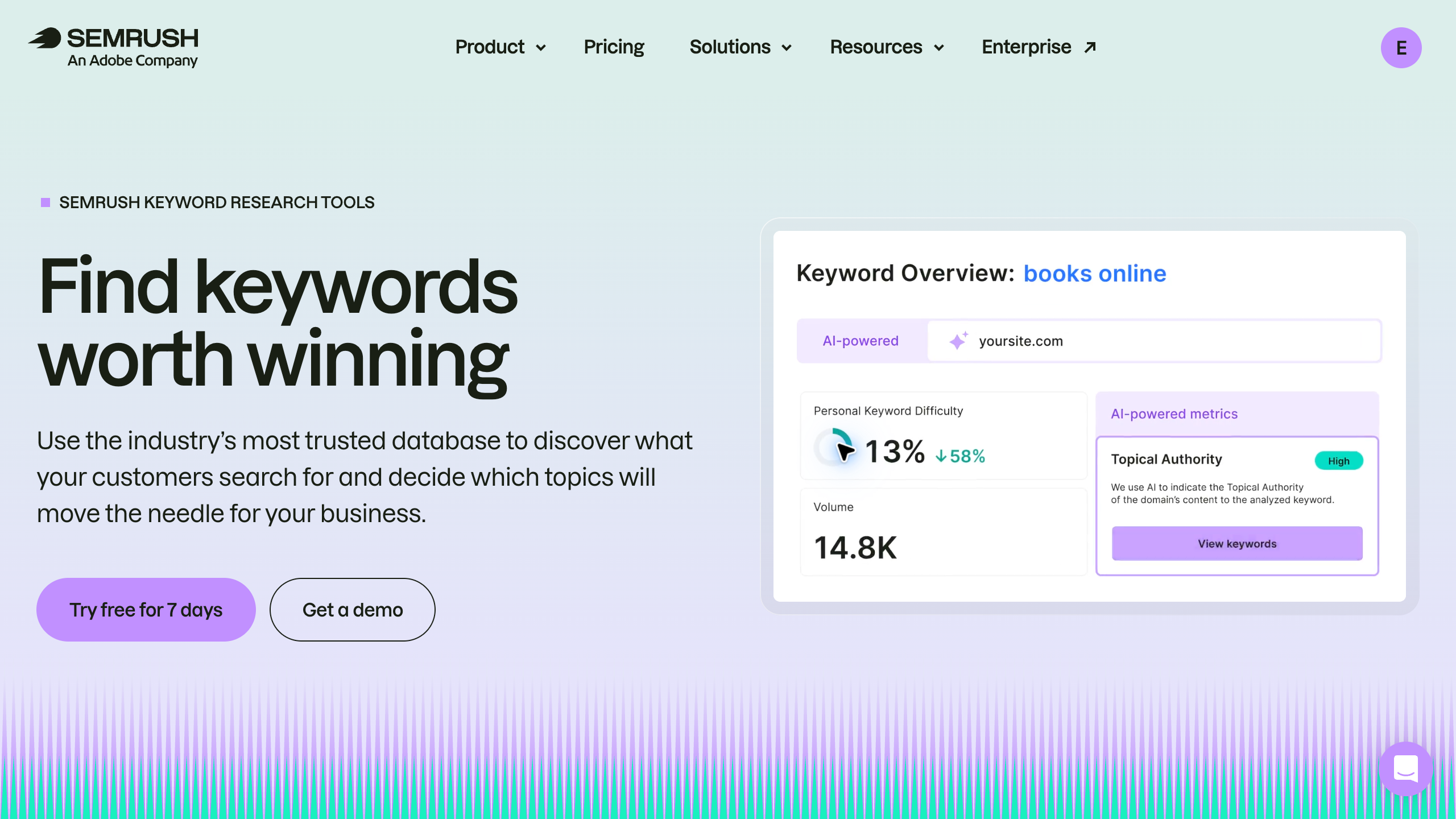
Before buying, confirm the precise toolkit, project capacity, user access, exports, and other limits included in the selected offer. A familiar brand name does not tell you what a particular subscription includes.
My test would be to turn one competitor observation into an original brief. I would look for a question the competitor covers poorly, identify what the buyer still needs, and decide whether my site can provide a genuinely better answer.
That does not mean copying the competitor’s entire publishing calendar. A competitor may have a different business model, an established audience, or products you cannot sell. Their traffic opportunities are leads to evaluate, not instructions to follow.
I would also test the handoff to whoever writes the article. Can I explain the primary question, the intended reader, the required evidence, and the commercial next step? If the export does not help me do that, I am still doing research without making a publishing decision.
The broader scope can be useful when you use it consistently. It can also become expensive unused capacity. Start with the tasks you will repeat each week, then compare the plan that supports those tasks. Do not pay for an agency-sized workflow just because the dashboard looks impressive.
Choose the business before choosing the software. Read my high-ticket dropshipping guide for the bigger picture →
3. Seobility: test related terms and competitor opportunities
Seobility offers related-keyword research, URL or domain research, and competitor comparisons. Its keyword tool describes filters and metrics including search intent, search volume, competition, and cost per click.
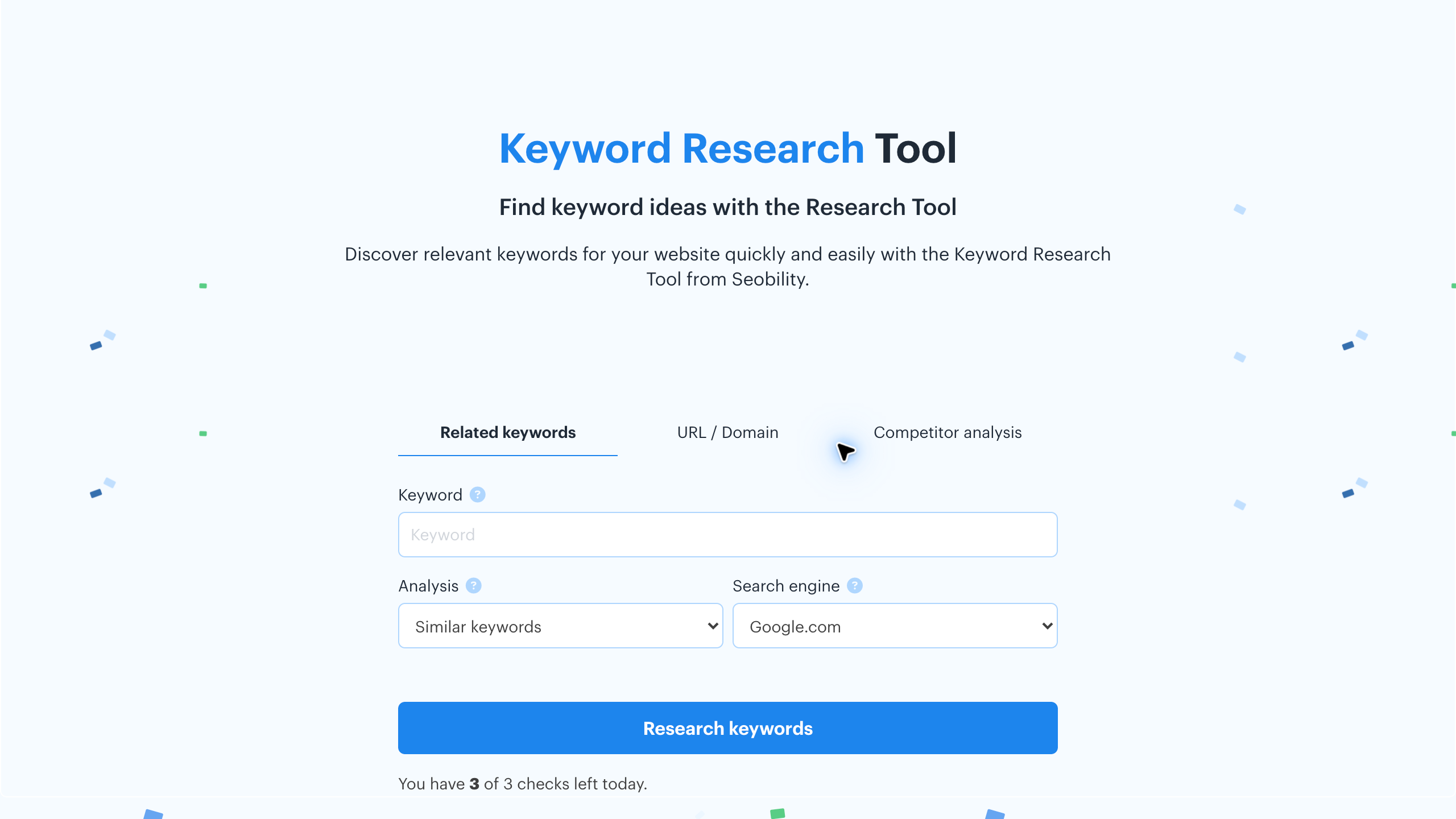
The published tool also supports CSV exports and a connection to rank tracking. Free and paid access have different query limits. Confirm those limits against the actual workload you intend to run.
I would test it with a small, realistic set of competitors. A large general retailer might rank for many topics that have little relevance to a specialized store. A closer competitor can give you a more useful starting point.
Then I would investigate the gap. Does the missing topic deserve a new page, or should it improve a page you already have? Sometimes the useful action is adding a clear section to an existing guide rather than creating another thin article.
A spreadsheet is fine for preserving the decision. Record the keyword, the source, the market, the date, the current page if one exists, and the next action. Keep the research understandable outside the software account.
The limitation I would watch is research capacity. Daily limits can matter when you are processing a large batch. Plan the searches you need instead of repeatedly running slightly different versions of the same query. More searches are not automatically better research.
4. AlsoAsked: use buyer questions to make the article useful
AlsoAsked maps Google People Also Ask questions and their relationships. Its published offering includes country, language, and location options, along with visual maps and export features depending on access.
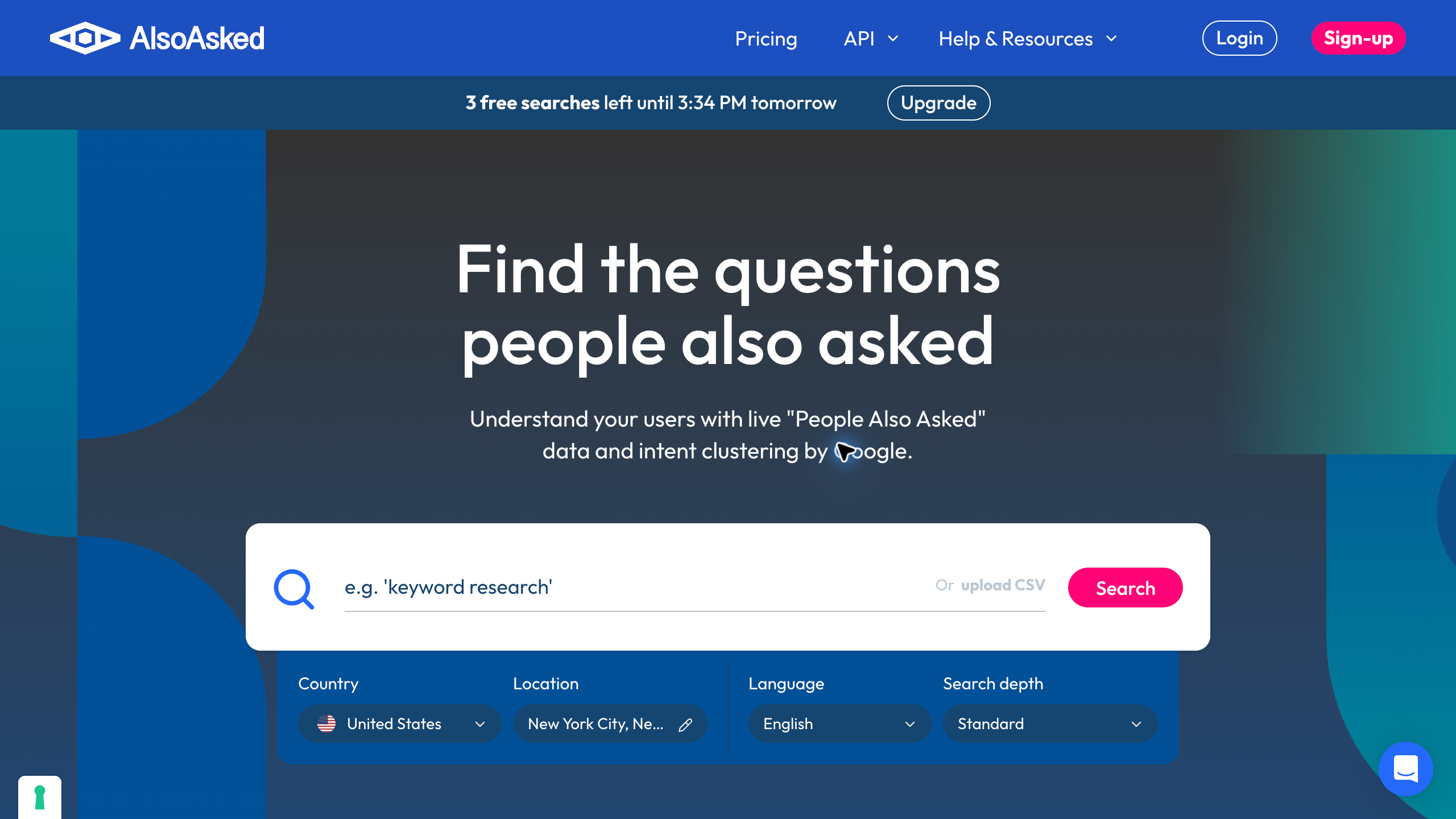
I would use it to understand how a topic branches into practical questions. It is a question-research layer, not a direct substitute for a tool that helps compare keyword demand and difficulty.
Imagine you are writing about buying a greenhouse. The useful questions might concern permits, wind exposure, installation, foundation requirements, or what size fits the available space. Those are examples of possible research directions, not a claim that I ran that query here.
I would select only the questions the article can answer responsibly. If a question depends on local rules, specific product specifications, or professional advice, the article needs that context. A question appearing in a map does not make a generic answer accurate.
Do not turn every branch into a separate article. Several questions can belong inside one strong guide. Others may deserve their own page because they involve a different reader, a different stage of the purchase, or a substantially different answer.
My test would be simple: does the question map help me write a clearer outline? If it only makes the FAQ longer without improving the reader’s decision, I would trim it. The point is useful coverage, not a contest to include every possible question.
Connect research to real suppliers. Use my supplier sourcing guide to turn niche ideas into focused outreach →
How I would choose the best keyword research tools for a small site
I would start with one primary research tool and a repeatable process. The tool should help me find ideas, evaluate their fit, and preserve a useful publishing decision. I would add another subscription only when it solves a clear missing job.
For a small content site, my first test would be three potential articles. I would research them, inspect the results, and produce three briefs. That is enough to learn whether the account helps me work, without turning evaluation into a month of collecting data.
If my main need is a focused keyword and results workflow, I would compare Mangools first. If I need research connected to a broader competitor and content process, I would include Semrush in the comparison.
If the gap is understanding buyer questions, I would compare AlsoAsked as a supporting tool. I would not buy a second volume-and-difficulty subscription simply because I wanted more questions for an outline.
Keep the people involved in mind. A solo writer may need a simple export. A team may need shared access, a clearer handoff, and consistent naming. Test the process with the person who will use the output.
Compare the complete subscription cost
Record the selected plan, billing period, currency, included seats, usage limits, and any required additions. If the page displays a monthly equivalent for annual billing, record the annual charge separately. That is the commitment you need to understand.
Use a hypothetical budget to check your decision. A $60 monthly research subscription plus a $20 supporting tool would cost $80 each month before other charges. Those are example inputs, not current prices for any provider in this guide.
Now ask what that spending produces. If it supports six well-researched briefs each month, you have a specific output to evaluate. If the account has not been opened in three weeks, you have a different problem.
Compare ongoing pricing instead of relying only on an opening offer. Check when billing starts, what happens at renewal, and how cancellation works. Do not enter a payment method until you understand the current terms.
I would also check whether the plan allows the kind of exports or integrations I require. A tool can be useful in the browser without providing the workflow you expected outside it. API or connector access should be verified separately, not assumed from a product name.
Build a keyword shortlist that leads to a real article
Start with one category and the customer you want to help. Write down what that person is buying, what they need to compare, and what could prevent a confident decision. Your seed phrases should come from those jobs.
Choose the intended country and language before reading the numbers. A site serving US buyers needs research suited to that audience. Record the settings so the next person does not mix results from a different market into the same list.
Then separate informational, comparison, and purchase-oriented topics. The exact classification matters less than understanding what the reader expects. A person looking for maintenance instructions should not land on a page that only sells a replacement.
Inspect the results for the shortlisted topics. Look at the page types, the questions they answer, and the evidence they provide. Do not decide that a result is weak just because its design looks old. Read it.
Before creating a new article, search your own site. A pricing guide, a product review, and a broad comparison can serve different purposes. Five nearly identical pages with slightly different keywords usually create an editorial mess.
Give each proposed page one primary job. Write the reader, the question, the evidence needed, and the next step in plain language. If you cannot describe why the page should exist, keep researching instead of sending it to a writer.
Build a useful supplier shortlist alongside your content research. Explore Supplier Paradise for sourcing research leads →
Common mistakes that make keyword tools feel useless
Treating estimates as promises. Search volume, difficulty, and competitor metrics help organize research. They do not promise a specific number of visitors or sales. Keep those estimates separate from your own verified site results.
Using inconsistent settings. If one export uses one country and another uses a different country, the numbers may not support a clean comparison. Save the source, date, country, and language with the research.
Publishing one page for every variation. Similar phrases may belong on the same page. Inspect intent before splitting them. A useful article should cover its subject thoroughly without creating several versions of the same answer.
Copying competitor choices without context. Their products, authority, audience, and resources may be different. Evaluate whether a topic fits your business instead of assuming their ranking list is your calendar.
Buying software before defining the workflow. You can spend a lot and still have no usable briefs. Write down the output you need, then test whether the tool helps you produce it consistently.
Frequently asked questions
Do I need more than one keyword research tool?
Not necessarily. Start with one tool that handles the core research job. Add another when it solves a specific gap, such as question mapping or a required competitor workflow. Avoid duplicate subscriptions that produce more data without changing the publishing decision.
Is a low-difficulty keyword always a good opportunity?
No. The topic still needs to fit your audience and the page you can create. Inspect the results, determine the reader’s question, and check whether you can provide a useful answer. A score cannot make an irrelevant topic valuable.
Can AlsoAsked replace a conventional keyword tool?
I would treat it as a different research layer. Question relationships can improve an outline, but they do not complete the entire demand, competition, and prioritization process. Choose the tool according to the part of the workflow you need.
Should a new site target only tiny keywords?
I would avoid choosing by volume alone. Look for topics your site can cover well and that connect to an actual reader decision. A focused page can be useful at different levels of demand. Keep larger topics in the plan when you have a credible way to address them.
What should I keep after the subscription ends?
Keep your briefs, topic decisions, source notes, publishing calendar, and relevant exports in a format you can access independently. Follow the provider’s usage terms. Your business should retain a clear record of why each article was created, not just a collection of numbers inside an account.
My recommendation: make the research produce a decision
I would choose the smallest stack that supports useful work. Compare Mangools for a focused keyword workflow. Compare Semrush when a broader competitor and content process is part of the requirement.
Include Seobility when its research approach fits the questions you need to investigate. Consider AlsoAsked when a clearer map of buyer questions would improve the brief.
The business foundation still comes first. Work through my business formation checklist when you are organizing the operation behind the site. Software supports that operation; it does not replace it.
If you want help deciding what to build and where to focus, review my private coaching. Bring a real category, your research, and your questions so we can work on a concrete next step.
Research reviewed October 10, 2026 using the official KWFinder, Semrush keyword-research, Seobility keyword-research, and AlsoAsked product pages. Product descriptions are based on published information, not an independent accuracy or ranking benchmark.
Related guides
Start with the high-ticket dropshipping overview to understand the model. Use the high-ticket niches list to narrow the categories you want to research.
Then read the supplier sourcing guide before outreach. Keep the business formation checklist alongside the plan.
Want help building the complete business? Review the Ecommerce Paradise done-for-you store service →

Trevor Fenner is the founder of Ecommerce Paradise. His main projects are Ecommerce Paradise, Supplier Paradise, and Review Paradise, which is currently in development. TrevorFenner.com publishes research-based reviews and practical guides to online business tools and remote-work services, with clear affiliate disclosures.