Affiliate disclosure: Some links below are affiliate links. I may earn a commission if you buy through them, at no extra cost to you. Product referral links are not promises of admission to an affiliate program.
The best affiliate programs are the ones that make sense for the people you already help. That sounds obvious, but it is easy to forget when you see a big commission number. A generous payout does not do much for you if your readers have no reason to buy the product.
If you write about online businesses, there are some useful options to compare. Store platforms, email software, SEO tools, accounting software, and course platforms all solve real problems. The opportunity is to explain those problems clearly and help someone make a good decision, not fill every page with random offers.
That is the approach I take with Ecommerce Paradise. Start with the business someone wants to build, then connect them with tools that fit the next step. An affiliate recommendation should make the work easier to understand.
This guide compares seven programs worth researching for an online-business audience. The order is a practical shortlist, not a ranking of guaranteed earnings. I will cover the published commission structure, the type of content that fits, and the questions I would ask before building a content cluster around an offer.
If your audience is interested in stores, my high-ticket dropshipping guide gives you the business-model context. Keep that context in the article instead of jumping straight to the software.
Best affiliate programs: quick comparison
| Program | Content audience | Published commission context | Important qualification |
|---|---|---|---|
| Shopify | People launching an ecommerce store | Eligible store referrals; payout varies by merchant location | Eligible plan must reach full-price payment |
| Mangools | Bloggers and people doing keyword research | 25%, 30%, or 35% tiers; recurring payments | Tier, attribution, and payout threshold matter |
| Semrush | SEO specialists, marketers, and agencies | Fixed commissions for eligible sales and trial activations | Check the current offer in your approved account |
| Omnisend | Store owners building email marketing | 20% recurring for up to 24 months | Referred customer must remain paying; partner must remain eligible |
| Kit | Newsletter and creator-business audiences | 50% monthly for up to 12 months | Later recurring earnings require qualifying status |
| FreshBooks | Freelancers and service-business owners | Advertises up to $200 per paid subscriber | Customized structure and application requirements |
| Teachable | Creators selling courses and knowledge | 30% recurring for the first year | Platform partner program differs from individual course affiliates |
Program information was reviewed October 10, 2026. Public pages are a starting point. Your accepted agreement, account offer, eligible territory, promotional method, and qualified conversions determine what you can actually earn.
The product links in the sections below let you explore the tools through my documented referral links. If you want to become an affiliate yourself, find the merchant’s affiliate or partners section and complete its separate process. Buying a product through my link does not make you an approved affiliate.
Seven affiliate programs worth researching
Understand the business before choosing its software. If you help store owners, start with the high-ticket dropshipping model →
1. Shopify: for content about launching a store
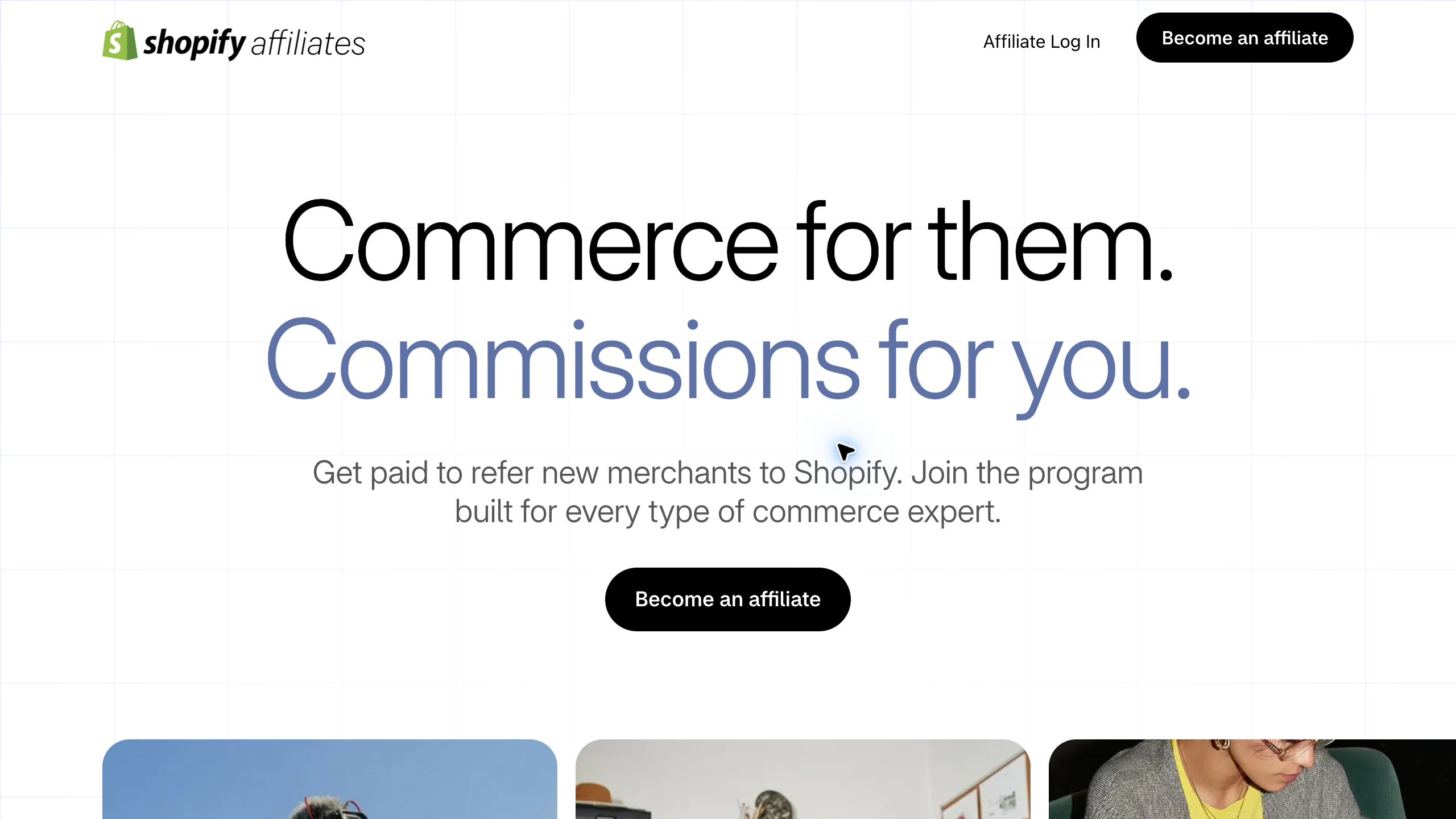
Shopify is a natural product to research if your audience wants to open an online store. Look at the actual store-building workflow before deciding whether to recommend it.
Shopify’s affiliate earnings documentation distinguishes eligible Basic, Grow, and Advanced referrals from plans that do not qualify. Store-plan commission depends on the merchant’s location and requires a full-price payment after the trial. A trial registration alone is not the same as earned commission.
My take: build content around decisions a prospective store owner needs to make. Explain product selection, supplier relationships, the theme, and the launch process. The platform recommendation belongs inside that bigger plan.
I would avoid an article that makes opening an account sound like opening a profitable business. A reader can complete the signup and still have no useful niche, suppliers, or traffic strategy. Explain the work on both sides of the purchase.
2. Mangools: for keyword research and content planning
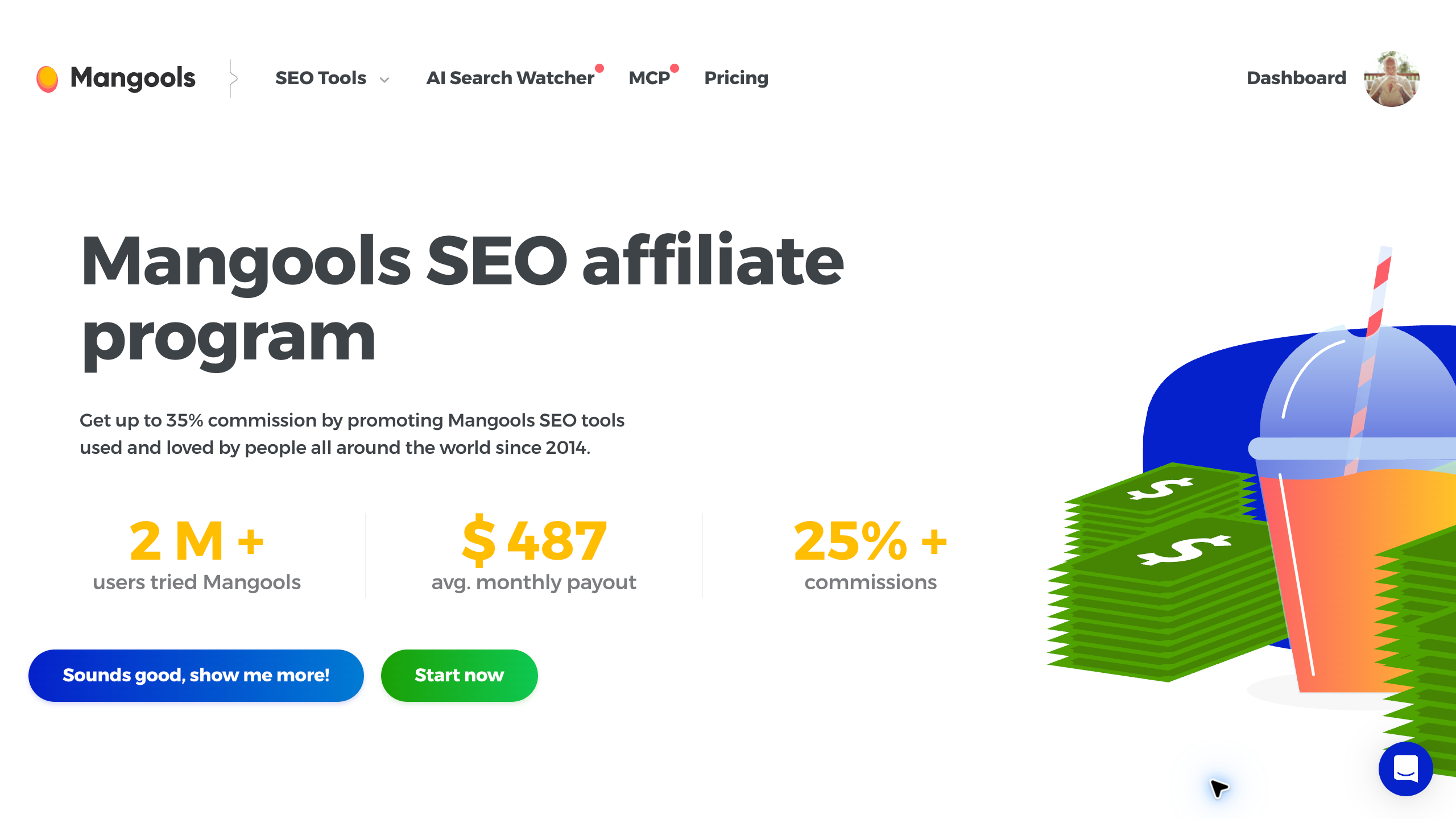
Mangools is worth exploring if you teach keyword research. Open the tools and work through a real topic so you can explain what someone gets from the research process.
The current affiliate page lists 25%, 30%, and 35% tiers and commissions on recurring monthly or annual payments. It describes a 30-day registration cookie and a $150 payout threshold. It also says a free account provides access to the affiliate section without a separate registration approval process.
My take: explain why a keyword is useful, not just where the search box is. A strong example shows audience fit, search intent, competition, and the offer that belongs in the eventual article.
A tool can give you data without choosing the business for you. Teach the reader how to make a decision from the data. That creates a better reason to buy than a screenshot of a large search-volume number.
3. Semrush: for a broader marketing workflow

Semrush is worth researching for an audience that needs a broader SEO and marketing workflow. Compare the specific features your readers need before recommending a larger software subscription.
Its affiliate documentation describes fixed commissions for sales or trial activations, with Impact tracking, last-click attribution, and a 120-day cookie. The exact commission offer should be checked in the current program and your accepted account rather than copied from an old roundup.
My take: use a concrete business question as the tutorial. What is a competitor ranking for? Which pages need improvement? What would you do with the findings? Explain the next action after the report appears.
Do not assume every beginner needs the same tool stack as an agency. If the person only needs occasional keyword research, compare that requirement honestly. The most useful recommendation is not always the most expensive one.
4. Omnisend: for ecommerce email-marketing content
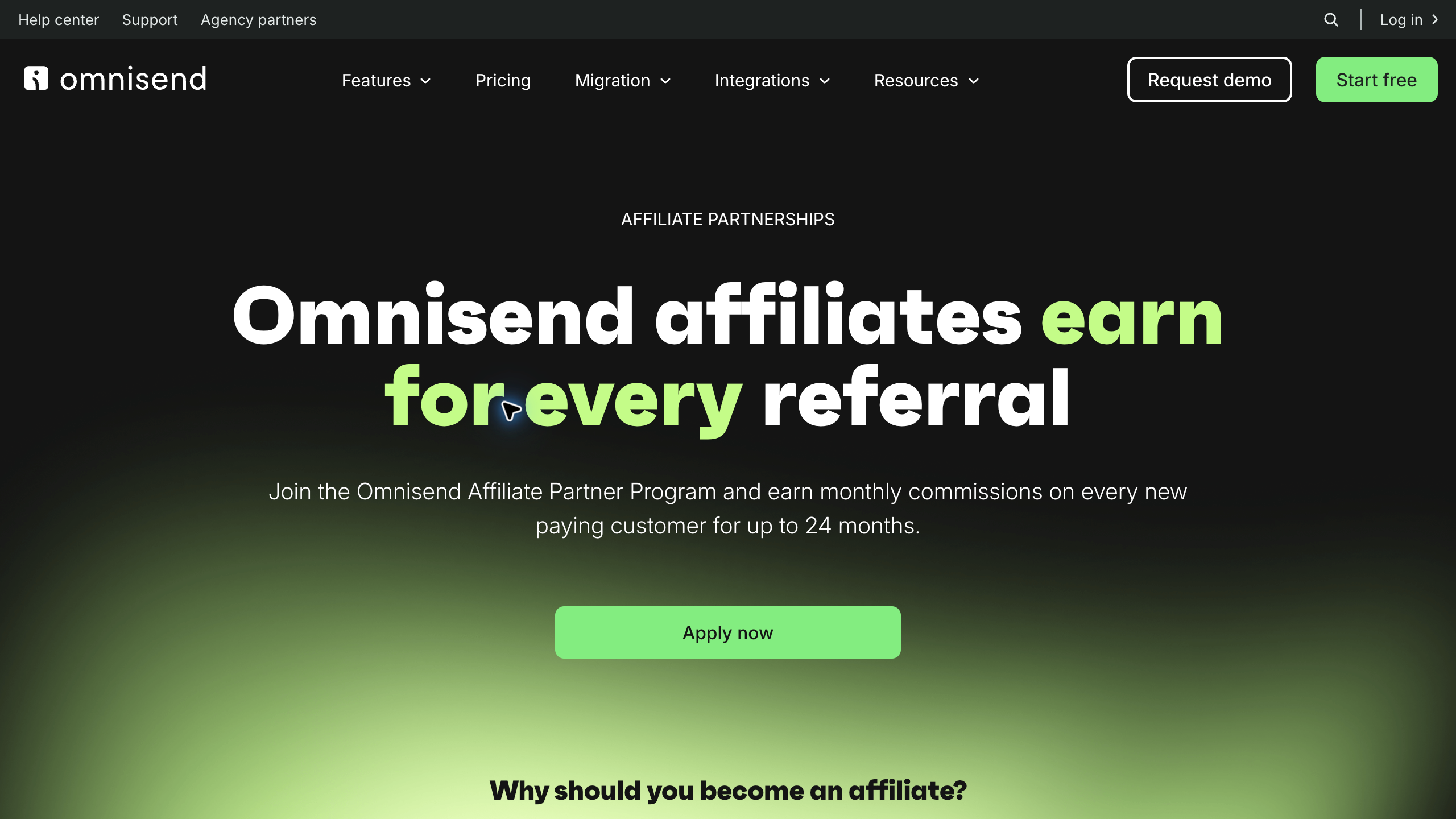
Omnisend is worth comparing when your readers operate stores and want to build email marketing. Look at their actual store, subscriber list, and automation requirements before choosing a plan.
The current affiliate terms specify 20% recurring revenue share for up to 24 months. The merchant must remain a paying customer, and the affiliate must remain active and approved. The program page describes a 60-day attribution window and tracking through Impact.
My take: content about welcome emails, abandoned-checkout follow-up, and post-purchase communication gives the product a clear job. Show the structure of the messages and explain which action each one is supposed to support.
Email software does not fix a weak offer or an unclear store. Keep the tutorial tied to the customer experience. That is a stronger foundation than promising that installing an app will produce a certain amount of revenue.
5. Kit: for newsletters and creator businesses
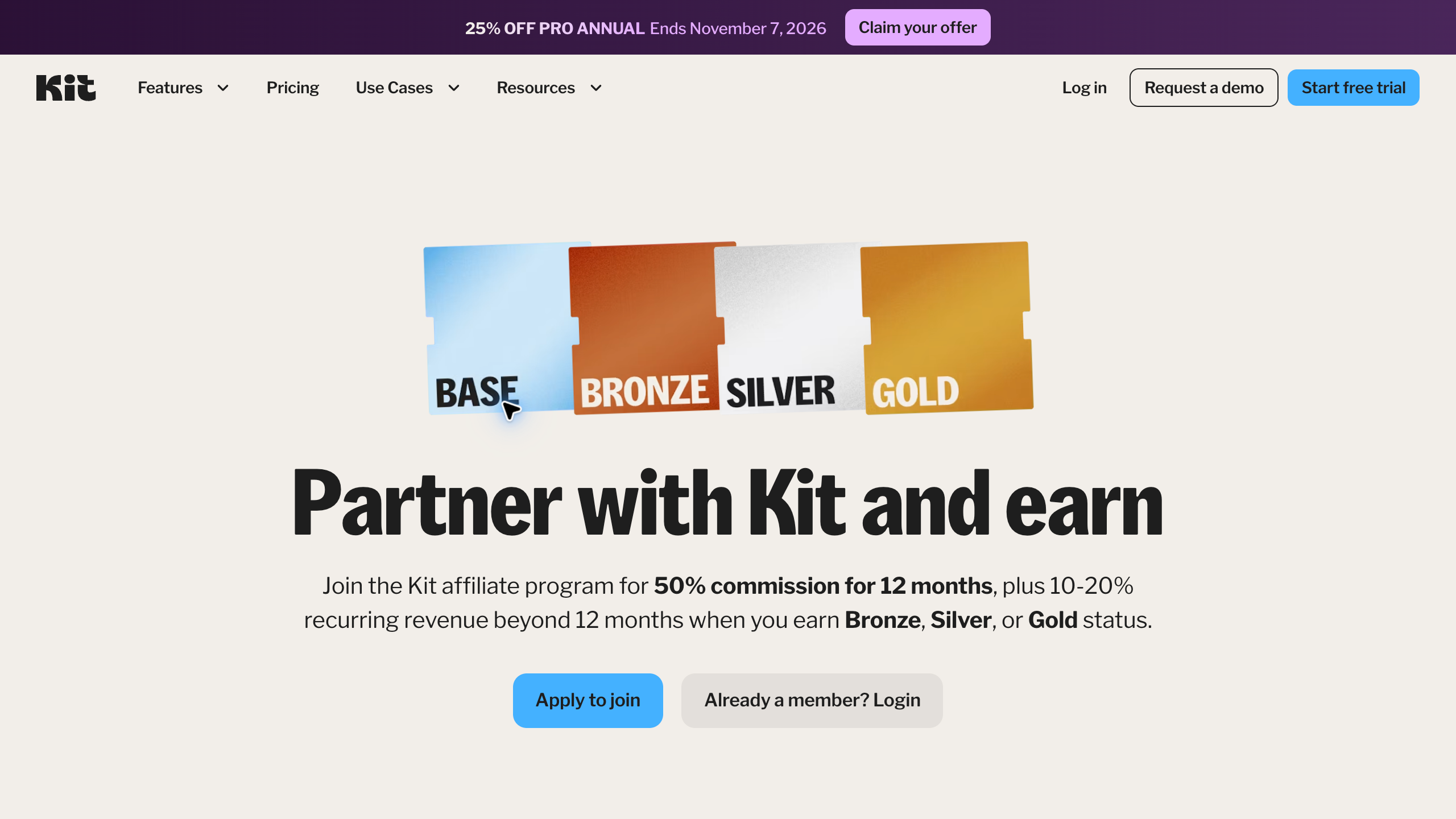
Kit is worth exploring for a newsletter or creator-business audience. Compare it around the reader’s publishing routine and how they want to organize subscribers.
Kit’s affiliate documentation advertises a 50% monthly commission for up to 12 months. Qualifying partners who maintain specified status levels can earn 10% to 20% recurring commissions after that period. Do not describe those later commissions as automatic for every affiliate.
My take: a useful article starts with the newsletter’s purpose. What will you send? Who is it for? What happens after someone subscribes? A tagging or sequence tutorial makes more sense once those questions are clear.
Newsletter content and ecommerce-store email content overlap, but they are not identical. Explain the use case instead of treating every email platform as interchangeable. Your reader should understand why a particular workflow fits their business.
6. FreshBooks: for freelancers and service businesses
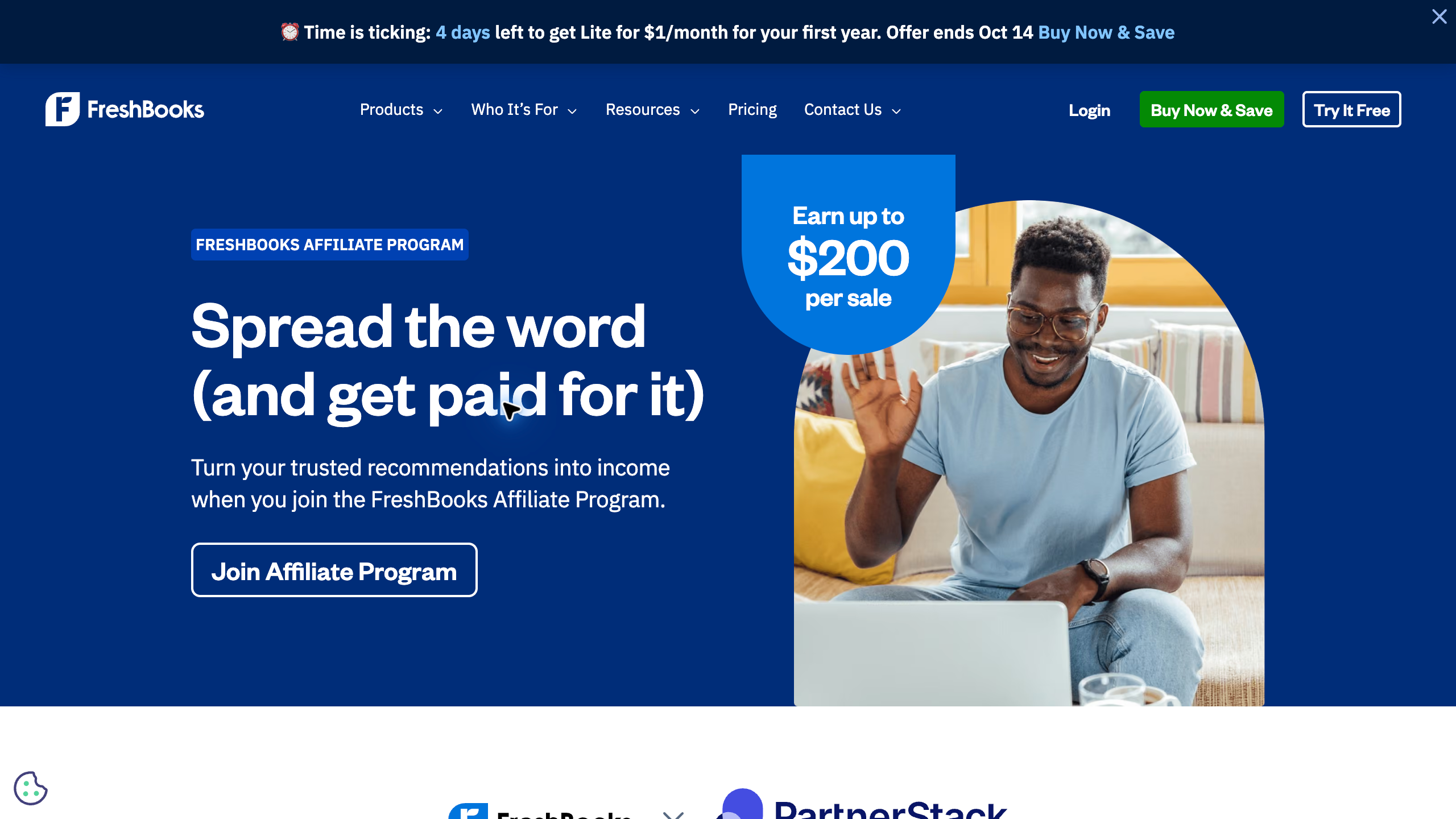
FreshBooks is worth comparing if your content helps freelancers or service-business owners manage invoicing and business finances. Review the workflow and discuss suitability with the person handling the books.
Its affiliate page advertises up to $200 per paid subscriber, describes a customized commission structure, and uses PartnerStack. Application guidance emphasizes original content and an audience of service-business owners, freelancers, or aspiring businesses.
My take: explain a real administrative task, such as preparing a client invoice or organizing expenses for review. Keep the recommendation connected to the type of business, not a generic promise that one app suits everybody.
I would not turn an accounting-software article into tax advice. Explain what the software helps organize and what needs professional review. A reader with an inventory-heavy store may have different requirements from a consultant sending a few invoices.
7. Teachable: for people creating courses
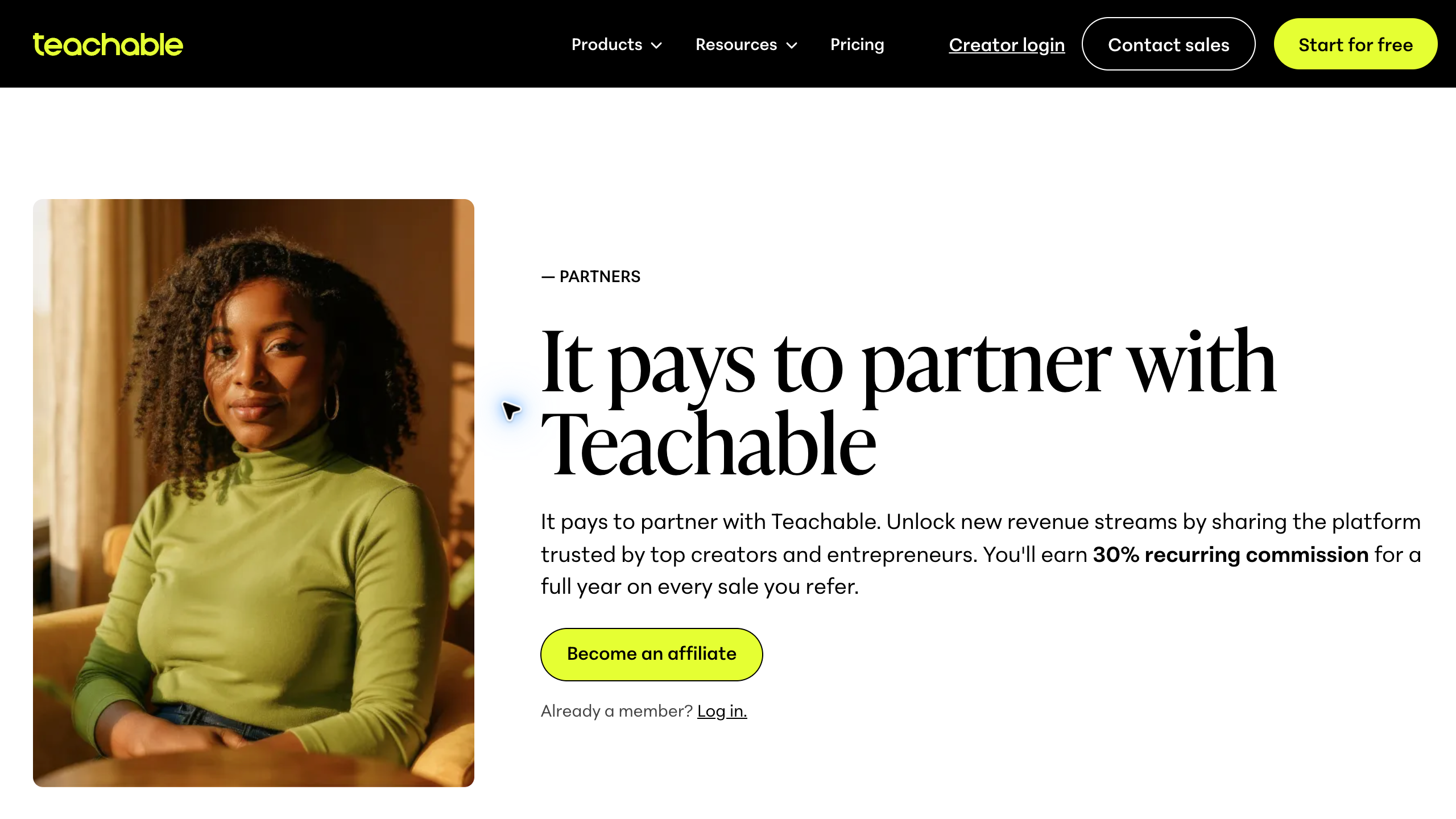
Teachable is worth researching for readers who want to package their knowledge into courses or related creator products. Start by checking how the product would be delivered and supported.
Teachable’s platform affiliate program advertises 30% recurring commission for the referred creator’s first year and a 30-day cookie window. PartnerStack provides the partner portal. This is separate from a school owner creating an affiliate arrangement for an individual course.
My take: focus on the product someone intends to teach. What outcome will the course cover? What material is already prepared? How will students get help? The platform matters, but it cannot supply the subject expertise.
Content that compares delivery workflows, launch requirements, and support responsibilities will be more useful than a list of commission percentages. Help a creator choose a setup they can actually maintain after the first sale.
How I choose the best affiliate programs for a content site
Choose a product category with a reason to exist. Use my high-ticket niches list to start your research →
I would start with one audience and one cluster of problems. If the audience is new store owners, store setup and supplier research belong together. If it is freelancers, client acquisition, invoicing, and project delivery create a different cluster. Mixing everything into one article makes the recommendation harder to trust.
Write down the audience’s current stage before choosing the offer. Someone exploring a business model needs different help from someone migrating a working store. The product can be useful for one person and premature for another. Your content should say which person it is written for.
Then ask whether you can explain the recommendation without mentioning the commission. If the answer is no, the audience fit probably needs more work. You should be able to describe the job the product does, the trade-off, and the situation where you would choose something else.
Go deep before you go wide. I would rather create a useful comparison, a detailed walkthrough, and a maintenance guide around one relevant category than publish fifty thin pages about unrelated offers. The smaller cluster gives you something coherent to improve.
Compare commissions using realistic assumptions
A recurring percentage and a fixed payout are different arrangements. Neither is automatically better. A recurring offer depends on eligible revenue and retention. A fixed offer depends on the qualifying event and whether the action is approved. Read those definitions before comparing headline numbers.
Here is a hypothetical example, not a forecast for any program in this article. Suppose 1,000 readers visit a comparison, 80 click to a merchant, and two qualifying sales are approved. At $100 per approved sale, the gross commission is $200. That is $0.20 per article visitor before your content costs.
Now suppose the same two customers create an eligible $50 monthly subscription and the commission is 20%. That is $10 per customer per eligible month, or $20 for the two customers in one month. Keeping both for twelve eligible months would produce $240. Cancellation, refunds, or changed eligibility would alter the result.
The examples show why you should record assumptions. Do not compare $240 of hypothetical retained revenue with $200 of approved cash as if both are already in your account. Separate pending actions, approved commissions, and paid commissions in your reporting.
Also compare the work involved. A detailed tutorial may take longer than a basic comparison. A product with frequent changes may need more updates. Your content has a maintenance cost even when the referral link keeps working.
Check eligibility and tracking before publishing links
A merchant appearing in a directory does not prove that your account is approved. A tracking URL does not prove the current program is paying you either. Keep separate records for application status, account approval, the active offer, and the referral destination.
Once accepted, use the link supplied by the merchant or network. Preserve its tracking details exactly. If you use a short redirect on your own site, record the actual destination behind it. A pretty URL is useful only when it sends the reader to the correct tracked offer.
Use the program’s reporting to check the workflow through permitted methods. Do not create fake customers, make self-referrals, or ask friends to produce artificial conversions. If tracking looks wrong, contact the partner team with the page, link, and timing details they request.
Read the promotional restrictions before buying ads or sending outreach. Brand bidding, coupon promotion, email traffic, incentives, and paid campaigns can have different rules. Permission to publish a product review does not automatically mean permission to run every type of promotion.
Keep a dated program note alongside the article. Record when you checked the terms and which account offer applies. If the rate changes, you can update the right pages without trying to remember where you mentioned the old number.
Create content that helps someone make a decision
The best starting article usually answers a buying question. Compare a small set of suitable options, explain the differences, and give the reader a way to decide. Do not call every product the best. A meaningful comparison includes reasons not to choose something.
A walkthrough should show the actual steps and what happens next. If you are demonstrating a research tool, include the decision you made from the results. If you are explaining store setup, show what is required before launch. Screenshots support the explanation; they do not replace it.
Be clear about your evidence. There is a difference between using a product in your business, testing a feature for an article, and reviewing its published documentation. Do not write a hands-on verdict when you have only read a pricing page. Readers deserve to know what the recommendation rests on.
Build the content around a useful sequence. A comparison helps choose the tool. A setup guide helps get started. A follow-up article helps avoid mistakes or decide when to upgrade. That sequence serves the reader instead of creating several pages that repeat the same sales pitch.
Keep the call to action specific. Ask someone to review the plan that matches their need, compare a feature, or work through the setup. An affiliate link should be a logical next step after the explanation, not a surprise at the end of an unrelated paragraph.
Keep affiliate content connected to a real business
Turn supplier research into a practical shortlist. Explore Supplier Paradise → Then verify dealer terms and approval directly.
If your niche is ecommerce, avoid making the entire site a collection of software recommendations. Store owners also need to understand products, suppliers, customer service, and the business foundation. Those topics create context for the tool articles.
My high-ticket niches list is a useful place to begin product-category research. Choose a focused category and work through whether there is a business opportunity, not just a keyword opportunity.
The supplier sourcing guide explains the next part of that process. Your reader needs real supplier terms and approval before treating a product catalog as a business plan.
You can use Supplier Paradise to organize a supplier research shortlist. Directory entries are leads to investigate, not guarantees of dealer acceptance, margin, or shipping coverage.
My business formation checklist helps organize the administrative questions. Keep the business’s records, agreements, and finances separate from the excitement of choosing a tool.
A simple first-month affiliate content plan
In the first week, select the audience, choose one category, and research the programs you can actually use. Check the live terms, compare audience fit, and create your program record. Do not begin by filling a spreadsheet with hundreds of brands you have no reason to recommend.
In the second week, prepare one comparison article and a useful example of the workflow. Collect accurate screenshots, explain the pricing context, and review the links. If you have not used the product, say that your comparison is based on published information.
In the third week, publish only after the article is complete and check it on a phone as well as a desktop. Read the page as a customer would. Make sure the disclosure is visible before the recommendation, the images load, and the comparison table can be read without breaking the layout.
In the fourth week, review what you can actually measure. Look at visits, merchant clicks, qualified actions, and feedback. Small samples are not enough to declare a winner, but they can reveal broken links, confusing calls to action, or a mismatch between the article and the offer.
This is a proposed working routine, not a promise of sales in thirty days. The goal of the first month is to create a useful, maintainable starting cluster and a clean record of what happened. Expand after that foundation works.
Affiliate program FAQs
Which affiliate program is best for beginners?
Choose a relevant product you can explain accurately and a program whose requirements you can meet. A simple account process can reduce friction, but it does not create traffic or useful content for you. Start with audience fit, then compare eligibility and economics.
Do I need to buy a product to become its affiliate?
Requirements vary. Check the specific program’s application rules. Product familiarity can improve your content, but purchasing through a referral link and being admitted to a partner program are different actions.
Are recurring commissions always better?
No. They depend on eligible revenue, customer retention, the commission period, and continuing partner eligibility. A fixed payout can be useful when the qualifying event and audience fit are clear. Compare realistic scenarios rather than the largest advertised percentage.
Should I join every program in this article?
No. Shortlist the offers that fit your audience and the content you intend to create. Each program adds tracking, compliance, and maintenance work. Start with a manageable group and expand when there is a clear reason.
Can I guarantee that readers or affiliates will earn money?
No. A tool purchase, affiliate approval, or published article does not guarantee business results. Explain the assumptions and the work required. Do not turn a hypothetical calculation into an earnings claim.
My recommendation: choose the audience before the payout
I would begin with one audience, one content cluster, and two or three relevant programs. Research their actual terms, understand the products, and create content that helps someone decide. You can add more offers later without turning the site into a random catalog.
For store-building audiences, the platform and email-marketing categories are natural places to research. For a content-business audience, keyword research and newsletter tools may fit better. For service-business readers, invoicing and administrative workflows can create a more useful starting point.
Want help connecting the content plan to a business you can run? Review my private coaching → Bring your audience, niche, and current content so we can focus on the next practical step.
If the goal is launching a store, get clear on that first. Explore the Ecommerce Paradise done-for-you store service → Affiliate content and running a store are different business models. Pick the one you intend to build, then choose the tools that support it.
Research note: published affiliate information was reviewed October 10, 2026 from Shopify Help Center, Mangools, Semrush Knowledge Base, Omnisend’s affiliate page and partner terms, Kit Help Center, FreshBooks, and Teachable’s platform partners page. This is an editorial comparison, not a claim that every application will be approved or that any commission rate is guaranteed.

Trevor Fenner is the founder of Ecommerce Paradise. His main projects are Ecommerce Paradise, Supplier Paradise, and Review Paradise, which is currently in development. TrevorFenner.com publishes research-based reviews and practical guides to online business tools and remote-work services, with clear affiliate disclosures.