

Affiliate disclosure: I may earn a commission if you sign up through my affiliate links, at no extra cost to you.
The best virtual mailbox makes running your online business from anywhere a little easier. Working from another country is pretty cool until a bank sends a notice, a supplier mails paperwork, or an important business document arrives at an address you cannot easily get to. Your website might work from anywhere, but somebody still has to handle the physical mail.
A virtual mailbox gives you an address where a service receives that mail and lets you manage it online. Depending on the provider and plan, you can request scans, forward originals, handle packages, and clear out the stuff you do not need. The useful part is having a repeatable process instead of asking a friend to check a pile of envelopes.
For an online business owner, the best virtual mailbox is the one that fits the actual mail you receive, the address you need, and the work you want the provider to do. The lowest advertised subscription price is only part of that decision.
I teach location-independent ecommerce through Ecommerce Paradise, so I look at these services through that practical lens. In this guide, I will compare seven options, explain the costs that are easy to overlook, and walk you through choosing a service you can use consistently.
If you are organizing the business side too, keep my business formation checklist alongside your mailbox research. A mailing address, registered agent, business registration, and bank verification are different jobs.
Get the business setup straight before you change your address. Use my business formation checklist →
Best virtual mailbox services: quick comparison
| Service | Worth comparing for | Price context | What to check first |
|---|---|---|---|
| Anytime Mailbox | Choosing a particular city or mail center | Location and plan dependent | The selected location’s services and fees |
| iPostal1 | Comparing personal and business mailbox plans | Personal from $9.99/month; business from $14.99/month | Address tier and mail-volume allowance |
| Traveling Mailbox | Comparing included page-scanning allowances | Basic $15/month | Envelope limits, scan limits, and address costs |
| PostScan Mail | A location-based plan with a clear usage breakdown | Starter advertised as low as $10/month | Open-and-scan charges and selected location |
| VirtualPostMail | A mailbox with additional address-service options | Starter displayed at $20/month | Mailbox versus TruLease or TruResidence |
| US Global Mail | Business mail and team workflows | Address and billing dependent | Scanning, recipients, users, and storage |
| PO Box Zone | Comparing an annual plan for occasional mail | Entry plan $99/year | Mailout charges, postage, and scans |
Prices were reviewed October 10, 2026. These are advertised starting prices or specific entry-plan prices, not all-in quotes. Location, billing commitment, usage, postage, and optional services can change what you pay.
1. Anytime Mailbox: compare the location as carefully as the brand
Anytime Mailbox is worth checking when the address location matters to you. Its network lets you compare individual mail centers, rather than treating every address as the same service.
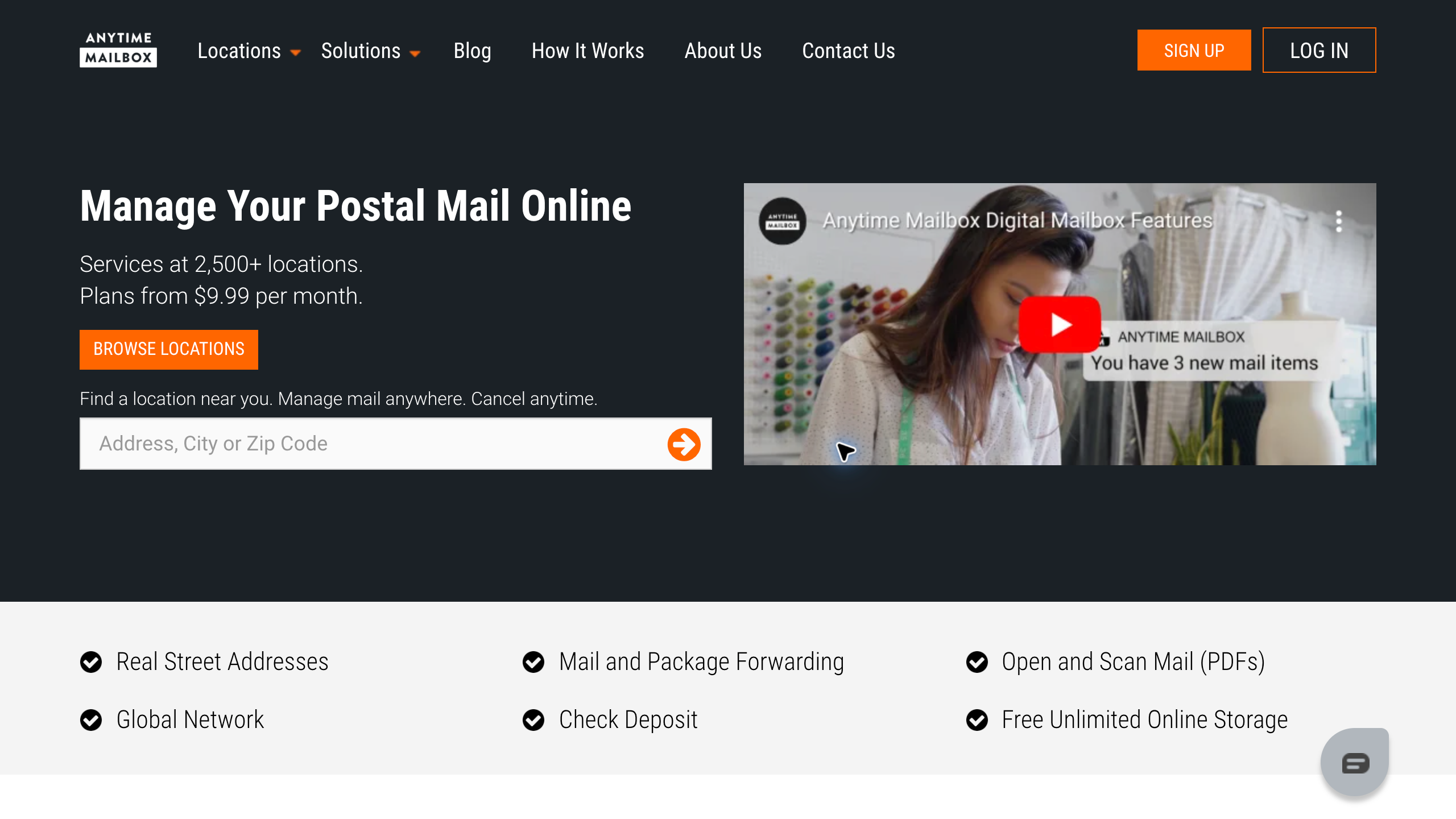
Look at the exact location’s plan, scanning fees, package handling, forwarding, pickup arrangements, and check-deposit availability. The company advertises remote mail management, but some services depend on the selected mail center.
My take: shortlist the address first, then read its service details. Two locations under the same brand can suit different needs. If a particular city is useful for your business correspondence, compare that location with another provider in the same city.
Also check the address use you have in mind. Anytime Mailbox cautions that official business registration and banking uses can face restrictions. Get confirmation from the organization that will receive the address before you change important records.
2. iPostal1: separate a personal mailbox from a business address
iPostal1 makes sense to compare when you want to distinguish personal mail from business mail. Its published categories include a personal mailing address, a business address, and a virtual-office option with phone and fax.
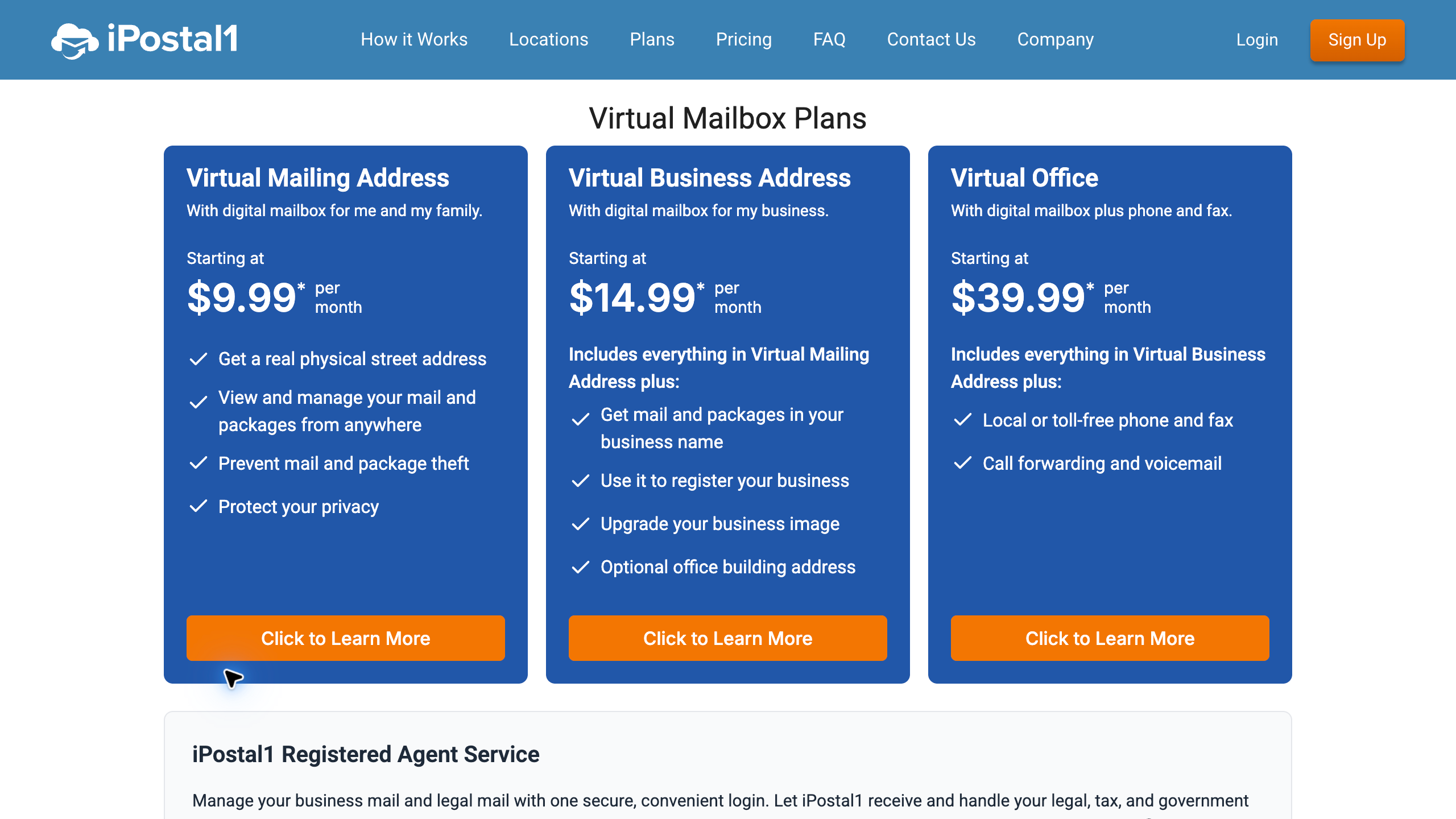
The advertised starting prices are $9.99 per month for a personal mailbox and $14.99 per month for a business address. Those are entry prices. Check the chosen address, included mail volume, and extra services before deciding what the plan will cost you.
My take: choose the category that matches whose name will appear on the mail. Do not pick a personal plan just because its headline price is lower if the service you need is business mail handling.
If you are comparing several addresses, make a separate cost line for each. Keep recipients and mail-volume allowances clear so you can compare the actual operation rather than a collection of starting prices.
3. Traveling Mailbox: look closely at the included scanning allowance
Traveling Mailbox is worth comparing if your main job is reading letters remotely. Its published Basic plan is $15 per month and includes 40 incoming envelopes, 35 page scans, and three recipients.
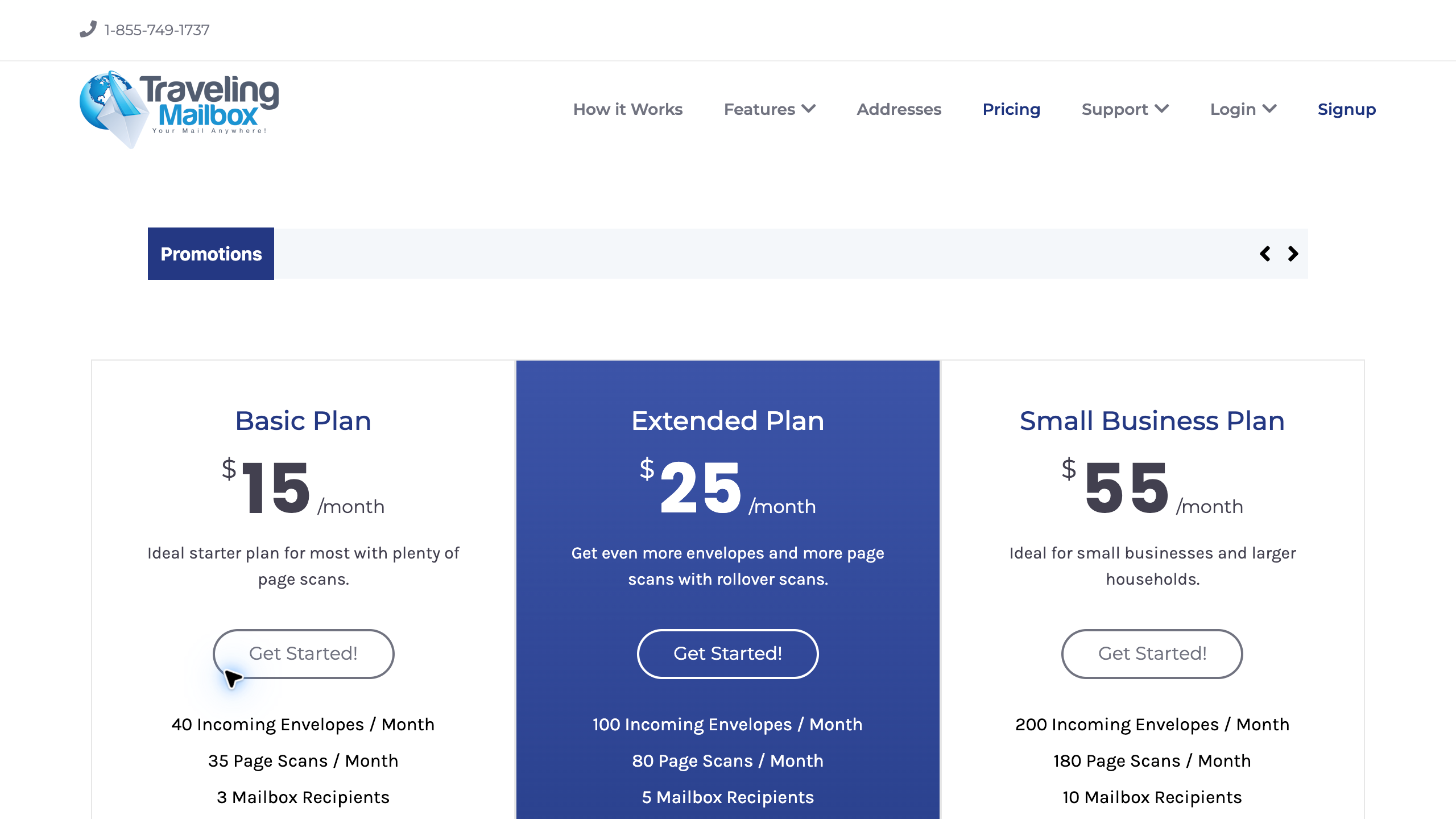
That distinction between envelopes and pages matters. A single envelope can contain a document with several pages. Your incoming-mail allowance and your scanning allowance are separate things to work through.
My take: count the paperwork you actually need to read. Someone receiving a few short letters has different requirements from a business receiving long statements or contracts. Use a sample month instead of guessing from the plan name.
Review the selected address and any forwarding or extra-service costs before signing up. An included scanning allowance helps you compare plans, but it does not mean every physical shipment or optional task is included.
Start with the business model, then choose the tools. Read my high-ticket dropshipping guide →
4. PostScan Mail: compare incoming items with opening and scanning
PostScan Mail is another option for comparing locations and usage levels. Its monthly Starter plan is advertised as low as $10 per month with 30 incoming letters or packages.
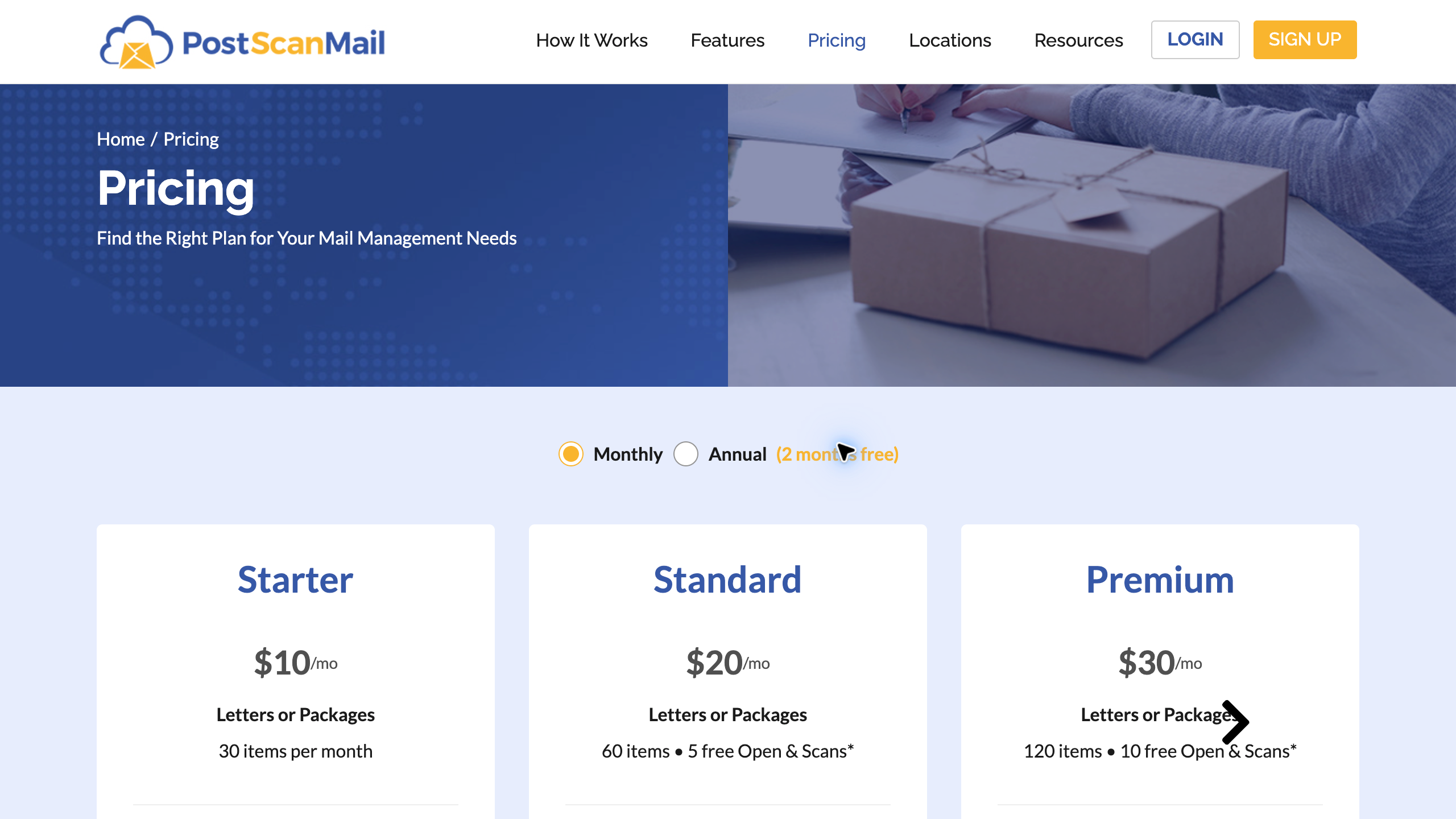
Opening and scanning is a separate part of the comparison. The published Standard and Premium plans include different amounts of open-and-scan service. Read the chosen plan carefully instead of assuming that every incoming item will be opened and scanned within the subscription.
My take: this is a good example of why you need a usage estimate before choosing a mailbox. Receiving an item and reading its contents online are two different actions.
Check the address, recipient allowance, storage rules, and forwarding costs together. The lowest advertised rate is a starting point for the quote, not a complete picture of your monthly bill.
5. VirtualPostMail: choose the right address product
VirtualPostMail is worth comparing when you need to think carefully about the type of address service. Its offerings distinguish a virtual mailbox from TruLease and TruResidence.
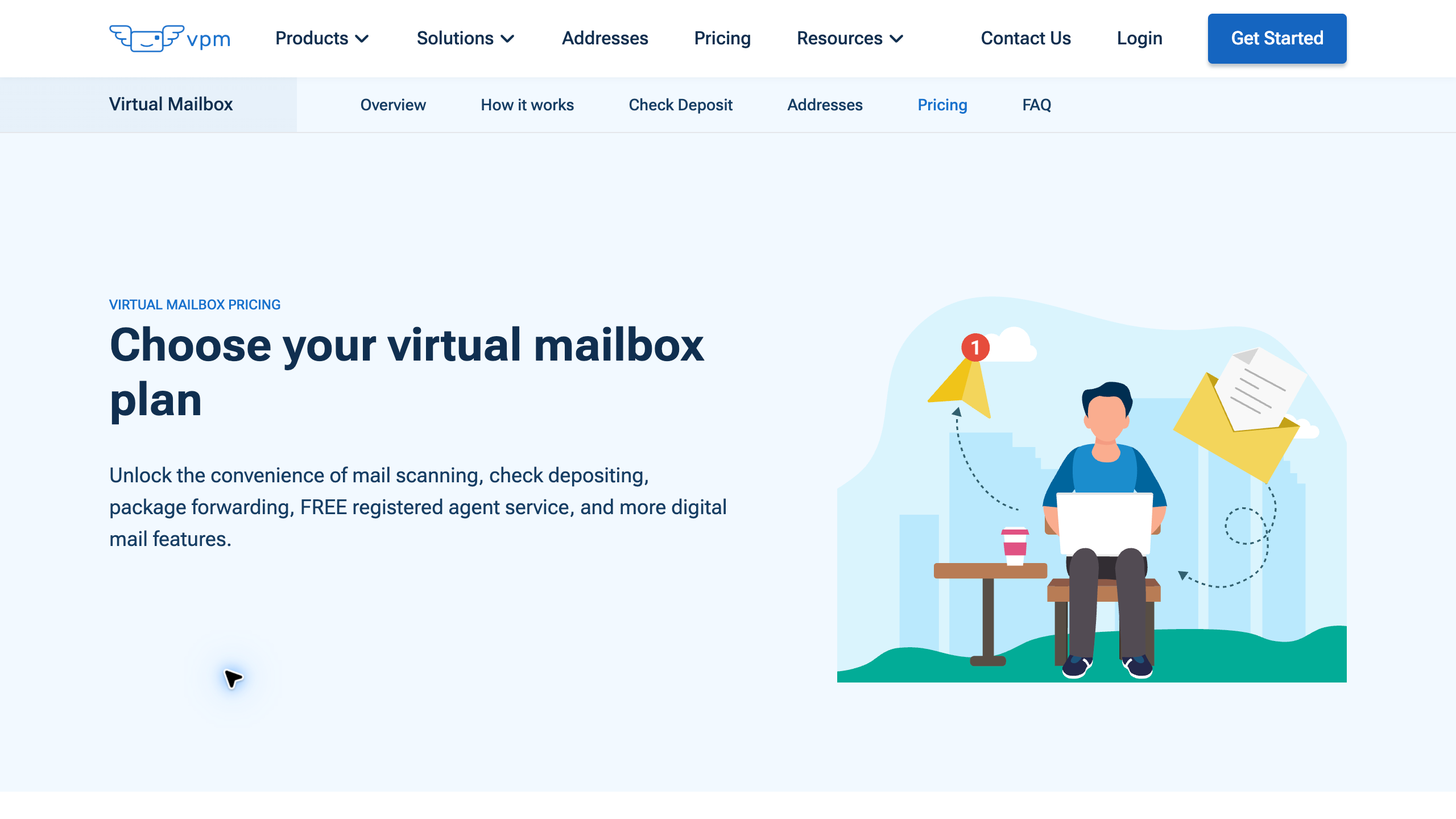
The mailbox pricing table displayed Starter at $20 per month, Plus at $35, Business at $60, and Premium at $90 during this review. Compare the included recipients, scanning, storage, and optional services for your situation.
My take: do not assume that every address product solves the same problem. The provider specifically separates ordinary mail management from products intended for physical-office or residential-address needs.
If an institution requires supporting address documents, start with those requirements. Ask the provider about the right product and confirm acceptance with that institution. A product description cannot guarantee a separate organization’s decision.
6. US Global Mail: compare the workflow as your business grows
US Global Mail is worth reviewing when the mailbox is part of a business workflow rather than just a place for occasional personal letters. Its current pricing page separates Scale, Teams, and Enterprise offerings.
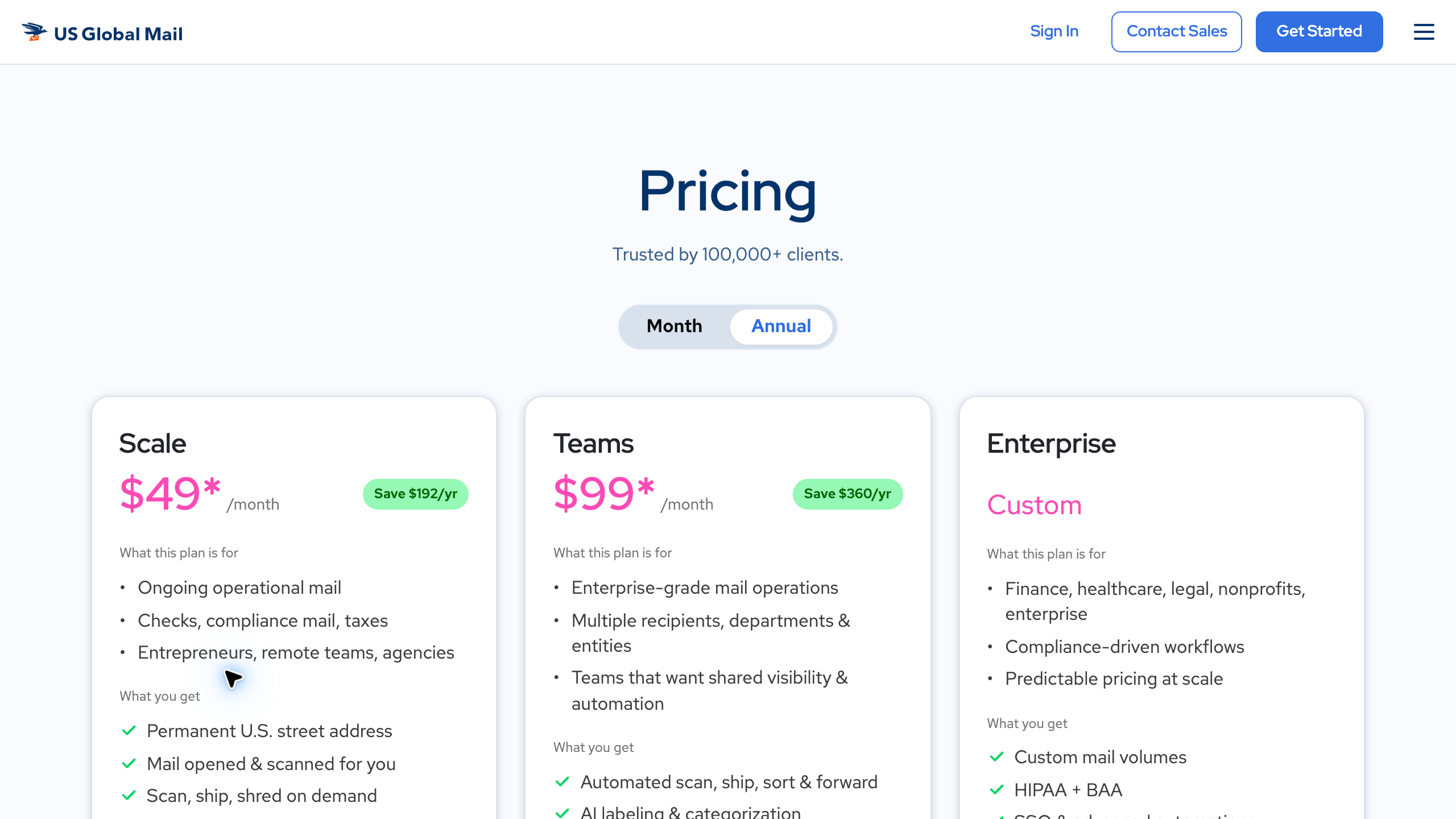
The page describes different recipient, user, scanning, storage, and automation provisions. Rates depend on the address and billing selection, so request the quote that matches the actual business instead of relying on an older plan name.
My take: work through who needs access and what happens after a scan arrives. A solo founder and a team handling documents for multiple entities need different arrangements.
Check the allowed recipients, extra-user costs, retention rules, and forwarding process. Paying for a broader plan makes sense when the extra workflow is useful, not simply because the plan sounds more professional.
7. PO Box Zone: work through the annual cost and mailout fees
PO Box Zone is worth comparing for a lower-volume mail-forwarding setup. Its published entry plan is $99 per year, equivalent to $8.25 per month but billed annually.
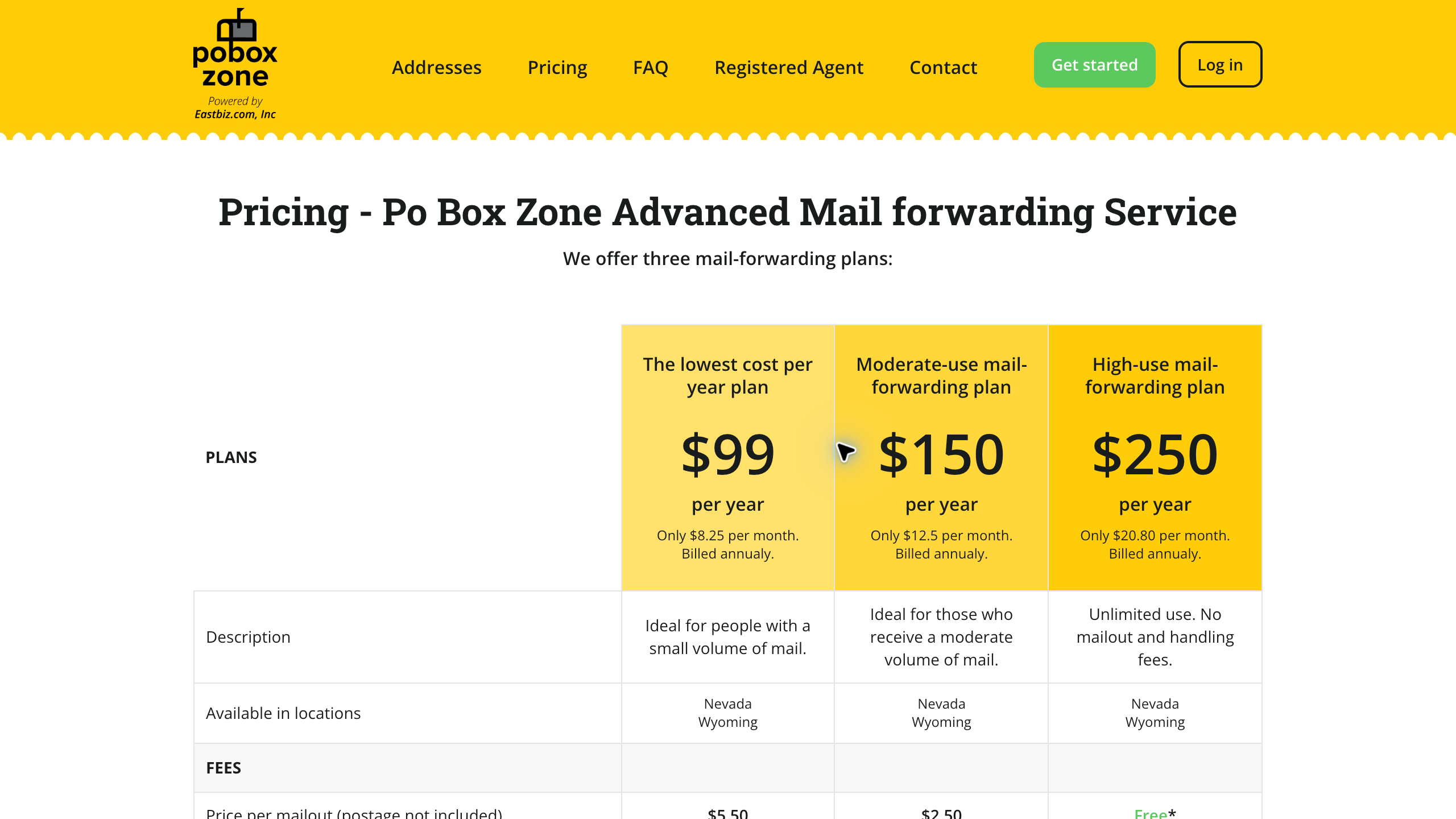
The entry plan also lists a $5.50 charge per mailout before postage and a $1 scanning charge for up to ten pages. Those charges are part of the comparison, especially if you expect to request frequent physical forwarding.
My take: annual pricing can be useful when your needs are steady, but calculate the mailouts. A small subscription does not automatically make the total cheaper for somebody shipping originals every week.
Ask about the chosen address, included names, storage, handling, and the kind of mail you expect to receive. Match the plan to your pattern of use, then compare it with a monthly alternative.
Research the niche before you spend money on the store. Explore my high-ticket niches list →
How I would choose the best virtual mailbox for my business
Start with the job you need it to do
Write down why you need the mailbox. Is it for personal correspondence while traveling, business paperwork, a mailing address on your website, packages, or a team receiving documents? You will make a better decision if you begin with one clear job.
Then separate your essential requirements from the nice extras. A local pickup option may be useful if you regularly visit the city. It may have little value if you live on the other side of the world and expect everything to be scanned or forwarded.
Estimate a normal month
Count the incoming envelopes, pages you expect to scan, packages, recipients, and physical shipments you will request. Use your existing mail where possible. If you are starting from scratch, write down an explicit estimate and review it after the first month.
Here is a hypothetical example: a $15 subscription plus $8 of scanning charges, $6 of handling, and $18 of postage totals $47 for that month. Those are example inputs, not one provider’s quote. The point is to include the actions you expect to request.
Check the address before changing your records
A useful mailing address does not automatically meet every business, banking, or residency requirement. The organization requesting the address decides what it accepts. Ask about the exact intended use before paying for an annual commitment or updating important accounts.
Keep the conversation specific. “Can you receive business mail in this company name?” is a different question from “Will my bank accept this as a physical business address?” Get answers to both if both matter to you.
Choose a service you can maintain
Think about how often you will log in and who will act on important documents. If a letter creates a deadline, someone needs to record it and complete the task. A digital scan is useful, but the scan itself does not finish the work.
Keep a simple process: check new mail, request the necessary scans, save the useful documents, act on deadlines, and decide what to forward or discard. Put the job on your calendar so it stays part of the business routine.
The fees that make comparisons confusing
Several mailbox plans can have a similar monthly subscription while producing very different totals. Compare incoming-mail limits, opening and scanning, extra pages, recipients, package handling, storage, mailouts, postage, and any setup or identity-verification charges.
Billing commitments matter too. A monthly equivalent on an annual plan is a useful comparison number, but it is not the amount you are paying each month. Record the upfront bill and the cancellation terms separately.
When comparing quotes, give each provider the same sample month. Otherwise you might compare a basic subscription from one company with a realistic full-use quote from another. That can make the cheaper option look better than it actually is for your situation.
Also consider the cost of changing the address later. Updating correspondence, vendors, and business records takes time. I would spend an extra hour checking the service upfront rather than choose only from the lowest number on the page.
Keep your supplier research organized. Use Supplier Paradise to build a shortlist →
Common mistakes to avoid
Choosing the brand without checking the location. For a network-based service, look at the selected mail center. Its service menu, pickup arrangements, forwarding options, and fees are what your account will depend on.
Assuming that incoming mail means included scans. These allowances are often counted separately. Check both envelopes and pages, especially if you receive statements or longer documents.
Using the address for a purpose you have not confirmed. Verify the institution’s requirements before using a mailbox for banking, registration, or other official records. The mailbox provider’s marketing page is only one part of that decision.
Leaving important mail unattended. Remote access helps when somebody uses it. Assign the task, save the documents you need, and keep track of deadlines after the mail is scanned.
Where the mailbox fits in an online business
A mailbox is one administrative piece of the business. It helps you handle correspondence, but it does not choose the niche, create supplier relationships, build the store, or bring in customers. Keep the tool connected to the bigger operation you are building.
If your goal is a location-independent store, start with my high-ticket dropshipping guide. It explains the model so you can work out which parts of the business need attention first.
My high-ticket niches list gives you categories to research before you spend money on a store. Go deep before you go wide.
When you get to supplier work, use my supplier sourcing guide to organize the research and outreach. A supplier’s approval, terms, and shipping process are separate from your mailing-address setup.
You can also use Supplier Paradise to build a focused research shortlist. Its directory entries are leads to verify directly with each company, not guarantees that a supplier will approve your store.
Virtual mailbox FAQs
Is a virtual mailbox the same as email?
No. A virtual mailbox handles physical postal mail at an address. The service gives you an online way to view and manage that mail. Email is a separate communication system, and you will usually need both for an online business.
Can I use a virtual mailbox while living abroad?
These services are worth comparing for remote mail management, but confirm your eligibility, identification requirements, and the destination you want originals forwarded to. Ask for a realistic forwarding quote if international shipments are part of your normal routine.
Does a mailbox replace a registered agent?
Do not assume that it does. Receiving ordinary correspondence and providing registered-agent service are different functions. Some providers sell or include related services, but check the exact offering, available state, and requirements for your business.
What is USPS Form 1583?
Mailbox providers may require this authorization as part of receiving U.S. mail on your behalf, along with identity verification. Follow the selected provider’s current application process and use accurate information. Complete the setup before directing important correspondence to the new address.
Should I pay monthly or annually?
Compare the full commitment and your expected usage. A monthly plan may be useful while you learn the service. An annual plan can suit stable needs, but make sure you understand the upfront charge, renewal, cancellation, and any usage costs. A cheap plan can be enough if its allowances cover your actual needs.
My recommendation: pick the workflow, then the provider
I would start by shortlisting two or three services that fit the address and the work you need done. Compare them using the same mail volume, scan requirements, recipient count, and forwarding pattern. You will get a much clearer answer than comparing subscription prices alone.
The seven services above give you different options to investigate. Location choice, included scanning, business-versus-personal plans, annual billing, and team features all create useful reasons to consider one service over another. Confirm the details that matter to your situation before you commit.
If you want help connecting the administrative setup to the bigger business, check out my private coaching. Bring your actual questions about the niche, suppliers, store, and operations so we can work on the next useful step.
If you need help with the complete launch, review the Ecommerce Paradise done-for-you store service. The mailbox is one tool. The goal is an operation you understand and can run consistently.
Keep it simple. Choose the right service, complete the setup, and build a routine for handling the mail. Then get back to the work that moves the business forward.
Research reviewed October 10, 2026 using the providers’ official pricing and service information. This comparison evaluates published offers, not a hands-on service benchmark. Prices and location-level terms can change.
Want help building the complete operation? Review the Ecommerce Paradise done-for-you business build →

Trevor Fenner is the founder of Ecommerce Paradise. His main projects are Ecommerce Paradise, Supplier Paradise, and Review Paradise, which is currently in development. TrevorFenner.com publishes research-based reviews and practical guides to online business tools and remote-work services, with clear affiliate disclosures.