
The best affiliate marketing tools depend on which side of the business you are building. If you publish recommendations and earn commissions, you need research, useful content and a reliable way to manage your links. If you sell your own products and want partners to promote them, you need a different system for referrals, commission rules and payouts.
I would not buy merchant affiliate software just because you want to start an affiliate blog. That is an easy way to spend money on the wrong job. Start by deciding whether you are the publisher, the merchant or a business doing both.
At Ecommerce Paradise, I focus on building a business around clear processes. The same idea applies here: choose the tool after you understand the work, not before.
This guide compares KWFinder for publisher research, LeadDyno for a merchant’s affiliate program and PayKickstart for merchants who also need checkout and billing workflows. They are not interchangeable competitors, and you do not need all three to get started.
The recommendations are based on official provider pages checked October 11, 2026. Public screenshots are research references, not evidence that I personally tested a paid account, a commission payout or a conversion. No tool guarantees traffic, partner recruitment or earnings.
Affiliate disclosure: some links in this article are affiliate links, and I may earn a commission at no additional cost to you. I own Ecommerce Paradise and Supplier Paradise, which are mentioned where relevant.
Find a useful question before buying a bigger stack. Explore KWFinder’s research workflow →
Quick comparison: research, partner management or billing
| Tool | Who should evaluate it? | Observed pricing context | Important limit |
|---|---|---|---|
| KWFinder | Content-led publishers researching search demand | Mangools Basic annual equivalent $37.70/month, $452.40/year | Research estimates do not guarantee rankings |
| LeadDyno | Merchants managing partners | Lite $49/month | 50 active affiliates, one commission plan |
| PayKickstart | Merchants needing checkout, billing and affiliates | $79/month at displayed $3,000 revenue band | Displayed 5.27% overage fee; processor costs separate |
These are three different jobs, not a shopping list for every new affiliate business. Start with the job you need to do now. Prices and allowances can change, so review the current offer before making a commitment.
Choose the affiliate marketing job before the software
An affiliate publisher earns by helping an audience choose another business’s product. The publisher needs permission to promote the offer, accurate information, a working tracked link and a clear disclosure. A merchant affiliate platform does not supply those things automatically.
A merchant owns the offer and recruits partners to promote it. That business needs written commission rules, a way to identify eligible referrals, an approval process and a reliable payout procedure. It also needs a product people actually want to recommend.
If you operate both models, keep their records separate. Commission income from other companies is not the same as the commission expense you owe your own partners. A dashboard that looks organized can still hide a confusing process if you mix those two flows.
I would write a one-sentence description of the next problem you need to solve. For a publisher, that might be finding ten useful buyer questions. For a merchant, it might be replacing a spreadsheet that cannot explain which refunded purchases should reduce a partner’s commission.
What the best affiliate marketing tools can actually help with
1. KWFinder: research for a content-led publisher
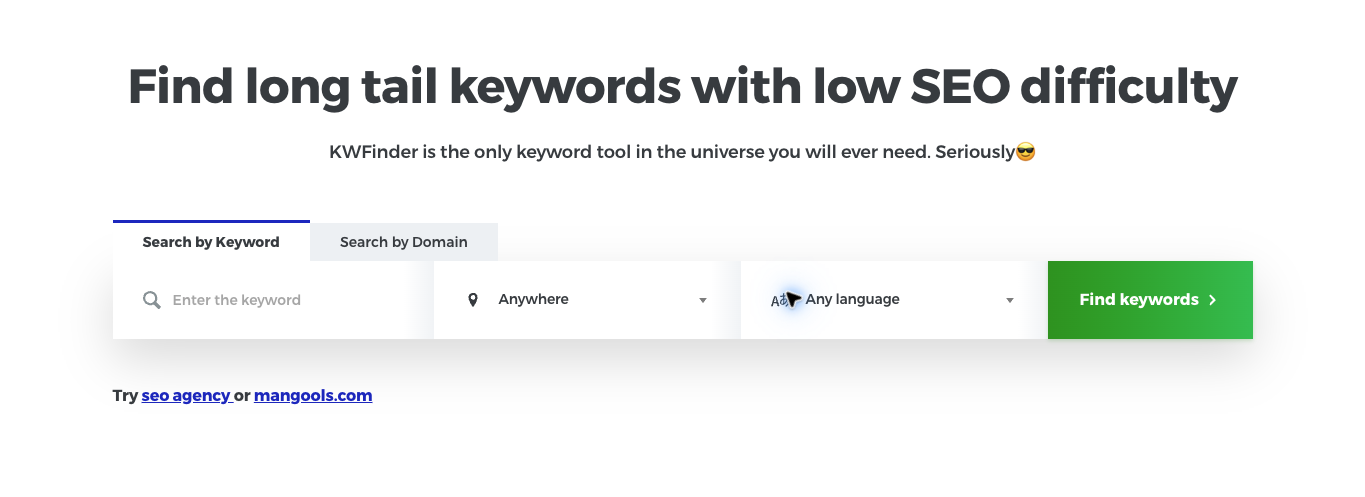
I would consider KWFinder for researching the questions and comparisons your audience searches for. It helps you organize keyword ideas and inspect search demand, difficulty and the current results. It does not write a trustworthy recommendation for you.
Choose the location and language deliberately. A search-volume estimate for one market should not become a claim about worldwide demand. Treat difficulty scores as research signals, not a promise that your new article will rank.
The annual pricing view checked for this guide showed Mangools Basic at $37.70 per month equivalent, billed $452.40 per year. That is not a month-to-month price. Verify the current selected billing option and allowance before subscribing.
The observed Basic allowance was 100 keyword-research requests per 24 hours. More capacity is useful only when you have a process for turning research into finished articles. Collecting hundreds of keywords does not help if none of them become a useful page.
I would research one cluster at a time, identify distinct reader questions and record the intended page for each. A review, a pricing explanation and a comparison may need separate pages, but five articles answering the same question can compete with one another. Go deep before you go wide.
My keyword research tools comparison goes deeper into the software choice. For this article, the key is that research helps you choose work worth doing; it does not do the editorial work for you.
Start with a business category you can research properly. Explore the free niches resource →
2. LeadDyno: manage partners promoting your own business
I would consider LeadDyno when you already have an offer and need to manage a merchant affiliate program. The useful questions are about referral tracking, partner onboarding, commission rules and the integrations your actual business needs.
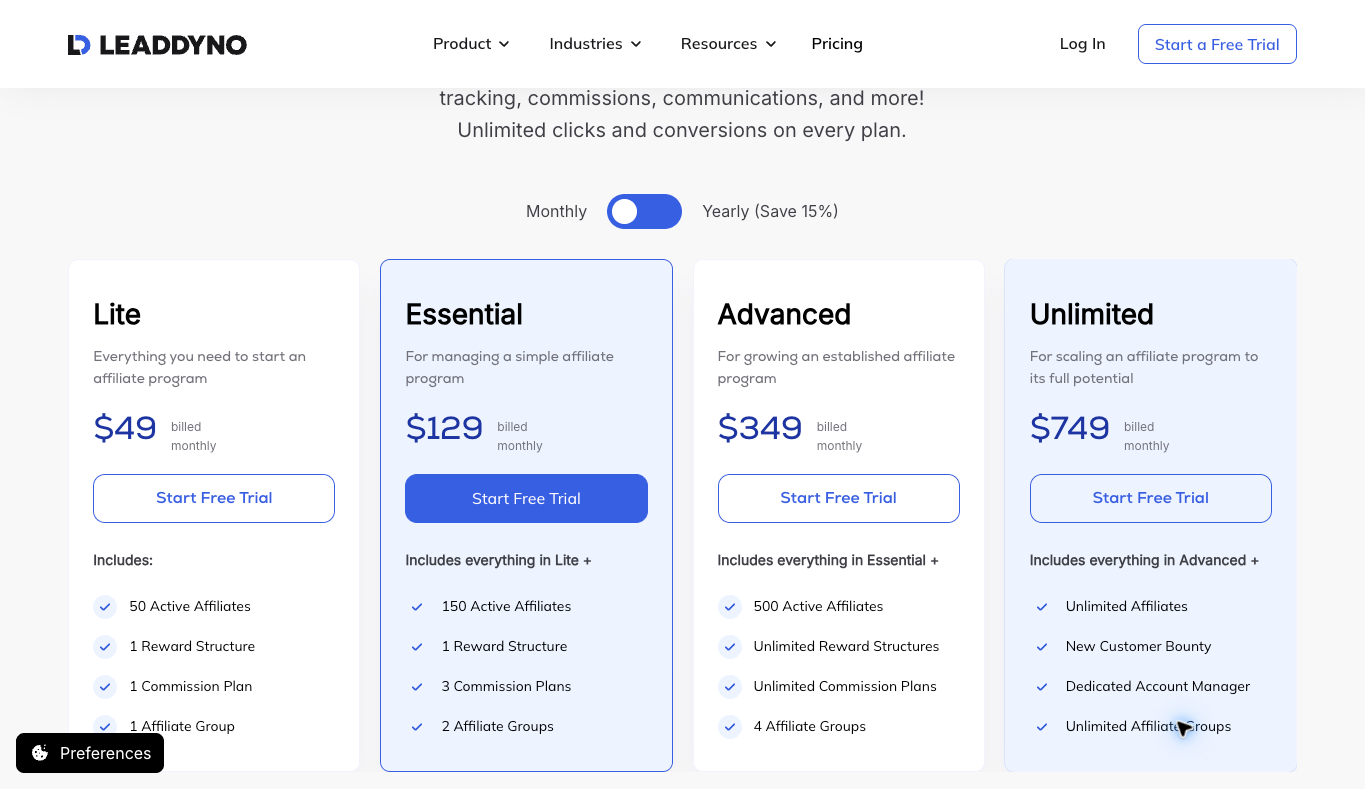
The public monthly plans showed Lite at $49, Essential at $129, Advanced at $349 and Unlimited at $749. The active-affiliate caps were 50, 150, 500 and unlimited respectively. Unlimited clicks and conversions do not mean unlimited active affiliates on every plan.
Lite included one reward structure, one commission plan and one affiliate group. If you need different terms for several products or partner types, compare the higher tiers against that requirement. Do not choose a tier based only on the number of people you hope will join.
The public page described a 30-day trial followed by automatic charging unless cancelled. Confirm the terms and the cancellation process for your integration. The FAQ said Shopify users need to uninstall the app through Shopify to cancel.
I would evaluate LeadDyno’s current plans against a written commission policy. Decide when commissions become payable, what a refund changes and who answers a partner’s question before recruiting your first group.
3. PayKickstart: checkout, billing and a merchant affiliate workflow
I would consider PayKickstart when affiliate management is part of a wider checkout and recurring-billing requirement. That is a different purchase from adding a research tool to an affiliate blog.
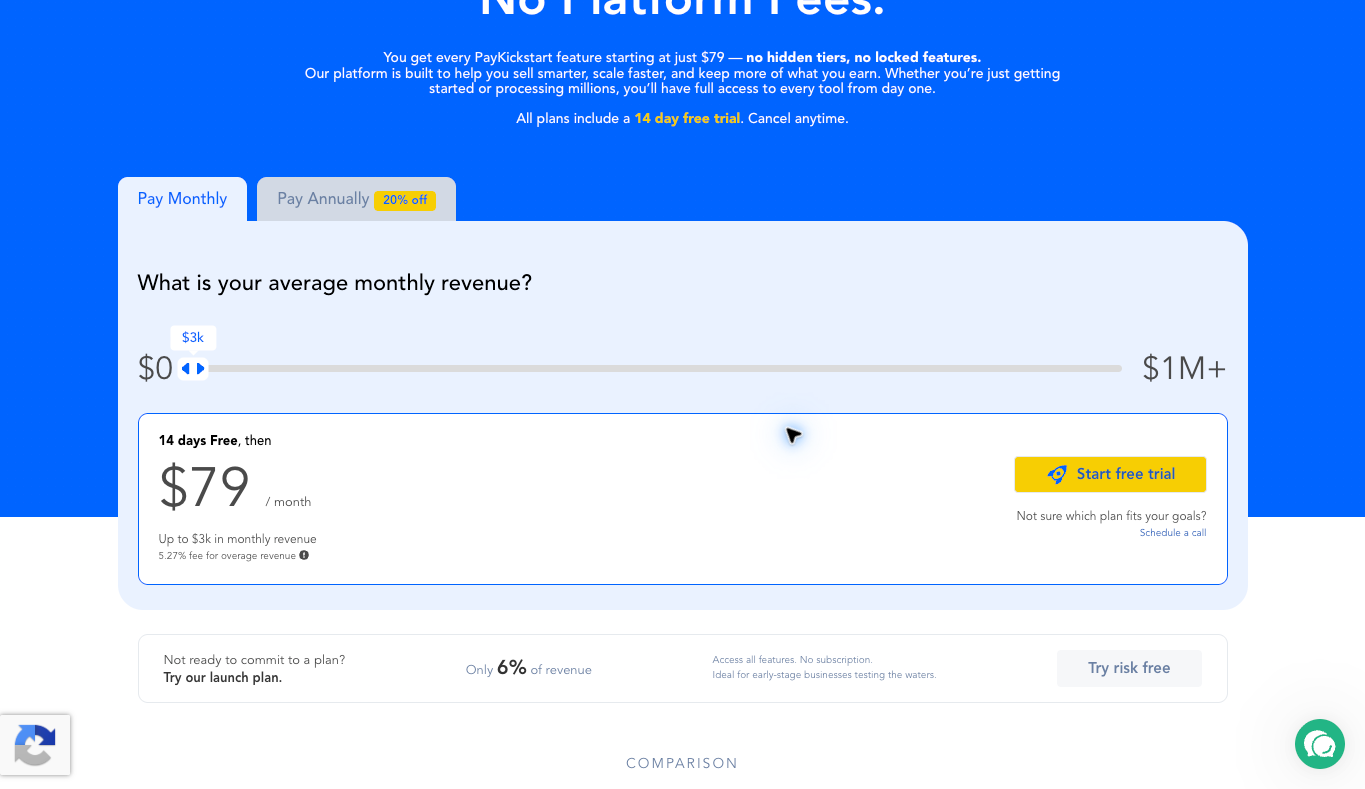
The public monthly pricing display showed $79 at the selected band of up to $3,000 in monthly revenue. It also showed a 5.27% fee for overage revenue. Do not assume $79 is the cost at every revenue level, or repeat a no-fees headline without reading the selected band.
A separate launch option showed 6% of revenue without a subscription. Payment processing and optional usage charges need their own review. Compare the total cost under a realistic revenue scenario rather than treating the lowest advertised number as your final bill.
The public page described a 14-day trial. Before moving a live business, verify the checkout, refund, subscription and affiliate-commission workflow through an authorized test process. This article does not claim that I ran those tests.
Write down which system owns the customer record, subscription state and product access. A successful payment is not enough if the buyer cannot access the product or a partner gets credit for the wrong transaction. That handoff matters as much as the checkout design.
If you need those jobs together, review PayKickstart’s current revenue-based pricing. If you only publish recommendations for other companies, a merchant checkout platform may not belong in your stack at all.
Build a publisher workflow before adding more tools
For a content-led publisher, I would start with a manageable editorial routine. Choose one reader problem, check the current product information, explain the useful differences and give the reader an honest next step. A comparison should help someone decide, not simply list every program you can earn from.
Keep a record of the source page, the date checked and the exact affiliate destination. Those records make an update much easier when a provider changes its plans or ends a program. They also prevent a writer from using an old price because it appeared in another article.
Do not turn a provider’s testimonial into your own experience. If you researched the public page, say that. If you have actually tested a product, describe the test and its limits. Those are different kinds of evidence, and the reader deserves to know which one you have.
Keep an offer inventory separate from your content calendar. The inventory tells you what you are allowed to promote and where the link should go. The calendar tells you what the reader needs next. Let both inform the article without making the commission rate the only editorial decision.
My affiliate programs comparison is a useful starting point for thinking about offer fit. Software cannot repair a mismatch between the audience’s problem and the product you are promoting.
For merchants, write the partner rules first
A partner program needs more than a sign-up form. Decide who can join, which products qualify, what promotional methods you permit and when a commission is approved. Partners should not have to discover the rules only after they send a customer.
Choose how you handle coupon attribution, repeat purchases, refunds and disputed orders. If two partners touch the same buyer, define the rule your system uses. Do not promise every partner credit for the same order unless your program deliberately supports that arrangement.
Then build the onboarding material. Give partners accurate product descriptions, current offer details and clear disclosure expectations. A folder full of banners is not a substitute for answering questions about what the customer actually receives.
Budget for commission payments as a real business expense. A profitable sale before commissions can become an unprofitable sale after commissions, processing costs, refunds and support. Review the numbers before announcing a reward that is difficult to sustain.
Your business foundation matters here too. Account ownership, records and written responsibilities need to match the actual business. Get appropriate professional advice for legal or tax obligations rather than assuming software handles them.
Connect the store setup to the way it will operate. See the done-for-you store build service →
Use a realistic cost and workload example
Here is a hypothetical example, not a provider quote or an earnings forecast. Suppose your own offer sells for $200 and you approve a 20% partner commission. The commission is $40 per eligible sale before considering processing, refunds, delivery and support.
If ten eligible sales remain after your approval period, that is $400 owed to partners. The software subscription is another expense. A report showing $2,000 in revenue does not establish your profit, and a pending commission is not money you can spend twice.
For a publisher, the calculation works differently. Suppose a research subscription costs $50 a month and your approved commissions total $35. You are still $15 short of covering that subscription, before hosting, writing time or any other expense. More tools do not automatically improve the calculation.
I would review the tool against an actual bottleneck. Does it save meaningful time, prevent mistakes or help produce useful work you could not otherwise complete? Keep the subscription only if its value is clear under your business’s numbers, not someone else’s screenshot.
Check policies and feature promises before committing
Email platforms have content rules. Do not assume that an email tool allowing some affiliate links also permits an affiliate-only newsletter or every topic you might promote. Review the current policy for your specific use case before moving your list.
Feature descriptions can also conflict. During this research, Kartra’s Growth card listed affiliates, while its comparison table placed affiliate management only under Professional. I am not making a firm affiliate-management tier recommendation from that contradictory page. Confirm the required feature and plan with the provider before buying.
That does not mean you need to stop building the business. It means you should not base a purchase on an unresolved assumption. Choose another verified option if it fits, or get a clear answer about the requirement you need.
Tracking is not a guarantee either. A working tracked redirect confirms the route you configured, not that every browser, purchase and payment will produce a commission. Follow the program’s reporting and dispute process, and avoid promising partners perfect attribution.
Learn the model before expanding the stack. Explore the Ecommerce Paradise masterclass →
Connect affiliate content to a real ecommerce business
A niche store and an affiliate publication can cover related buyer questions, but they are not the same business model. My high-ticket dropshipping guide explains the store model. Be clear about whether you are selling the product or referring the buyer elsewhere.
Use product categories you can explain well. The high-ticket niches list can help you explore ideas, but you still need to check the actual audience, offers and competition. A niche name is not evidence that a particular affiliate program will be profitable.
If you also want to sell products as a dealer, read the supplier sourcing guide. An affiliate approval and an authorized dealer agreement create different responsibilities. Do not substitute one for the other.
Supplier Paradise is another supplier-discovery starting point I own. A listing does not guarantee an affiliate opportunity, dealer approval or a particular integration. Confirm those arrangements directly before building content or a store around them.
How I would choose the best affiliate marketing tools
For a publisher, I would evaluate the research workflow first and avoid buying merchant program software by mistake. For a merchant with a simple program, I would evaluate LeadDyno against the partner rules and integration needs. For a merchant with checkout and recurring-billing requirements, I would evaluate PayKickstart’s combined workflow and total costs.
Choose one clear improvement to validate before adding another tool. Keep a record of the cost, the work it supports and what would justify an upgrade. That makes it easier to stop paying for features your business does not use.
Frequently asked questions
Do beginners need affiliate-management software?
Not simply to promote other companies’ products. Merchant program software is for a business managing its own partners. A publisher should start with useful content, approved offers, disclosures and a reliable link process.
Does KWFinder guarantee an article will rank?
No. Demand and difficulty estimates help with research, but rankings depend on the page, competition and other factors. Inspect the actual results and create something useful for the reader.
Are unlimited clicks the same as unlimited affiliates?
No. LeadDyno’s observed plans had different active-affiliate caps even though the pricing page advertised unlimited clicks and conversions. Check the allowance that applies to your program.
Is PayKickstart always $79 a month?
No. That was the displayed monthly price at a particular revenue band. The page also showed an overage fee and a separate revenue-share launch option. Review the selected band and all relevant costs.
Can software guarantee affiliate earnings?
No. It can support research, tracking or operations, but you still need a relevant audience, a useful offer and work that helps people make decisions. Do not treat a subscription as an income plan.
Need help choosing the next business step? Explore Ecommerce Paradise coaching →
Related guides
My AI content tools comparison explains why sources and editorial judgment come before automated drafting.
The course platform comparison covers a different choice for creators selling their own educational product.
Read the ecommerce platform comparison before choosing the foundation for a product-selling business.
My virtual assistant hiring guide helps you define a role before delegating content or partner administration.
The accounting software comparison is relevant when you need to separate commission income from partner-program expenses.

Trevor Fenner is the founder of Ecommerce Paradise. His main projects are Ecommerce Paradise, Supplier Paradise, and Review Paradise, which is currently in development. TrevorFenner.com publishes research-based reviews and practical guides to online business tools and remote-work services, with clear affiliate disclosures.