
The best Amazon seller tools are the ones that solve a problem in the business you actually operate. Product research, listing work and repricing are different jobs. Buying software for all three before you understand your numbers can turn a small operation into an expensive stack pretty quickly.
I would start by separating research from daily operations. Helium 10 is worth evaluating for research and listing workflows. Feedvisor is worth evaluating when ongoing pricing decisions are a real operational bottleneck. Neither should be treated as a guarantee that a product will sell or that your margin will improve.
At Ecommerce Paradise, I focus on building a business around clear supplier relationships and processes. Those fundamentals matter on a marketplace too, even though Amazon has its own account, listing and fulfillment requirements.
This comparison is based on current official public sources checked October 11, 2026. It is not a claim that I connected an Amazon account, purchased a paid plan or tested a repricing campaign. Research estimates, provider marketing and real business results are different kinds of information.
Affiliate disclosure: some links in this article are affiliate links, and I may earn a commission at no additional cost to you. I also own Ecommerce Paradise and Supplier Paradise.
Start with a research question you can actually use. Explore Helium 10’s current tool suite →
Quick comparison: research versus pricing operations
| Tool | Starting job | Pricing context | What to verify |
|---|---|---|---|
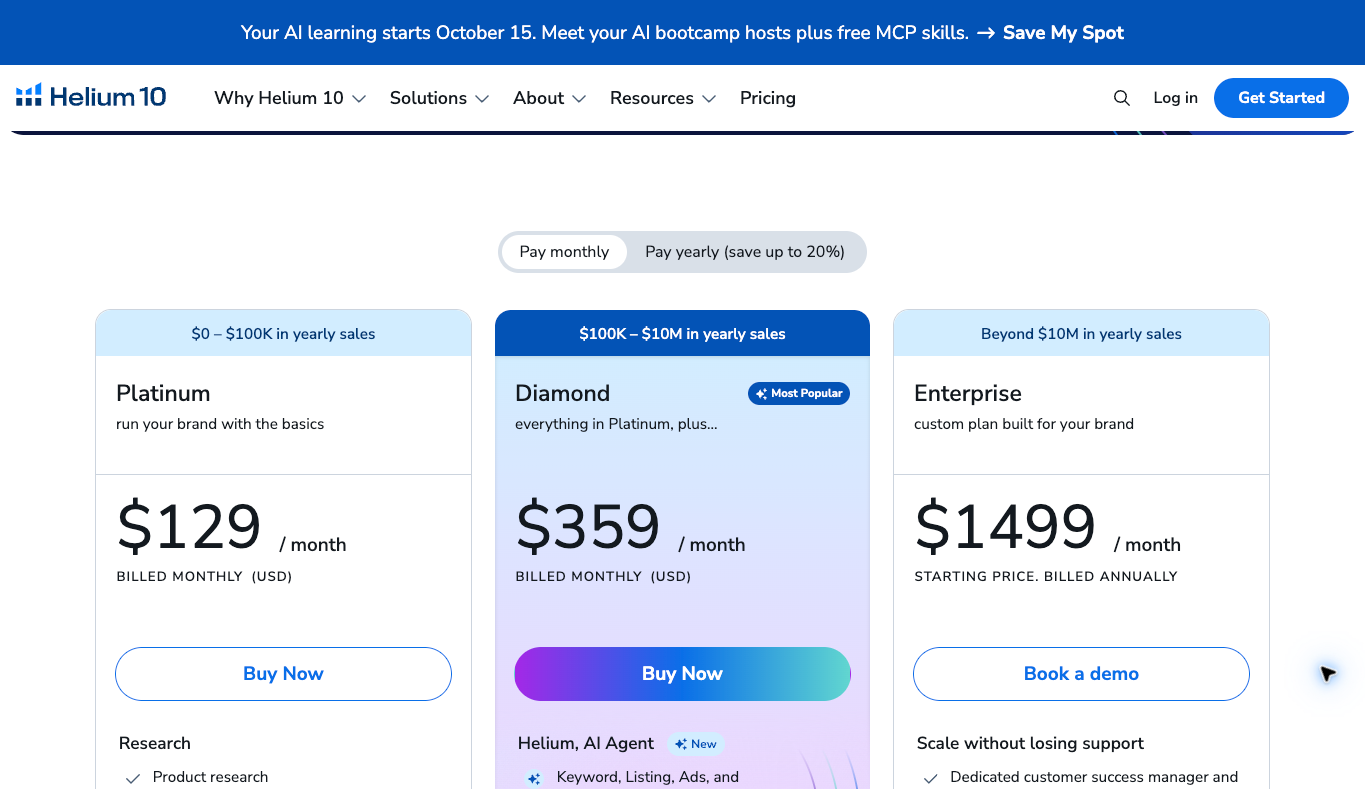
| Helium 10 | Product research, keywords and listing workflows | Platinum $129 monthly or $99/month equivalent billed annually | Current tier features, usage limits and promotion terms |
| Feedvisor | Dynamic pricing and ongoing repricing decisions | No fixed subscription price displayed on the inspected offer page | Written quote, catalog fit, costs and price controls |
These tools do not replace one another just because both serve Amazon sellers. Choose the job first, then compare the cost and requirements. A research subscription is not a substitute for a pricing process, and a repricer is not proof that a product has demand.
Start with your seller model and the next job
A private-label brand researching a new product has different needs from a reseller competing on an existing listing. A seller preparing inventory for fulfillment has another set of tasks. Decide which operation you are building before comparing tool subscriptions.
Write down your next bottleneck in one sentence. It might be researching buyer demand, improving a listing, understanding inventory costs or keeping prices inside a sensible range. If you cannot identify the job, I would hold off on another subscription.
Also check what your existing systems already provide. Paying for overlapping reports can make the operation harder to understand rather than easier. Decide which system is the source of truth for each number and what data it uses.
What the best Amazon seller tools can help you do
1. Helium 10: evaluate research and listing workflows
I would consider Helium 10 when you need to organize product and keyword research or evaluate listing workflows. Use it to build questions worth investigating, not to turn an estimated sales number into a promise.
Start with products you understand and record the assumptions behind each candidate. Look at competition, fulfillment requirements, supplier access and your actual landed cost. A product can look attractive in a research report and still be a poor fit for your operation.
The public partner landing page offered promotional codes, while official product pages showed annual-plan prices. Those are different pricing contexts. Compare the plan, billing commitment and promotion duration you select before deciding what the software will cost after the offer ends.
Do not buy a higher plan just because it has more tools. Identify the feature and allowance you need, then verify that the current tier includes it. A limit on research uses can matter if your team runs the same workflow every day.
The current official pricing comparison listed Platinum at $129 per month with monthly billing, or $99 per month equivalent billed annually. Diamond was $359 monthly or $279 per month equivalent annually. Those are different commitments, and applicable taxes are added at checkout.
I would compare the standard price and the price after any promotion ends. Also check costs for optional services, especially advertising management. A software subscription does not automatically cover your ad budget, managed-spend charges or the cost of inventory.
If research and listing work are your bottleneck, check Helium 10’s current plan details against the exact task. Keep a record of the tier and allowance you selected so another person on your team does not assume every feature is unlimited.
Explore categories before committing to a software stack. Review the free Ecommerce Paradise niches resource →
2. Feedvisor: evaluate an ongoing pricing problem
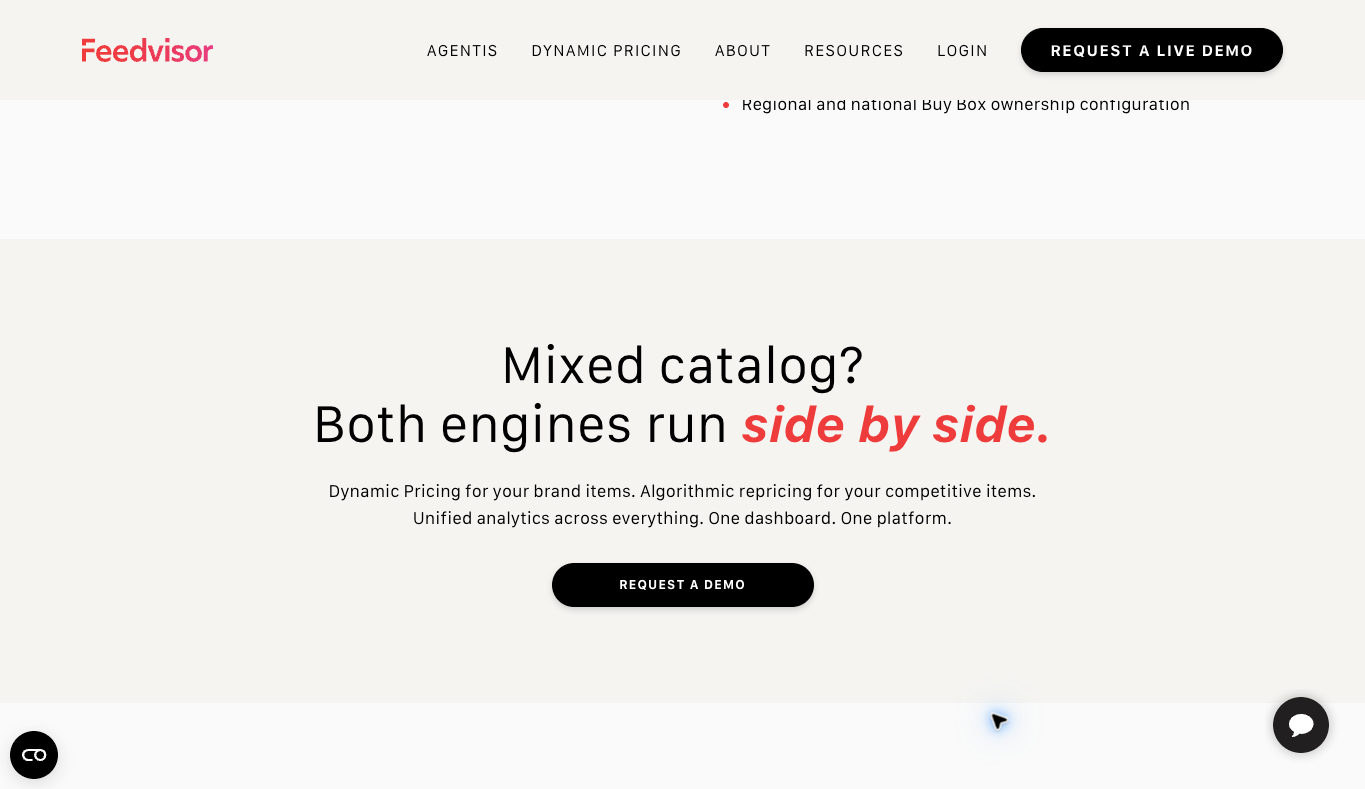
I would consider Feedvisor when pricing is an ongoing operational decision across an established catalog. Its current public offer describes dynamic pricing for brand items and algorithmic repricing for competitive items.
The public offer page did not display a fixed subscription price. Get a quote for the actual catalog and required service rather than assuming an old entry-level price applies. Confirm the total charge, contract terms and support scope before committing.
Repricing needs reliable cost data and clear boundaries. Decide your floor, ceiling and exception process before allowing a system to change prices. A price that moves faster is not automatically a price that produces better profit.
Provider claims about Buy Box performance or improved margins are not guarantees for your business. Ask what information the tool needs, which decisions it controls and how you review its changes. Keep an owner responsible for the result.
A mixed catalog may need different rules for your own brand’s products and products with competing offers. Do not assume one price strategy suits every item. Define the exceptions and review a manageable group before expanding automation.
If those are real operational problems, evaluate Feedvisor’s current offering and ask for the details your catalog requires. I would not buy a repricing system simply because a provider’s case study shows impressive growth.
Research estimates are not purchase orders
A research tool can help you find patterns, but you still need to understand how its estimates are produced and what they exclude. Seasonality, competing offers and changes in availability can affect the picture. A snapshot is not a complete business plan.
I would compare several signals and write down what would invalidate the idea. That might be supplier terms you cannot meet, a margin too small to absorb returns or a product restriction you have not resolved. Finding that problem before buying inventory is useful progress.
Keep your evidence separate from your enthusiasm. A provider’s marketing example is not your result, and another seller’s revenue screenshot is not your unit economics. Make the decision using information you can explain and check.
Build a unit-cost calculation before setting a price floor
Here is a hypothetical example, not an Amazon fee quote. Suppose a product sells for $100. Your purchase cost is $40, inbound freight and preparation are $5, selling and fulfillment costs are $20, advertising averages $10 and your allowance for returns and other costs is $5.
That leaves $20 before general overhead, taxes and any costs missing from the example. If the selling price falls to $90 while those assumed costs stay unchanged, the remainder becomes $10. A small price movement can make a big difference when the margin is already narrow.
Your actual fee structure may change with price, category, fulfillment method and other factors. Use current account and product information for the real calculation. Do not copy the example’s numbers into a repricer and assume they describe your business.
A useful price floor begins with the costs you actually incur and the margin you need. It should also account for situations such as inventory aging, returns and promotional changes. Write down who can approve an exception and how long it applies.
Track software costs separately so you can see the total operating expense. My accounting software comparison is relevant when reports stop matching the books. A software dashboard is helpful, but you still need records you can reconcile.
Check supplier access and marketplace requirements
Finding an attractive product does not mean you have permission to sell it or access to a reliable supplier. Confirm the brand relationship, product documentation and fulfillment arrangement before you build a listing strategy around it. Product research software cannot grant dealer approval.
My supplier sourcing guide explains how I approach the relationship side of a store. Marketplace requirements add another layer that you must check for your specific products and account.
Supplier Paradise is a supplier-discovery resource I own, not a guarantee of Amazon eligibility. A listed supplier may have restrictions on marketplaces or require a particular dealer agreement. Get those answers before purchasing inventory or making a sales promise.
If a supplier ships orders directly, review Amazon’s current dropshipping requirements. Its public guidance requires you to be the seller of record and prevents other parties from being identified on packaging, invoices or packing slips in the prohibited way. Do not assume an arrangement used for your own store automatically meets Amazon’s rules.
My high-ticket dropshipping guide covers the store model I teach. Keep that business model distinct from the specific marketplace rules you agree to follow.
Build around a real supplier and fulfillment process. See the Ecommerce Paradise store build service →
Review app access before connecting an account
An integration may need access to selling data to perform its job. Read what it requests and decide whether that access fits the feature you need. Do not authorize an app merely to see what the dashboard looks like.
Amazon’s public app guidance explains that authorizations can be managed and revoked through Manage Your Apps in Seller Central. Review the current listing and provider documentation for the actual integration. Confirm the current integration requirements before granting access.
Keep account ownership and staff permissions clear. Use the provider’s supported access controls rather than sharing the owner’s login with everyone doing research. Decide who can change billing, pricing rules and integrations.
Your business formation checklist is a broader foundation to review. Software access, billing records and responsibilities should reflect the actual business, not whichever personal account happened to set up the trial.
Validate a small workflow before expanding automation
I would also choose the review period before starting. A few days of activity may tell you whether data is importing correctly, but it may not establish a reliable business result. Separate a technical check from a performance evaluation so you do not confuse a working connection with a profitable strategy.
Record the baseline you are comparing against. For a manual workflow, that might be time spent per product and the number of corrections required. For pricing operations, it might include margin, sell-through and exceptions under the existing rules. Use measures your business can actually collect rather than copying a provider’s case-study metric.
Write down changes made during the evaluation. If inventory, advertising or product availability changes at the same time, you cannot casually attribute every improvement to the software. The purpose is to understand what is useful, not to produce a success story for the subscription.
Finally, decide how to stop the evaluation safely. Know what records you need to retain, when billing begins and how pricing rules or account access would be handed back. A clear exit plan is part of a sensible trial, even when you hope to keep using the tool.
I would start with a written procedure for one task and a manageable set of products. Define the inputs, the expected output and the conditions that require a person to review the result. That makes it easier to spot an incorrect assumption before it affects the whole catalog.
For research, that could mean checking a few candidate products against supplier terms and real costs. For pricing, it could mean reviewing the proposed rules and monitoring changes within an approved group. The exact test should match your account permissions and provider’s supported process.
Keep a fallback procedure. Know how you would review listings or prices if the integration stopped updating, and who would respond to an exception. Automation is useful when it removes repetitive work without removing accountability.
Also define what would justify an upgrade. More products, another team member or a specific reporting requirement may be valid reasons. Buying the biggest plan because you hope the business grows is not a substitute for knowing what the current plan cannot do.
Improve the operating process before adding more volume. Review Ecommerce Paradise scaling support →
How I would choose the best Amazon seller tools
If you are still investigating products and listing work, I would evaluate the research workflow first. If an established catalog needs ongoing price decisions, I would evaluate the pricing workflow. If you cannot explain your costs or supplier access, I would fix those before expanding either tool.
Choose a product category you can understand deeply. The high-ticket niches list can help you explore categories, but it does not establish Amazon demand, selling permission or profitability for any particular item.
Before selecting a subscription, write down its role, the data it needs and who is responsible for reviewing its output. A clear owner makes it easier to catch incorrect assumptions before they affect buyers. Keep that responsibility in the operating procedure.
One tool solving a clear problem can be more valuable than several tools producing overlapping reports. Review what changed after adding it, and stop paying for a subscription that does not support useful work. Keep it practical.
Frequently asked questions
Which Amazon seller tool should a beginner buy first?
First identify the task your existing setup cannot handle. Research, listing work and ongoing repricing are different needs. Do not buy a full stack before checking supplier access, costs and marketplace requirements.
Does Helium 10 prove a product will be profitable?
No. Research estimates help you investigate candidates, but profitability depends on your actual costs, selling arrangement and results. Confirm the assumptions before committing to inventory.
Does a repricer guarantee Buy Box wins?
No. Pricing software can support a strategy, but it does not guarantee a marketplace outcome. Review your controls, account requirements and real results instead of relying on a marketing headline.
Are annual plan prices paid month to month?
Not necessarily. A monthly equivalent under annual billing describes a different commitment. Compare the total charge, renewal terms and any promotion duration before selecting a plan.
Can I connect an app just to test it?
Only authorize access when you understand the requested data and purpose. Use a supported evaluation process and the appropriate permissions. Do not share private seller or customer information in public screenshots.
Need help deciding what to work on next? Explore Ecommerce Paradise coaching →
Related guides
My wholesale supplier comparison separates discovery tools from actual supplier agreements.
The ecommerce platform guide covers the foundation for a store you operate outside a marketplace.
Read the shipping software comparison when you need to understand who buys labels and handles fulfillment.
My AI content tools comparison explains why source verification matters before publishing product claims.
The virtual assistant hiring guide helps define an operational role before delegating account work.

Trevor Fenner is the founder of Ecommerce Paradise. His main projects are Ecommerce Paradise, Supplier Paradise, and Review Paradise, which is currently in development. TrevorFenner.com publishes research-based reviews and practical guides to online business tools and remote-work services, with clear affiliate disclosures.