
The best VPN services are the ones that fit your devices, your work and a subscription cost you actually understand. So start with those requirements, not a discount percentage. A laptop you use for supplier calls needs a different evaluation than a TV you use for streaming.
Surfshark, NordVPN, PureVPN and FastestVPN make this focused shortlist. Each one offers a different device allowance or purchase structure. None of them gets a universal speed or privacy award from me, and I’ll explain why.
I reviewed public provider pricing, support documentation and policies on October 14, 2026. The retained screenshots show public pages captured October 13. I did not install these apps, purchase subscriptions, measure connection speeds or perform leak tests.
My approach at Ecommerce Paradise starts with the business you plan to run. For most of my students, that’s high-ticket dropshipping, so choose tools around the work. A consumer VPN doesn’t replace account permissions, secure devices or a reliable internet connection.
I’ve been a digital nomad since about 2019, based in Bali, with time in Chiang Mai and Bangkok too. Running a business from abroad makes you think hard about connections. Before choosing a plan, write down your operating systems, required apps and expected simultaneous connections, then compare the upfront bill, renewal period and supported settings.
Provider offers change with location, purchase channel and promotion. Affiliate disclosure: some links earn me a commission at no additional cost to you. I own Ecommerce Paradise and Supplier Paradise, and my recommendations reflect documented features and decision criteria, not personal testing of these 4 services.
Compare devices and purchase terms
A connection allowance describes simultaneous use. Licensing, household sharing and employee access are separate requirements. Check the right terms before you treat a consumer account as a company-wide system.
| Service | Documented allowance | Purchase question |
|---|---|---|
| Surfshark | Unlimited simultaneous VPN devices on Starter, One and One+ | Displayed currency, charged currency and annual renewal |
| NordVPN | Up to 10 simultaneous devices, with connection conditions | App version, selected package and renewal total |
| PureVPN | 10 default connections, expanded allowance sold separately | Base plan versus bundle and add-on costs |
| FastestVPN | 10 simultaneous connections in the public FAQ | Lifetime base service versus separately billed extras |
Use the same device list for every option. Otherwise a low price for a narrower setup looks better than a plan that covers more of what you need. Separate essential features from extras you’d never use.
Surfshark
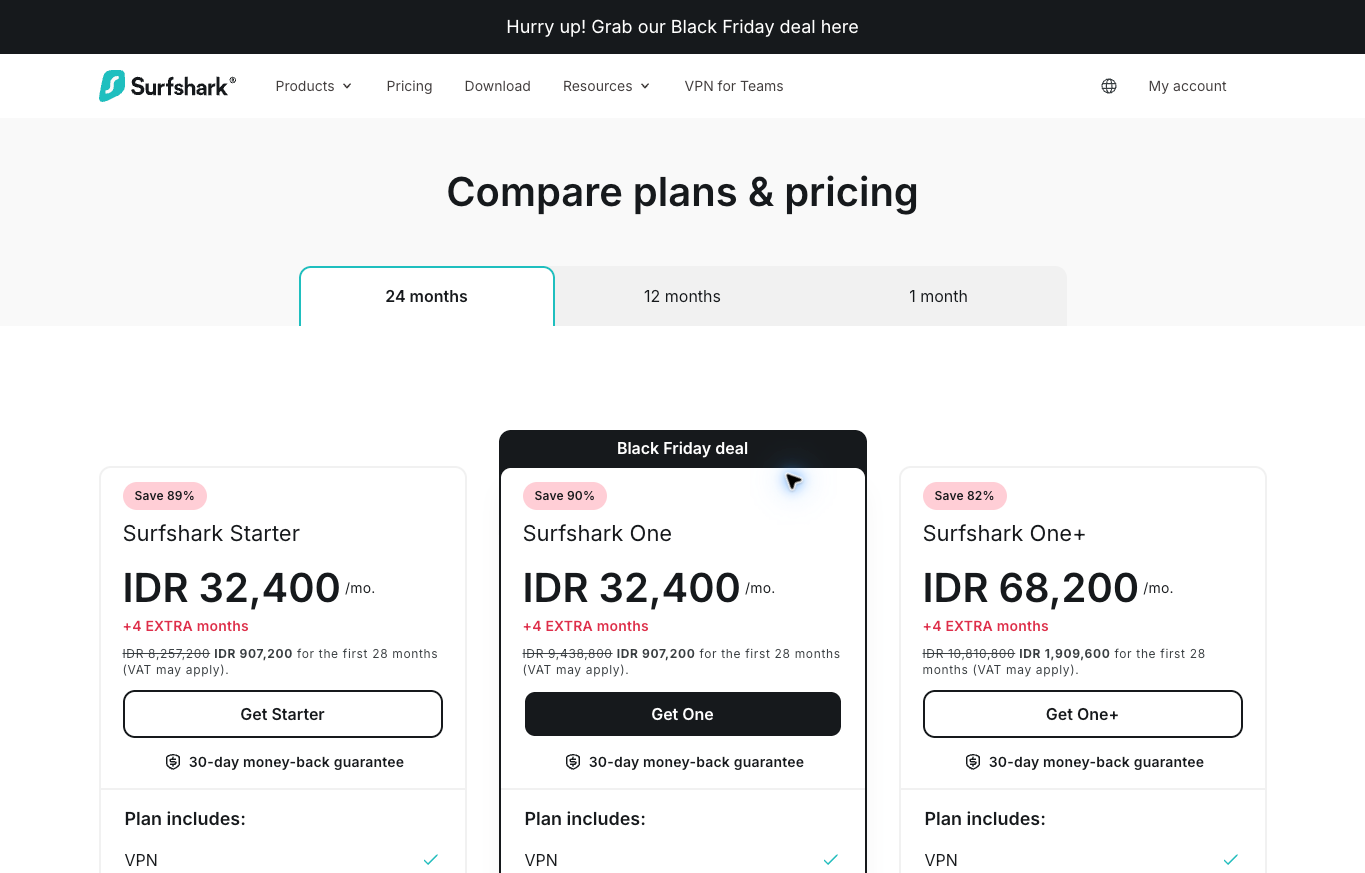
Surfshark is worth comparing when you need several supported devices connected at the same time, because its documentation lists unlimited VPN connections for Starter, One and One+. Antivirus limits and subscription-use restrictions are separate.
The October 13 screenshot shows Starter at an IDR 907,200 introductory total for 28 months. Treat the displayed monthly equivalent as a description of an upfront purchase, not a monthly invoice. The captured offer is a dated localized example.
Display currency and payment currency also differ under Surfshark’s current policy. Card country and payment method affect the charged currency. The supported-currency list excludes IDR and lists USD for otherwise unlisted regions, subject to its payment rules, and bank conversion charges deserve their own review.
The October 14 renewal table displayed Starter at IDR 1,415,654 for one year after the two-year term, before taxes. Renewal prices use location-based display and conversion rules. Review the charged currency, renewal notice and applicable offer instead of treating either displayed amount as a permanent quote.
Here’s what I’d do. Choose the VPN coverage you need before buying a bigger bundle. Check the exact apps and operating systems you use, then compare the additional products separately. My Surfshark pricing guide covers the purchase-versus-renewal questions in more detail.
NordVPN
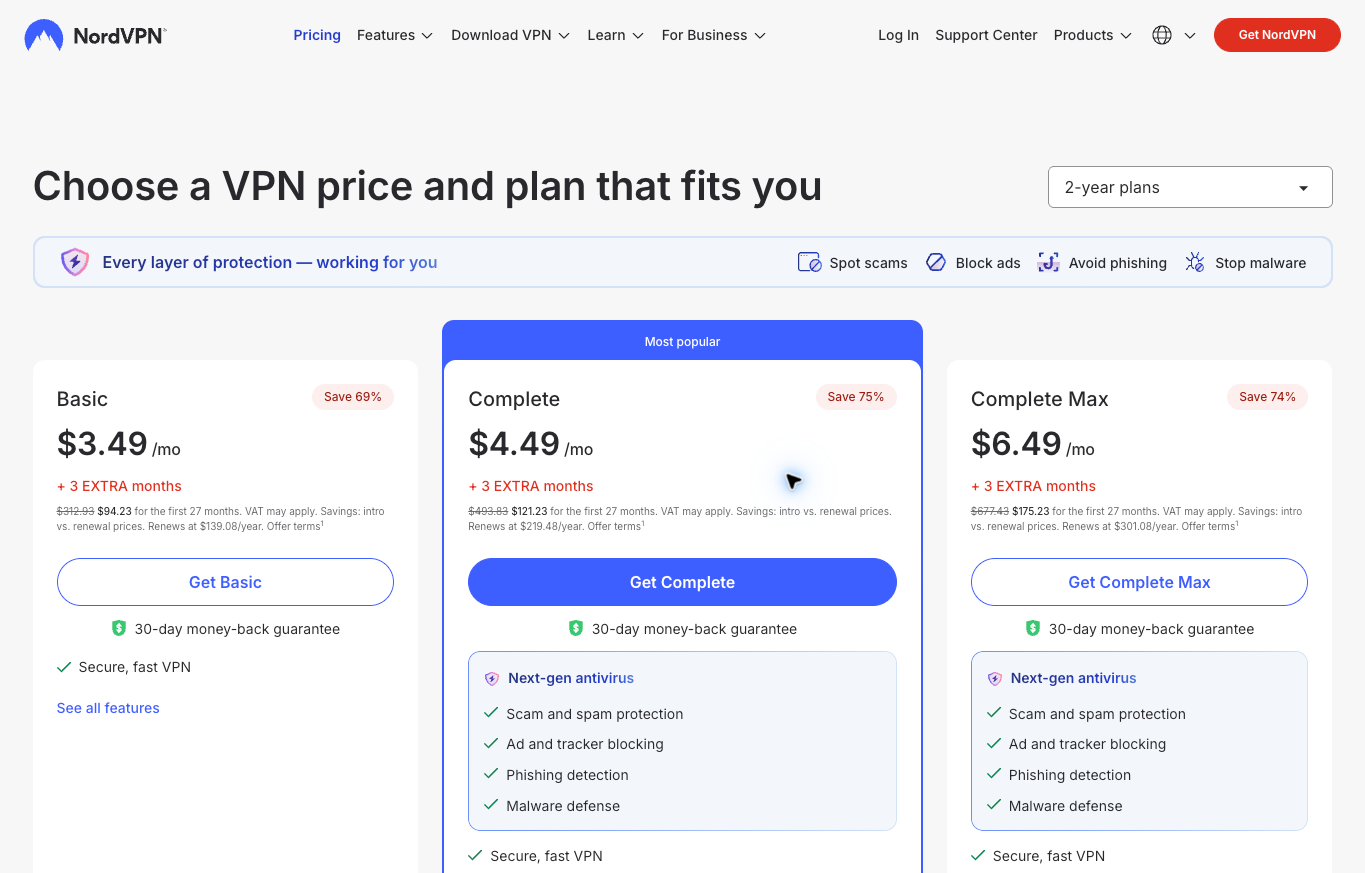
NordVPN fits a comparison centered on supported apps and package selection, since its support page lists up to 10 simultaneous devices. Same-server connection conditions deserve a review for the setup you plan to use.
The retained October 13 capture shows a dollar-priced Basic offer of $94.23 for 27 months, followed by a listed $139.08 annual renewal. Those amounts document the captured page. The current web reader returned a different currency and package presentation, so I wouldn’t treat the screenshot as every reader’s present quote.
On macOS, the provider separates its website download from its App Store version. Its current documentation requires macOS 14 or later and describes differences in connection controls and other features. So the installation channel belongs in the decision right next to the subscription tier.
Start with the app behavior you need. Choose a package after checking the relevant platform instructions, then save the initial bill and renewal terms. A broad feature list doesn’t prove identical behavior across every supported device.
PureVPN
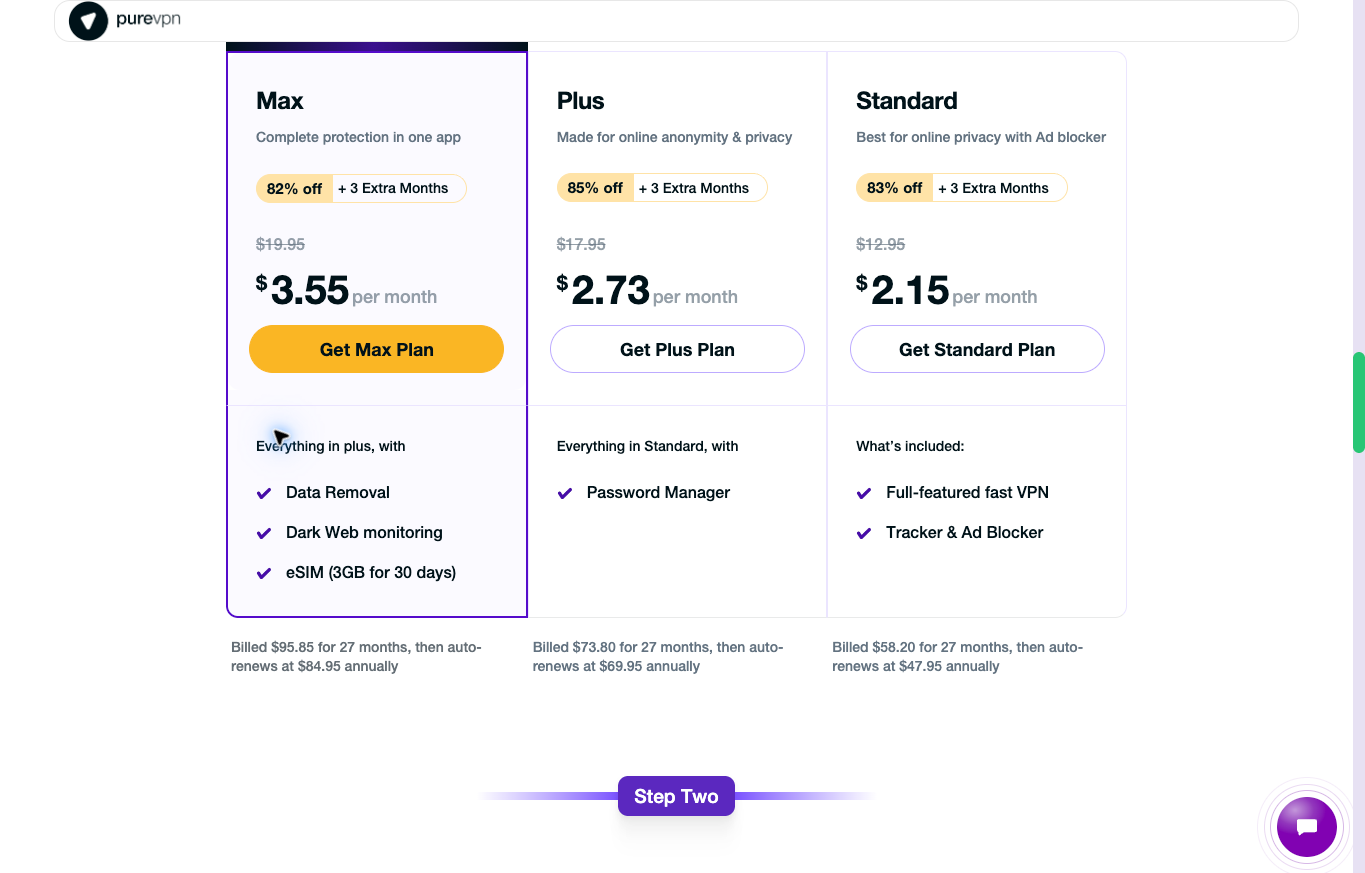
PureVPN is useful for a base-plan-versus-bundle comparison, because the base allowance and the paid add-ons are spelled out. The official multi-login page lists 10 simultaneous connections by default. Paid additions expand the allowance to 20, 30, 40 or 50.
The current affiliate landing displayed Standard at $58.20 for 27 months, followed by $47.95 annually. Plus showed $73.80 initially and $69.95 annually. Max showed $95.85 initially and $84.95 annually, so review taxes and the terms offered at purchase.
Use the stated total instead of multiplying a rounded monthly equivalent. Record separately billed additions and ask whether you need each bundled product. More connections don’t give you an employee offboarding process or broader access controls.
My take: compare the base allowance first. Check PureVPN’s plans against your device list before paying for a bigger connection count. Extra capacity adds little when your usual work already fits the base allowance.
FastestVPN
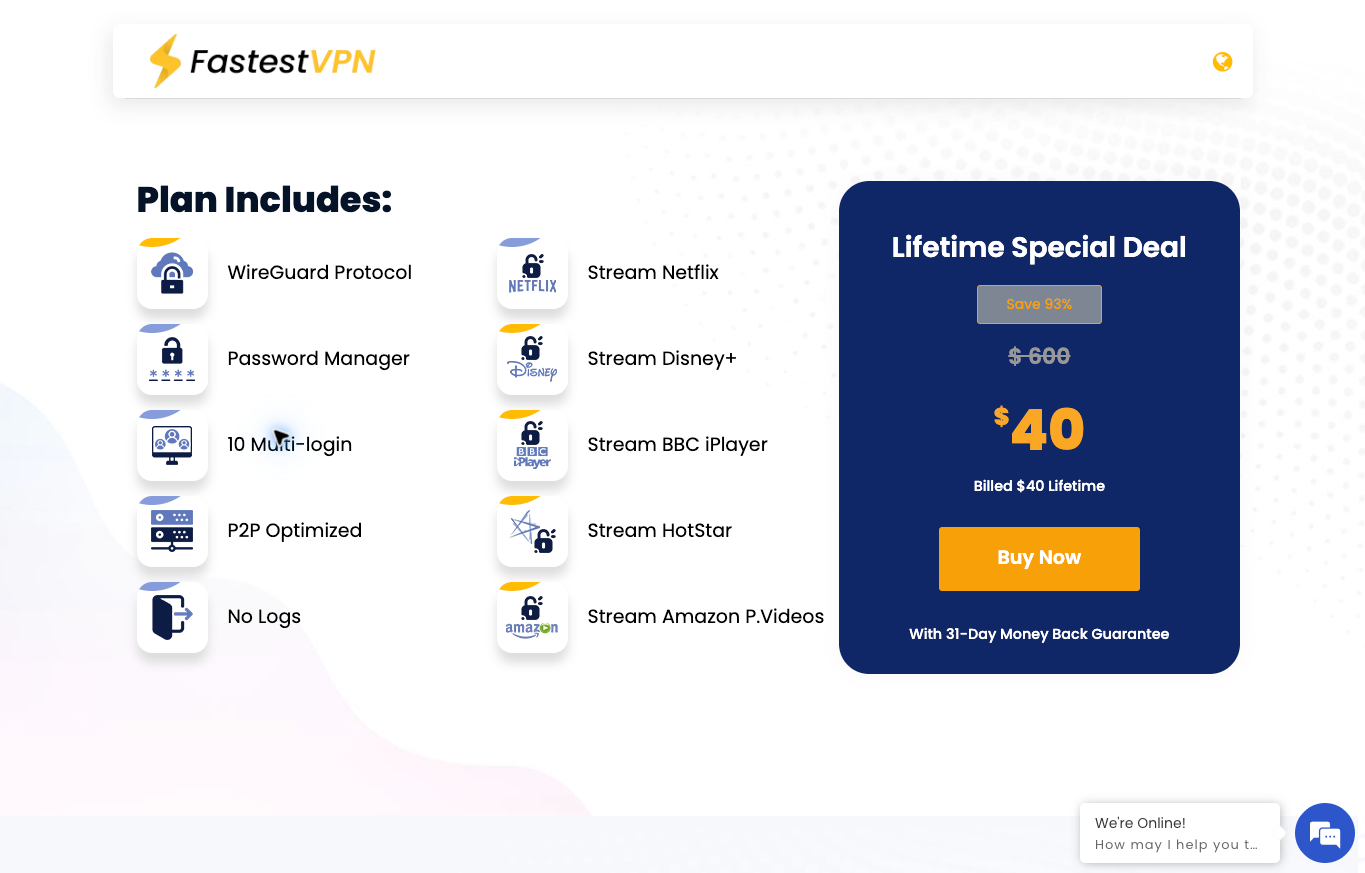
FastestVPN is on the list because it offers a different purchase model. The current partner landing displayed a $40 lifetime base offer, and its FAQ lists 10 simultaneous connections. Read the scope of the base service before you compare ongoing costs.
Optional extras on the landing carry separate charges. A lifetime label doesn’t include every addition, and it doesn’t promise unchanged features and service availability forever. Keep any recurring extras in the budget.
The offer advertises a 31-day money-back window. Refund conditions, payment methods and purchase channels still need review. Treat the policy as a set of eligibility terms, not an automatic refund for every transaction.
The brand name supplies no speed evidence. No benchmark or streaming test supports a fastest-provider claim here. Review the FastestVPN partner offer for its purchase structure, supported devices and optional charges.
Calculate the bill over your intended usage period
A monthly equivalent splits a longer purchase into smaller units. Your card still pays the stated upfront total under a prepaid offer. Read the number of included months and the next renewal term before you treat the advertised rate as your monthly budget.
Here’s a simple hypothetical comparison. A subscription costing $90 upfront for 27 months has a $3.33 monthly equivalent. A $120 annual renewal has a $10 monthly equivalent, and these are invented budgeting figures, not quotes from the providers above.
Keeping the subscription for the initial term and one renewal would cost $210 across 39 months in this example. Dividing $210 by 39 gives about $5.38 per month. Looking only at the introductory $3.33 figure leaves out a big part of the later cost.
Taxes, currency conversion and separately billed extras stay outside those assumed totals until you confirm them. Save the purchase confirmation and set a reminder before the renewal date. Review the service again instead of letting a forgotten subscription turn into an ongoing expense.
A short contract also deserves a look when your need is temporary. A larger upfront discount adds little if you stop using the service after a trip. Compare the money committed, not only the price divided across the longest available period.
Write down the exact apps you need
Start with your laptop and phone operating systems. Include version requirements and the installation channel you plan to use. Then add the work apps that need a reliable connection, like video calls, file uploads and supplier portals.
Keep a browser extension separate from a device-wide VPN app. Their traffic coverage differs. Review the provider’s instructions instead of assuming a browser installation covers every app running on your computer.
For a simple remote-work example, list a laptop for calls, a phone for messages and a tablet for reading documents. 3 devices on the list don’t necessarily mean 3 simultaneous connections. Record which devices usually connect together.
Now identify the feature needed on each device. A connection-control requirement on a laptop shouldn’t be answered with a screenshot from a phone app. Check the exact platform documentation and supported version.
Your requirements change when a company supplies the device. Follow the approved installation and access policy. A personal preference for one VPN doesn’t authorize changing the company’s managed network setup.
Understand connection controls before relying on them
A kill switch needs a platform-specific explanation. Closing selected apps is different from blocking internet traffic outside the VPN connection. Learn the supported behavior for your version before you depend on a broad feature label.
Split tunneling creates routing exceptions where it’s supported. Review which apps or destinations take each route and how exceptions interact with other controls. Keep a short configuration note instead of trying to remember several overlapping settings.
The provider’s setup guide is the starting point. Follow supported instructions and keep important protections in place. This article doesn’t establish a tested configuration for your computer, router or phone.
If a work app stops connecting, collect the error message and contact the approved support channel. Don’t disable a firewall, antivirus protection or certificate checking as an improvised fix. Solving one connection problem shouldn’t create a bigger security problem.
A useful support request describes the operating system, app version, network and failing task. Leave out passwords, payment details and private customer records. Clear details help support understand the issue without unnecessary disclosure.
Keep privacy claims tied to their evidence
A VPN changes which service handles your network connection. You still have to trust the provider. Logged-in accounts, cookies and device location information raise separate tracking questions.
A different IP address doesn’t make you anonymous. Strong passwords, multi-factor authentication, current software and secure website connections still matter. Buying a VPN doesn’t finish your account-security work.
CISA has a plain-English page on multifactor authentication that’s worth a few minutes. Its guidance on keeping software updated covers the other basic. Both matter whether or not you run a VPN.
On public networks, the FTC’s article on whether public Wi-Fi networks are safe explains the role of encrypted website connections. That’s useful context before you assume a VPN is the only thing protecting you.
Read the privacy policy behind a no-logs label. Traffic logs, billing records and operational information are different categories. A short marketing phrase doesn’t answer every retention question.
Audit references need a date and scope. An assessment of one app or infrastructure component doesn’t certify every product forever. No independent audit, leak test or privacy certification was performed for this article.
Evaluate calls and uploads under consistent conditions
For remote business work, evaluate the tasks that wreck your day when they fail. A supplier call, a customer meeting and a large file upload reveal different problems. One download-speed result leaves those tasks mostly unexplained.
Begin with an approved evaluation on a network you’re authorized to use. Establish ordinary network behavior without exposing sensitive work traffic. Keep the device, network and task consistent when comparing permitted configurations.
Record a call’s interruptions, upload completion and connection failures. Note the date, network and chosen server alongside any speed result. Describe the observation narrowly instead of claiming the same performance for everyone.
Repeat an important task across more than one session. A good result on a quiet afternoon doesn’t prove performance on a busy evening. A poor result also needs context before you blame a provider.
My VPN performance evaluation guide explains this distinction. The process is a way to gather your own evidence, not a report of tests completed for this comparison.
Separate personal VPN coverage from team access
A consumer VPN subscription answers a different question than employee access to company systems. A connection limit tells you little about user approval, individual permissions or removing access after someone leaves.
Keep separate logins for business apps where supported. Assign the permissions each role needs and document the offboarding process. Giving everyone the same VPN credentials doesn’t solve those admin requirements.
For a small online business, start with an access inventory. Name the person responsible for each account, billing record and recovery method. Review changes when contractors join or leave, instead of waiting for a lost device or blocked login.
Apply the organization’s approved access arrangement when working with managed systems. Ask the responsible administrator before introducing another VPN. Compatibility, licensing and authorization need answers beyond a consumer pricing page.
My remote business tools guide puts connection tools alongside communication and administration. Pick a setup your team understands and the responsible owner is prepared to maintain.
Prepare for travel without misrepresenting account eligibility
Check the current local rules and the terms of the services you plan to use. A server location doesn’t establish residence, business eligibility or permission to access a restricted service. Keep identity and business information accurate.
Set up your approved recovery methods before a trip. Know how to reach support without relying on the same failing app. Keep sensitive recovery information private and follow your organization’s storage requirements.
Test ordinary permitted work before an important meeting. A travel day is a bad time to learn an app lacks a feature you need on your phone. Leave time for the provider’s supported troubleshooting process.
Have a practical backup for unreliable internet, like an authorized alternate connection. Switching VPN providers won’t fix weak underlying connectivity. That holds for anyone working location independent, so don’t promise clients uninterrupted availability based on a subscription alone.
My Surfshark travel guide covers the questions to review for travel use. Check destination-specific rules separately instead of assuming a general article gives you legal clearance everywhere.
Build the operating plan behind your tools
For an ecommerce business, connection software supports work that’s already defined. Customer service, supplier follow-up and order exceptions still need an owner. My high-ticket dropshipping guide explains the supplier-direct model before you choose the supporting tools.
Use the high-ticket niches list to organize product research around a focused category. Choose a business you understand and investigate its operating requirements. A big software stack adds expense before you’ve validated the underlying opportunity.
Supplier communication deserves a documented process. The supplier research guide covers relationship development and the questions to ask. A private connection doesn’t establish dealer approval, product availability or reliable fulfillment.
Supplier Paradise offers another starting point for supplier discovery. I own the directory. Review manufacturers and their requirements directly before making commitments to customers.
The business foundation checklist covers the wider setup. Keep business registration, banking eligibility and accurate account information separate from a VPN purchase.
For help choosing the model and building an operating plan, look at Ecommerce Paradise coaching. Coaching is a separate paid business service, not a VPN installation or security audit.
The Ecommerce Paradise Academy is a separate classroom and membership community for the business side. Review its current enrollment terms. Membership doesn’t include a tested VPN configuration or establish a provider endorsement.
Questions before choosing a subscription
Which service is fastest for every user?
This comparison establishes no universal speed winner. Device, network, server route and task all affect observations. Evaluate your permitted work under consistent conditions.
Does a monthly equivalent mean monthly billing?
No. A longer prepaid purchase uses a monthly equivalent to describe its cost. Check the amount charged, included months and renewal term separately.
Do unlimited VPN devices mean unlimited employees?
No. A device allowance doesn’t establish a team-access license or employee administration. Review subscription-use terms and your company’s access requirements.
Does the displayed currency match the payment currency?
Don’t assume a match. Surfshark’s current billing policy separates local display from charge currency and explains payment-method rules. Review the final charge currency and conversion costs.
Does a lifetime offer include every extra forever?
Read the base service scope and separate charges. A lifetime label doesn’t guarantee permanent availability, unchanged features or unlimited additions.
My take on choosing a VPN
So with that said, here’s the short version. Surfshark if you need lots of devices connected at once, NordVPN if specific app behavior and package choice matter most, PureVPN if you want a clear base plan with paid add-ons, and FastestVPN if a lifetime purchase model appeals to you. In every case, read the upfront total and the renewal, not just the monthly equivalent.
Keep in mind that a VPN is one layer. Strong passwords, multi-factor authentication, updated software and a clear access inventory do more for a small business than any single subscription.
No VPN makes a business run by itself, and none of these providers was tested for this guide. What you get from this process is a cleaner decision and fewer surprises at renewal time.
If the bigger question is what business to run from your laptop in the first place, start with my free high-ticket dropshipping mini course. It walks through the model I teach, and it’s the foundation the tools should support. Go check that out.
Related guides
Review my Surfshark pricing guide for introductory totals and renewal questions.
The Surfshark remote-work guide focuses on supported devices and work requirements.
Read the Surfshark travel guide before reviewing destination-specific use.
My performance evaluation guide explains how to keep observations narrow.
The remote business tools guide connects security decisions with communication and administration.

Trevor Fenner is the founder of Ecommerce Paradise. His main projects are Ecommerce Paradise, Supplier Paradise, and Review Paradise, which is currently in development. TrevorFenner.com publishes research-based reviews and practical guides to online business tools and remote-work services, with clear affiliate disclosures.