

The best airline loyalty programs are the ones that fit the trips you actually take. So start with your departure airport and realistic dates, not a points headline. A huge points balance doesn’t help much when the available flight lands too late or forces a painful connection.
I’ve been a digital nomad since about 2019, based in Bali, and I’ve also lived in Chiang Mai, Bangkok, Los Angeles and Seattle. So I get why people chase travel rewards. But my take is simple: rewards should support the travel you’d already do, not create reasons to spend more or take flights you don’t need.
In this guide I compare Aeroplan, Flying Blue and Atmos Rewards against one specific itinerary. The real question is whether the trip works at a total cost you’re happy with. A promotional points offer answers a completely different question.
You’ll learn how to compare programs against the same trip, calculate the full cost of a redemption, keep points purchases separate from program choice, manage expiration rules and protect your business while you travel. At Ecommerce Paradise, I teach people to build a practical operating plan first, and the same thinking applies here.
If you’re working toward location independence, the business side matters way more than the points. My guide to the high-ticket dropshipping model covers the online retail model I teach. Keep that in mind as you read the travel sections.
This comparison uses public program sources reviewed October 14, 2026. The 3 retained provider images were captured October 13. No loyalty accounts, private balances, award searches, points purchases, bookings or redemptions were tested.
Affiliate disclosure: qualifying purchases through the documented Aeroplan and Flying Blue links pay me compensation, subject to program approval and terms. The linked offers are for buying points or Miles, not for enrollment or flight booking. I own Ecommerce Paradise and Supplier Paradise.
Aeroplan for a suitable itinerary
I’d look at Aeroplan when Air Canada or its eligible partners serve your trip. A partner relationship does not mean a reward seat is available on your date and in your cabin. Compare the actual fare and required cash before you put a value on the points.
The current US flight-reward policy lists a CAD39 applicable partner-booking fee per ticket and a separate nonrefundable CAD30 Contact Centre service fee. Those are Canadian-dollar amounts. The policy also treats Points + Cash payments differently from an ordinary paid ticket.
Reward travel does not earn Aeroplan points or status-qualifying credit under the reviewed policy. Keep reward redemption and status earning in separate boxes. A great award doesn’t move you toward a particular status benefit.
Aeroplan’s public notice on suspended points expiry pauses expiry through November 29, 2026, with the normal policy returning November 30. Check the actual eligible-activity requirement and your account deadline before you rely on the pause. A temporary notice does not mean points never expire.
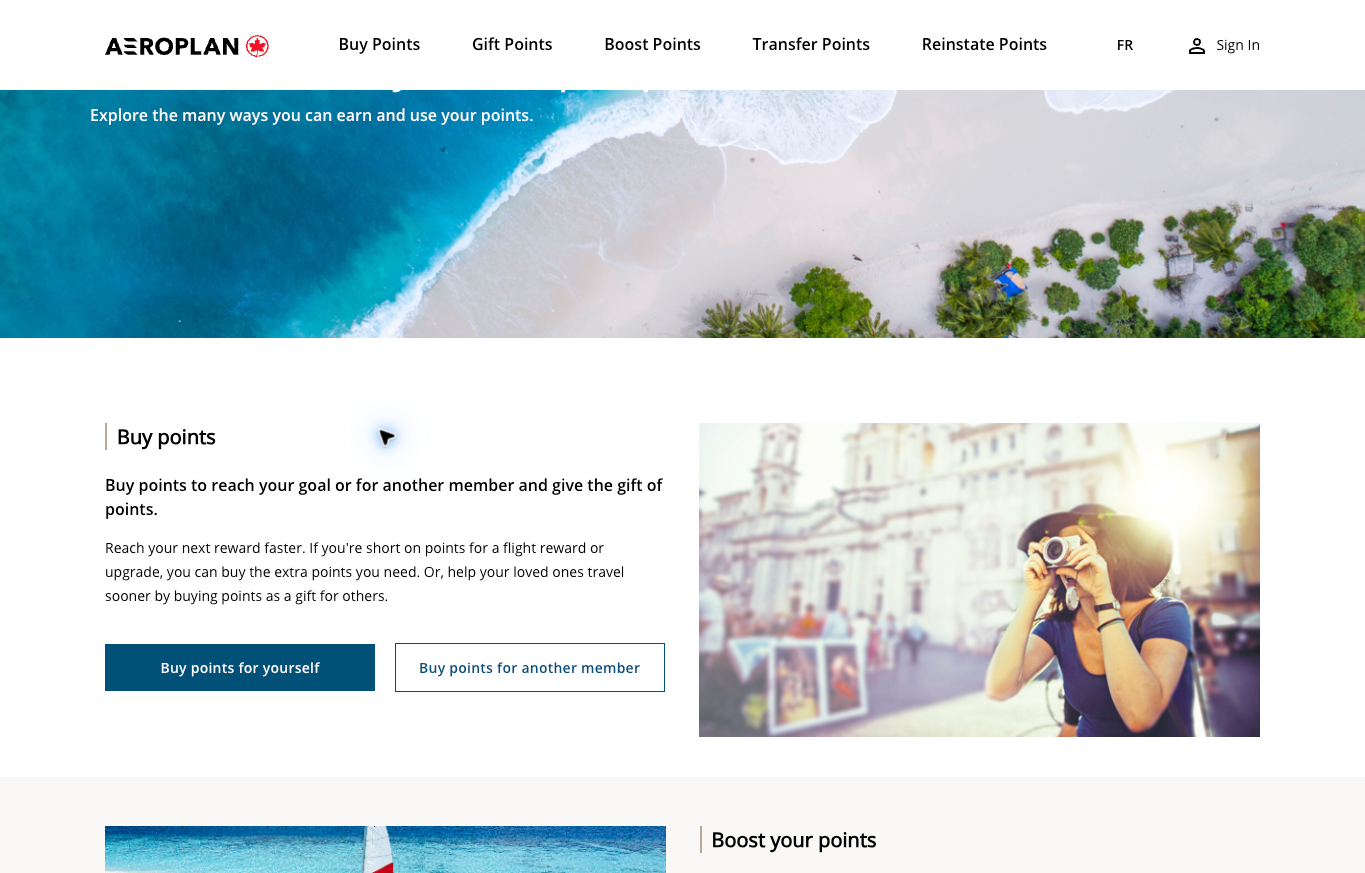
The Aeroplan points-purchase gateway is a separate, optional top-up offer. Its public page reached a Canadian-market buy-and-gift gateway during this review. No purchase quote or account-specific eligibility was checked.
Flying Blue for the selected reward fare
Flying Blue covers Air France and KLM loyalty benefits. Look at it when the available travel fits your route, then compare the selected reward fare’s cash contribution and conditions.
Its September 8, 2026 changes introduce Light, Standard and Flex for qualifying new Air France and KLM reward bookings. The current Q&A specifies Standard only for Air France or KLM flights combined with partner flights. Standalone partner rewards stay nonbranded.
The announcement lists different change and refund conditions for each. Review the actual fare and any status benefits that apply instead of assuming a low Miles price includes flexibility. An existing ticket keeps its own conditions.
The May 4, 2026 validity update describes a single 24-month period that eligible earning activity extends. Germany is an explicit exception and keeps three-year validity conditions. Other status, membership, card and age exceptions need their own review.
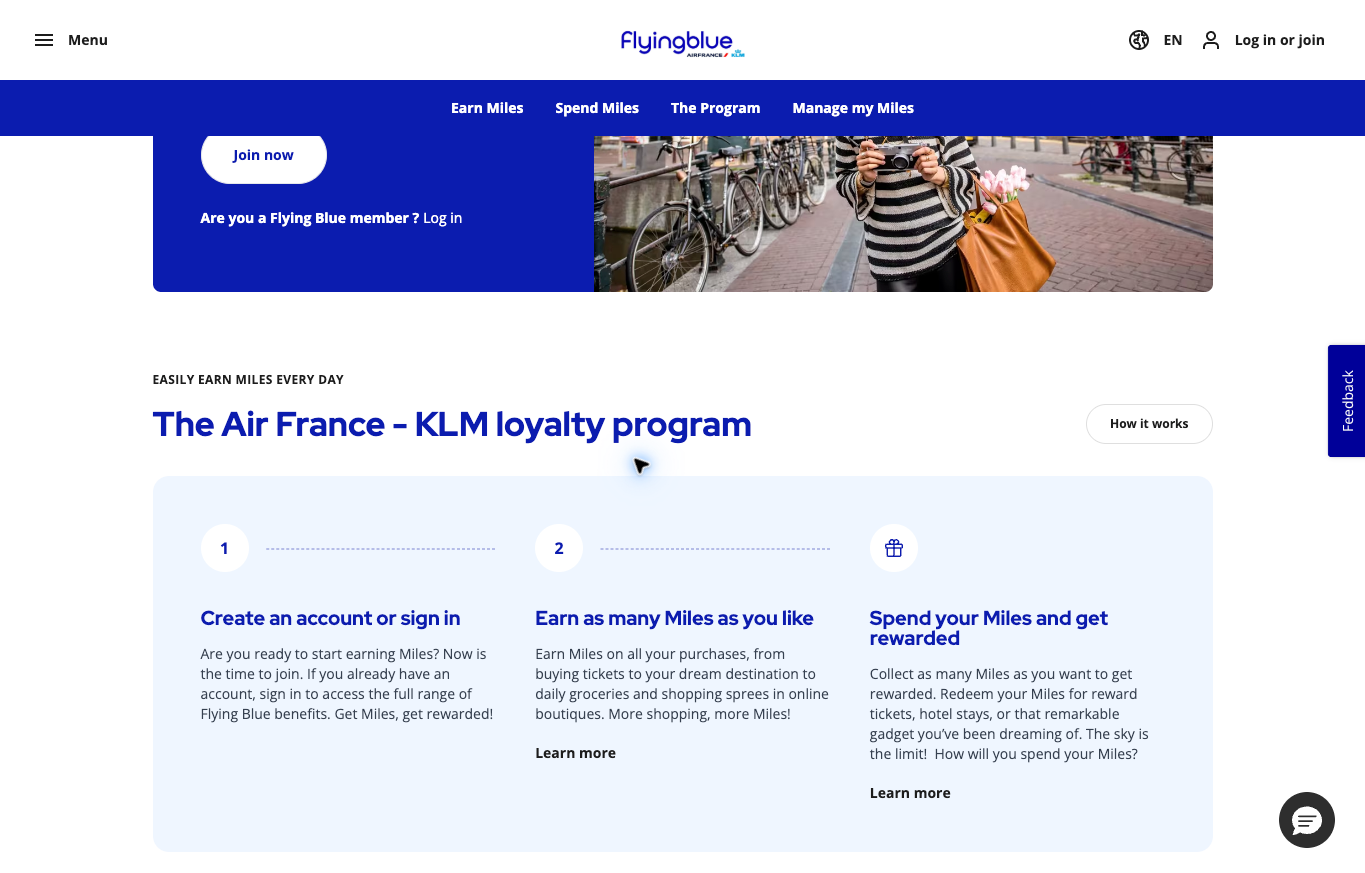
The Flying Blue Miles-purchase offer reached a sign-in screen during this review. No account-specific offer, price or eligibility was inspected. The public program image shows the program, not a completed purchase.
Atmos Rewards for the relevant travel network
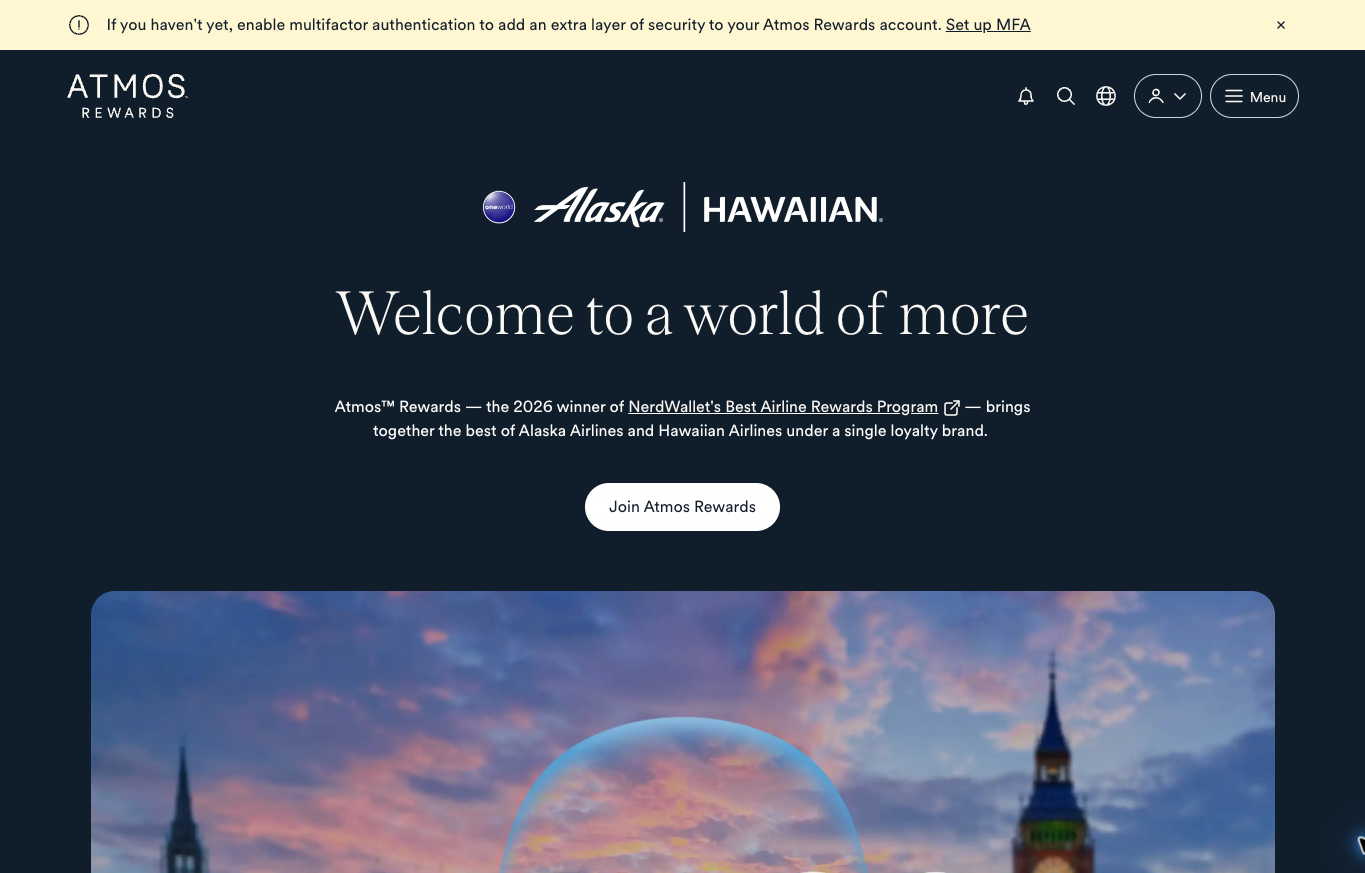
Atmos Rewards combines the Alaska Airlines and Hawaiian Airlines loyalty programs. Check the current branding and rules instead of treating older Mileage Plan or HawaiianMiles material as current.
The September 29, 2026 Atmos Rewards announcement lets members pick an earning choice from October 1 for departures on or after January 1, 2027. Distance, price paid and segments are the 3 separate choices. The selection date doesn’t make the future rules apply to every flight today.
Existing members who don’t pick keep distance-based earning. New members who join from January 2027 default to price paid under the announcement. You still need to check the applicable earning table, fare and booking conditions.
I’d judge the choice against the travel you already plan. Buying an unnecessary ticket to earn extra points raises your travel cost without giving you a worthwhile benefit. Redemption points and status points do different jobs.
Compare programs against the same trip
| Program | Starting comparison | Rule to review | Linked offer scope |
|---|---|---|---|
| Aeroplan | Suitable Air Canada or eligible partner itinerary | Applicable Canadian-dollar charges and expiry deadline | Optional points purchase |
| Flying Blue | Selected Air France or KLM reward fare | Fare conditions and regional validity rules | Miles purchase, sign-in required |
| Atmos Rewards | Relevant Alaska, Hawaiian or eligible partner trip | Earning choice versus actual departure date | Unlinked program comparison |
None of these starting points proves award availability or the cheapest fare. Compare the actual route, cabin, dates and total cost before you choose. Membership and an optional points purchase serve different purposes.
Start with the flight you would otherwise buy
Write down the trip before you open any points-purchase offer. Record the departure airport, destination, dates and the latest acceptable arrival time. Note whether the schedule depends on work, family or an event, because those details decide which alternatives are worth comparing.
Decide how much flexibility you really have. A connection through another airport adds more than flight time when you need ground transportation or an overnight stay. Include those costs instead of comparing the points total alone.
Here’s the move. Use the cash ticket you’d genuinely consider buying as your alternative. An expensive flexible premium fare is a useless baseline when you’d normally buy a standard economy ticket, so keep the cabin and conditions consistent.
Write down the booking conditions for both options. Checked baggage, change restrictions and cancellation treatment all affect the decision. A smaller starting number doesn’t mean a better deal for a trip with an uncertain schedule.
For several travelers, repeat the comparison for the whole group. One available reward seat doesn’t mean the same cabin and flight are available for everyone. Keep each traveler’s required dates and acceptable options clear before you calculate the total.
Record which fare the cash quote describes. If the quote leaves out checked baggage you need, add that cost to the comparison. If the reward option needs a longer stay, add the extra accommodation and ground transport, using confirmed amounts instead of a made-up standard allowance.
A useful worksheet also records why you rejected an option. A bad arrival time, an unavailable cabin or an unacceptable refund condition explains the decision later. The lowest displayed price does not override the requirements you set for the trip.
Put a date next to every quote and don’t mix results from different searches. When you revisit the decision, refresh the offer instead of treating an old screenshot as a current reservation. This guide’s public images document program pages on their capture date, not available seats or a ticketed itinerary.
Calculate the whole redemption
Record the points required and the mandatory cash together. Include separate booking fees and other confirmed expenses, and label every currency. Converting Canadian-dollar charges into a US-dollar budget needs the actual applicable conversion, not a copy of the original number.
Here’s an original hypothetical example. Assume a comparable cash ticket costs $600 and the reward needs 30,000 points plus $150. The cash difference is $450 before other differences, and dividing $450 by 30,000 gives 1.5 cents per point for this example only.
Now assume buying the required points costs $500. Add the $150 and you’re at $650 before other purchase costs, which is more than the $600 cash ticket. So the nice-looking redemption value doesn’t make the purchase worth it, and these figures are arithmetic, not a current offer or a tested redemption.
Use your own comparable quotes. Points you already have and points you buy have different histories and constraints. A big balance doesn’t make the cash charges disappear or give the program a permanent value.
Never present a calculated value as a guaranteed resale price. The point of the worksheet is choosing a specific trip. A different itinerary, cabin or award price gives you a different answer.
Keep a top-up separate from program selection
A loyalty program is still worth evaluating even when buying its currency is a bad deal. Start with your ordinary travel and the benefits that matter for those trips. A points-sale headline should never pick your departure airport or push you into an unnecessary booking.
Before a paid top-up, figure out exactly how many points you’re missing for a specific usable reward. Check the full purchase cost, eligibility and timing. A purchase doesn’t reserve the seat or lock in the award price while the transaction processes.
Review the Aeroplan top-up offer only as a separate purchase decision. Confirm the current terms and the total price with its currency. The public gateway doesn’t prove your account gets a promotion.
A bonus percentage describes how an offer is structured, not the value of your trip. Compare the final cost with the cash alternative. Avoid borrowing or ramping up everyday spending just to build a speculative balance.
The Flying Blue purchase gateway required account access for the reviewed offer. No private quote was checked here. Sign-in access and purchase approval are separate from public program research.
Check availability without promising a seat
A route map shows a network, not available reward seats. When you run an actual search, record the specific itinerary, date and cabin. A provider screenshot in this guide is not an award-search result.
Review every flight segment. A connection adds another departure time and another cabin to check. Don’t describe an itinerary as premium the whole way without looking at each segment.
Compare nearby dates only when the flexibility is real. An open Tuesday flight doesn’t solve a required Monday arrival. The traveler should understand the tradeoff before anyone buys or transfers points.
Never turn one search into a lasting availability promise. Record when you checked and keep research separate from ticketing. This guide did not search accounts, hold seats or complete reservations.
Manage expiration and benefits separately
Record the actual balance deadline and the activity the program recognizes. Keep points validity separate from certificates, status and other benefits. One account screen mixes several types of information with different rules.
Aeroplan’s inactivity policy says points expire only after 18 months of account inactivity, and it notes the current pause. A reminder only helps when the underlying deadline is right, so check the current regional policy and any exception before you enter a date. Germany’s Flying Blue validity exception is one reason a broad headline needs a closer read.
Don’t assume a login, an unrelated purchase or a booking extends validity. Identify the eligible activity and when it gets credited under the applicable terms. Avoid unnecessary purchases based on an expiration date you haven’t confirmed.
For Aeroplan purchase research, keep buying points separate from checking eligible activity. The temporary expiry pause does not set the terms of every buy, gift or transfer transaction.
Compare earning and status against ordinary travel
Redeemable points and status qualification are different calculations. Decide which benefit you want and what travel you already expect. Don’t lump unrelated balances into one number and call it progress toward status.
Check the fare, operating airline and booking-channel conditions for each trip. A general program explanation doesn’t mean every flight earns the same amount. Future earning choices also depend on the correct departure date.
I’d look at the actual benefit before changing a travel plan. A baggage allowance matters when you need checked luggage. A benefit tied to a route you can’t use does little for the trip in front of you.
My business credit card comparison focuses on fees, eligibility and ordinary business expenses. Rewards should never become a reason to take on debt or spend past your existing budget.
Leave enough time for changes
A client meeting, event or family commitment carries a different risk than a flexible holiday. Review change and cancellation treatment before you ticket. The cheapest points option is less useful when the schedule already needs flexibility.
Keep the confirmed ticket conditions with the booking record. If plans change, use the provider’s actual process instead of an old promotional summary. Follow the applicable deadlines and don’t assume every fee gets waived.
A cash refund, reinstated points and a returned certificate are different outcomes. Ask which one applies to your actual fare and situation. Don’t turn a broad refund headline into a promise of immediate repayment for every part of the trip.
Give the traveler a clear owner for follow-up. Save the booking reference privately, note the next step and track the provider’s response. Keep account access and sensitive passenger details out of public screenshots and shared research sheets.
Keep travel separate from reliable business operations
A reward flight doesn’t create revenue or answer customer messages. Before you add travel complexity, decide who handles orders, support and urgent decisions while you’re in transit. A long connection eats working time even when the ticket looks cheap.
This is where systems and SOPs earn their keep. I teach people to document how orders, support and supplier issues get handled so the business keeps running while they’re on the move. Skateboarding is my own reason for wanting that freedom, but the logic works for any reason you travel.
Use the high-ticket niches list to organize category research. A niche needs real product and customer evaluation before you make assumptions about location independence.
The supplier research guide helps you prepare agreement and operating questions. Supplier relationships still matter while you’re traveling.
Supplier Paradise is a supplier-discovery resource I own. The directory has nothing to do with airline programs, and it does not guarantee a dealer agreement or replace supplier due diligence.
My business foundation checklist covers broader setup responsibilities. Keep those decisions separate from loyalty membership or travel status.
Ecommerce Paradise coaching is a separate paid service for business planning. The Ecommerce Paradise Academy page describes current classroom and enrollment options. Neither one books flights or guarantees reward savings.
Questions before choosing a loyalty program
Which program is best for everyone?
No universal winner is established here. Route, dates, total cost and conditions decide the fit. This is a research shortlist, not a tested performance ranking.
Do the linked offers enroll members or book flights?
No. The documented Aeroplan and Flying Blue destinations are for paid points or Miles. Membership and ticketing are separate decisions.
Does buying points reserve an award?
No. A purchase and a ticketed reservation are separate. Check availability, timing and applicable conditions before you commit money.
Does Flying Blue use the same expiry rule everywhere?
No. The reviewed announcement explicitly excludes Germany from the new 24-month rule and keeps three-year conditions there. Other account exceptions also need review.
Do Atmos’s new earning choices apply to every current flight?
No. The announcement separates the October 2026 selection from departures on or after January 1, 2027. Check the actual fare and earning table.
My take: plan the trip first, then pick the program
So with that said, here’s the recap. Start with the exact trip you’d otherwise pay cash for. Compare Aeroplan, Flying Blue and Atmos Rewards against that same route, cabin and date, then add up the points, the cash charges and any extra travel costs.
Buying points only makes sense when the full cost beats the cash ticket for a specific, available reward. Keep top-ups, expiration rules and status earning in separate boxes. And never let a points sale talk you into a flight you didn’t need.
Most of all, protect the thing that pays for the travel. A business with clear systems and reliable suppliers is what makes location independent living possible, not a points balance.
If you want to build that kind of business, start with my free high-ticket dropshipping mini course. It walks you through the model I teach so you can decide if it fits your goals. Go check that out before your next trip.
Related travel and operating guides
My hotel booking comparison starts with the actual stay and booking conditions. Accommodation costs belong next to the flight in your trip budget.
The business banking guide covers operating accounts, not reward chasing. Keep travel expenses and business records clear.
Read my USD-to-IDR transfer guide for a separate currency-transfer decision. A travel-rewards balance is not a bank transfer or available cash.
The VPN comparison covers subscription, device and renewal considerations. A VPN has nothing to do with booking eligibility and does not replace responsible account security.

Trevor Fenner is the founder of Ecommerce Paradise. His main projects are Ecommerce Paradise, Supplier Paradise, and Review Paradise, which is currently in development. TrevorFenner.com publishes research-based reviews and practical guides to online business tools and remote-work services, with clear affiliate disclosures.