

Trying to pick the best business credit card? Here’s the honest answer. The right card fits your ordinary expenses and a repayment plan you can actually keep. Compare eligible purchases, fees and account obligations before you even look at a welcome offer, because rewards never fix an unprofitable purchase.
At Ecommerce Paradise, I focus on the business behind the payment method. Product economics, supplier terms and clean records deserve your attention before another financial account does. That’s the same mindset I teach for high-ticket dropshipping, where supplier payments can get big fast.
This shortlist compares 3 US cards: Chase Ink Business Unlimited, American Express Blue Business Cash and Chase Ink Business Preferred. Flat cash back, capped cash back and category points are 3 different reward structures. In this guide you’ll see how each one earns, what the fees and APRs look like, how caps and welcome offers really work and who is on the hook for the balance.
The issuer screenshots keep their October 12, 2026 capture dates. Current terms need to be checked against the offer and agreement you actually receive. No account was opened, and no application, redemption or credit-limit test was performed for this comparison.
This is general research, not personalized financial, legal or tax advice. Eligibility, liability, rates and repayment depend on your actual arrangement. Get qualified guidance when you need help evaluating your own obligations.
Disclosure: I own Ecommerce Paradise and Supplier Paradise, and their links promote resources I own. Some links to business tools on this page are affiliate links, and qualifying purchases earn me a commission at no extra cost to you. Card issuer names and images stay unlinked because verified card-affiliate destinations were not established. No approval or reward outcome is guaranteed.
Compare ordinary rewards and fees
| Card | Ordinary purchase rewards | Annual fee | Foreign transaction fee | Main trade-off |
|---|---|---|---|---|
| Chase Ink Business Unlimited | 1.5% cash back on eligible ordinary purchases | $0 | 3% | Simple rate, but review foreign purchase fees |
| American Express Blue Business Cash | 2% on the first $50,000 of eligible purchases per calendar year. 1% thereafter | $0 | 2.7% | Higher initial rate, with a calendar-year cap |
| Chase Ink Business Preferred | 3 points per $1 on the first $150,000 of combined qualifying category purchases per account anniversary year. 1 point on other purchases and after the cap | $95 | None | Category points and a fee, not automatic 3% cash back |
Ink Business Unlimited for ordinary cash back
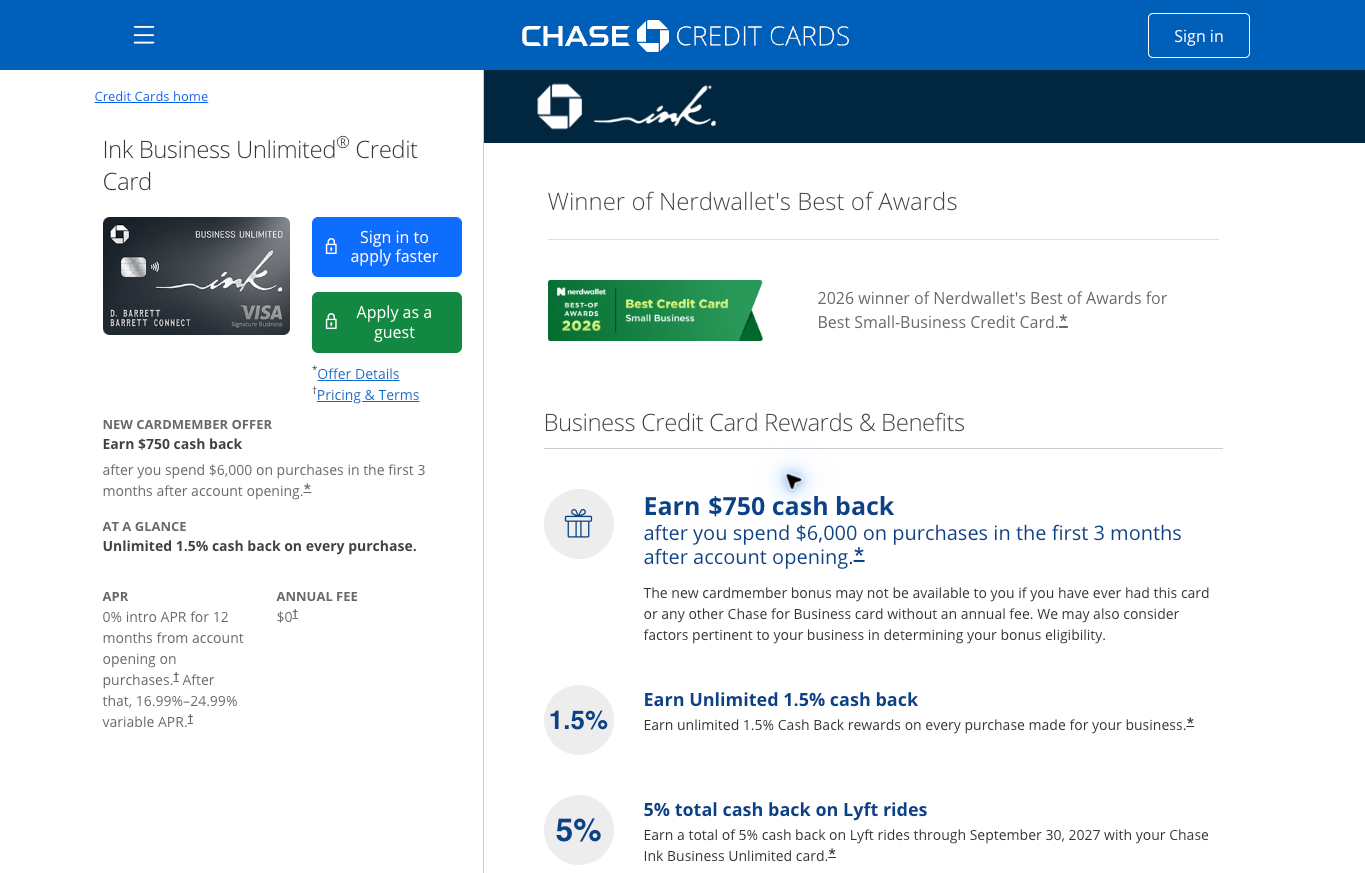
Chase Ink Business Unlimited presents 1.5% cash back on ordinary eligible purchases and no annual fee. I’d look at this one when simple, predictable earning matters more to you than tracking several higher-rate categories.
The linked terms checked October 13 show a 3% foreign transaction fee. They also show a 0% introductory purchase APR for 12 months, followed by a variable 16.99% to 24.99% range. These are dated public offer terms, not a rate assigned to you.
For a hypothetical calculation, $20,000 of qualifying ordinary purchases at 1.5% produces $300 before other costs or adjustments. That excludes any welcome bonus and assumes every purchase qualifies. No reward was earned or redeemed for this comparison.
Read the actual repayment and liability terms before you decide. A $0 annual fee does not remove interest, transaction fees or personal obligations. No application or eligibility check was performed here.
Blue Business Cash for a capped higher rate
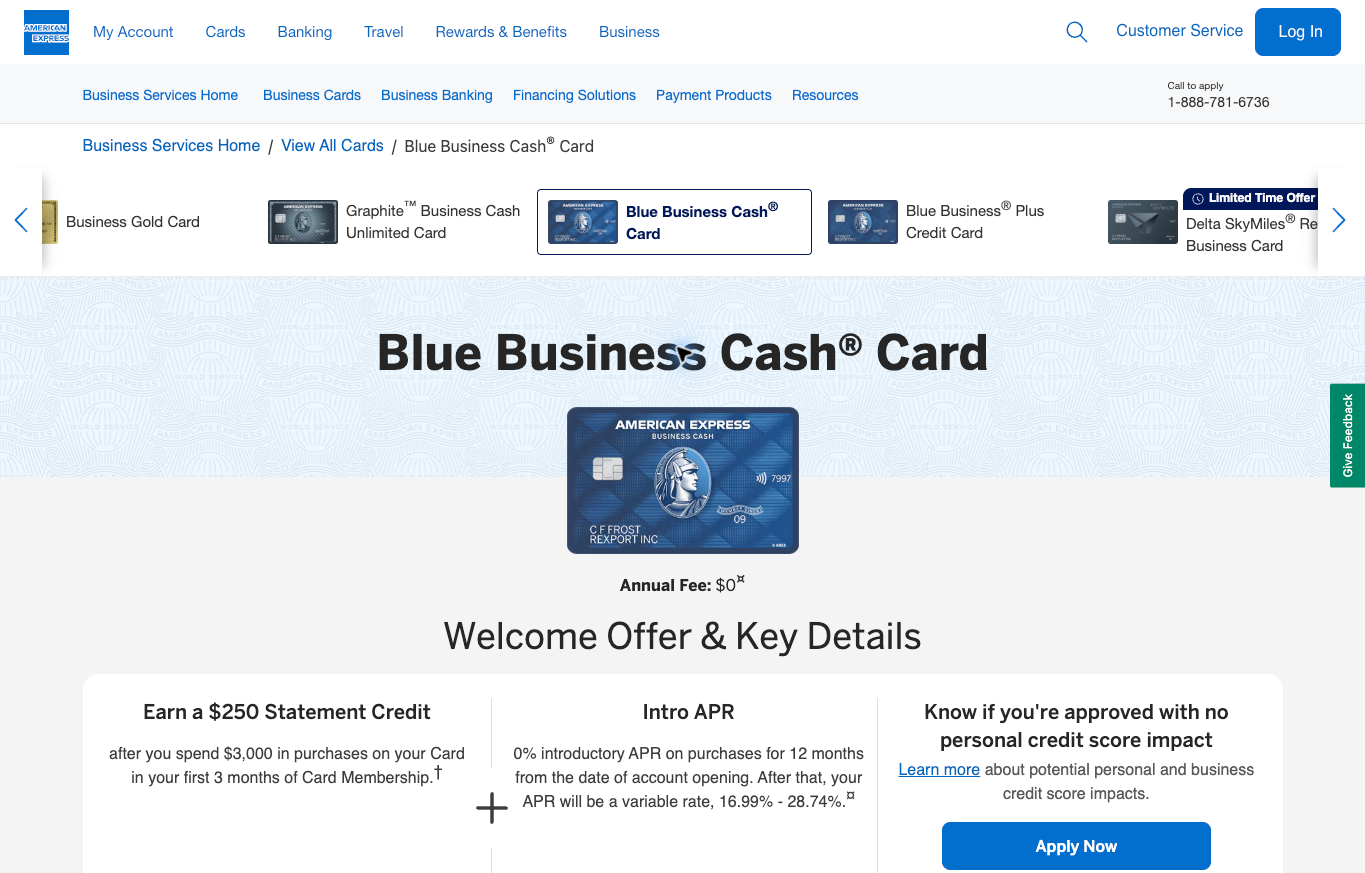
American Express Blue Business Cash presents 2% on the first $50,000 of eligible purchases per calendar year and 1% after that. The annual fee is $0. Keep in mind that the higher rate is capped, so this is not unlimited 2% cash back.
Linked terms dated October 13 show a 2.7% foreign transaction fee and 12 introductory months at 0% purchase APR. The variable range after that is 16.99% to 28.74%. Eligibility and the offer you receive need their own review.
For a hypothetical $80,000 of eligible annual spending, the first $50,000 produces $1,000 and the remaining $30,000 produces $300. That $1,300 total excludes fees, interest, returns and other adjustments. At a flat 1.5%, the same assumed purchases produce $1,200.
Check eligible-purchase exclusions and supplier acceptance before you use this comparison. Fees, interest and cash-equivalent transactions are not ordinary qualifying purchases. A supplier surcharge also changes the math.
The public credit-impact explanation separates learning if you’re approved from accepting a card. Don’t read the headline as a blanket promise of no impact. This guide did not apply, accept an account or test credit effects.
Ink Business Preferred for category points
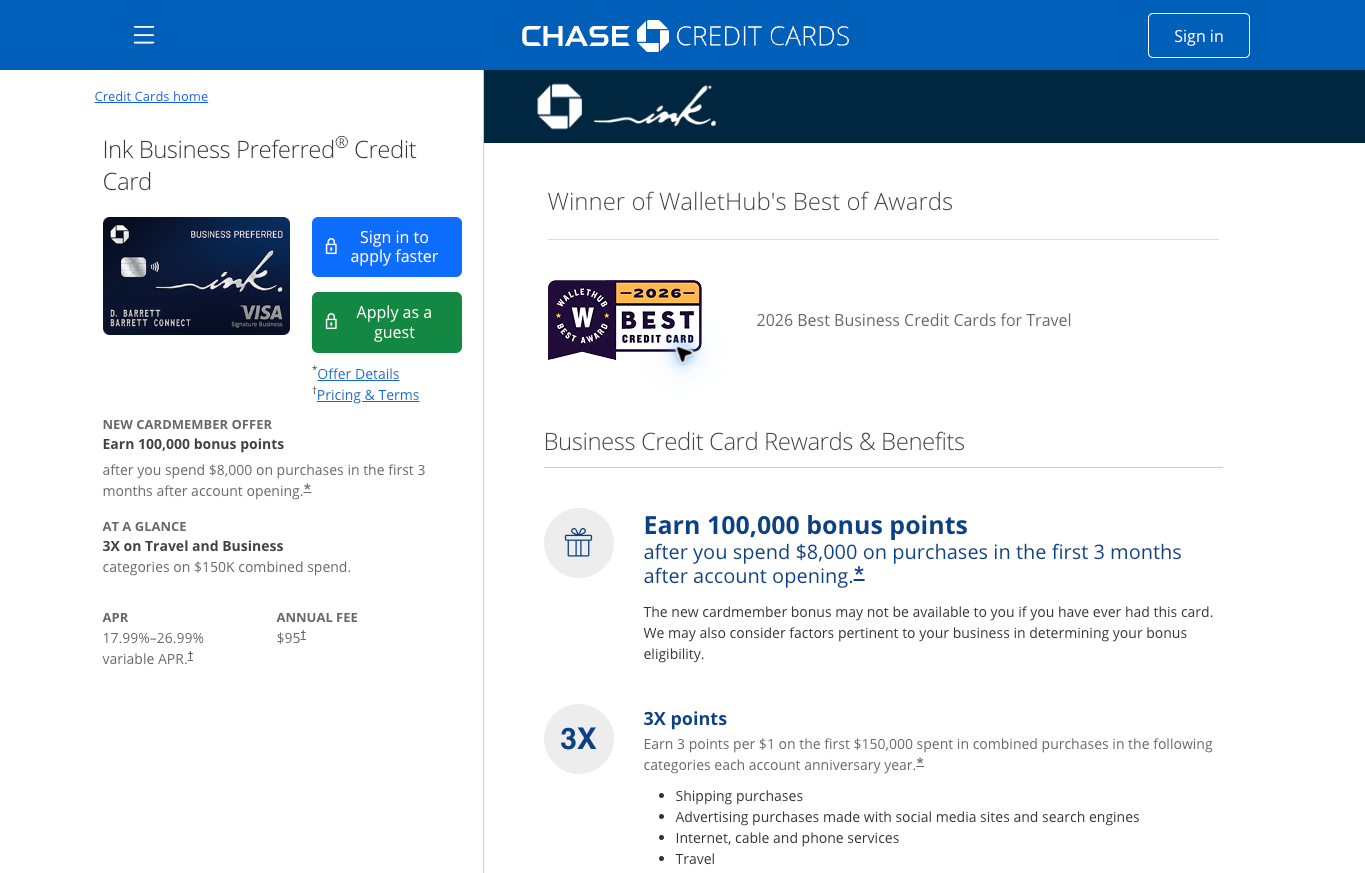
Chase Ink Business Preferred earns points instead of using the same cash-back math. The current annual fee is $95, and linked terms show no foreign transaction fee. Its variable purchase APR is 17.99% to 26.99%, with no assumed 0% introductory purchase period.
The 3-point rate applies to the first $150,000 of combined qualifying shipping, social-media and search-engine advertising, internet, cable, phone and travel purchases per account anniversary year. Other eligible purchases, and spending beyond that combined cap, earn 1 point per dollar.
Three points do not automatically equal 3% cash back. Redemption value needs its own review of current terms. A points balance does not guarantee a particular flight, transfer opportunity or real saving.
My take: compare your actual category mix and the redemption options you’d really use against the annual cost. The issuer’s category rules decide which charges qualify, not your bookkeeping labels. No account, redemption or category-classification test was performed for this guide.
Compare expenses already in the plan
Review a representative period of your ordinary business expenses. Split out supplier payments, software, advertising, shipping and travel. Real records make a stronger comparison than spending you project just to earn a card offer.
Find out which payments accept cards and whether a surcharge applies. A supplier that requires bank transfer is a different arrangement entirely. Don’t assign rewards to an expense until you’ve confirmed the payment method.
Keep total bank outflows separate from eligible purchases. Payroll, transfers and paying the card statement are not automatically ordinary card purchases. The issuer’s actual definitions decide what qualifies.
Here’s what I’d do. Use the same spending assumptions for every card. Record the eligible amount, earning structure, cap period and fees. One consistent worksheet beats a pile of advertising headlines describing different arrangements.
If your store runs on Shopify, your platform subscription, apps and ad spend are a good place to start that worksheet. Pull those recurring charges from your billing history so your numbers are real, not guesses.
Distinguish cash back from points
A percentage cash-back rate and points per dollar use different units. Review the earning rules before you think about redemption. A bigger displayed number does not mean a better result.
Points need a separate look at the redemption options you can actually use. A possible transfer or flight has its own availability and terms. Don’t give points a universal value just because the balance looks large.
When you evaluate a points card, use a redemption you realistically expect to complete. Keep speculative travel scenarios out of the ordinary comparison. This article did not redeem points or test award availability.
For cash back, still review qualifying purchases, adjustments and how statement credits work. An advertised rate does not cover every account transaction. Keep returns, fees and nonqualifying payments out of the calculation.
Track the cap and reset period
Blue Business Cash uses a calendar-year higher-rate allowance. Ink Business Preferred uses an account-anniversary-year combined category allowance. Put the right dates for each period in your comparison record.
Review seasonal expenses across the actual period. One unusually busy month does not establish a normal annual pattern. The timing affects when you burn through the higher-rate allowance.
Keep category spending combined where the issuer sets a combined cap. Don’t give every category its own full allowance. Your spreadsheet should follow the actual earning rule, not an optimistic reading of it.
Look at the next eligible purchase after you hit the limit. The lower rate after the cap changes the comparison. Don’t treat the first-dollar rate as the rate for the whole year.
Separate recurring value from a welcome offer
Welcome offers come with eligibility rules, qualifying spending and timing. They’re separate from ordinary ongoing rewards. Review the offer you actually receive instead of assuming a public screenshot proves you’re eligible.
Keep a first-year bonus out of your recurring annual comparison. An introductory benefit does not renew just because the account stays open. The ordinary earning and fee structure has to make sense on its own.
Don’t create unnecessary purchases just to hit a threshold. A campaign or supplier order needs its own business reason. Earning a small percentage on extra spending does not turn a bad expense into a good investment.
The CFPB has warned card companies about deceptive marketing of promotional offers, and it notes that promotional balances have conditions you must meet to avoid unexpected interest. Read the fine print on any offer. No bonus eligibility check was performed for this guide.
Prior accounts, issuer rules and individual offer conditions need their own review. The preserved images document public pages, not an approved account.
Include fees in the payment comparison
A $0 annual fee does not mean a zero-cost account. Interest, transaction charges and payment-related fees deserve review against how your business actually uses the card. Keep those costs separate from the ordinary reward rate.
For a hypothetical calculation, a 3% fee on $1,000 is $30, while a 2.7% fee is $27. Those figures only show the fee arithmetic. They don’t decide how a specific merchant transaction gets classified or converted.
A checkout showing US dollars does not by itself settle the issuer’s foreign-transaction definition. Read the actual issuer and merchant terms for the payment you plan to make. Sort out open fee questions before you rely on a reward calculation.
I’m based in Bali, so cross-border costs are something I pay attention to. If you pay overseas suppliers or contractors by bank transfer instead of card, Wise is one option I like because it shows the exchange rate and fee before you send. Compare that cost with the card’s foreign transaction fee for the same payment.
For an annual-fee card, compare the fee with the benefits you expect to use. A pile of unused perks does not offset the charge automatically. Count the time it takes to understand and manage the arrangement too.
Put repayment ahead of reward differences
Rewards are only one part of a payment decision. If the business expects to carry a balance, interest and repayment come first. A small difference in earning rate does not make borrowing affordable.
Introductory purchase APR periods have end dates and eligibility conditions. Write down the ongoing variable rate and the events that affect the introductory treatment. A temporary rate is not permanent financing.
Know the difference between the minimum payment and the amount needed to clear the balance. Review the agreement’s actual interest and payment rules. A low required minimum is not evidence that the borrowing cost is small.
Keep supplier payment timing and available store cash in a deliberate operating plan. A gap between paying a supplier and receiving usable proceeds needs attention before you open another account. Future orders are not guaranteed money for a statement payment.
If you’re weighing a card against other ways to fund the business, the SBA guide to funding your business lays out debt and other funding options. This guide does not prescribe a borrowing strategy, so get professional guidance on debt and cash commitments. No balance, credit limit or repayment outcome was tested.
Read individual and company obligations
A business name on a card does not mean only the company owes the balance. The reviewed issuer terms include both individual and company liability provisions. Read the actual offer and agreement before you decide.
Forming an entity and accepting a card agreement are separate processes. An LLC does not automatically remove personal obligations the agreement creates. Get qualified guidance when you need an interpretation for your situation.
I run my own business through a Wyoming LLC, so the line between business and personal liability is something I take seriously. If you’re forming an LLC, Northwest Registered Agent is one formation service to compare because a registered agent can keep your home address off the public filing. It won’t change what a card agreement says about personal liability.
Review obligations for additional cardholders as well. A spending control does not remove responsibility for every charge. Confirm the account owner’s duties and exceptions under the arrangement you pick.
Keep the agreement next to your comparison record. Public product pages are an introduction, while the actual account terms set the responsibilities. A reward summary is no substitute for reading those obligations.
Keep eligibility and credit-impact statements qualified
This is a US product comparison, not a promise that every reader qualifies. Issuers set identity, address and business requirements. A travel lifestyle or a business identifier does not prove those conditions are met.
Give accurate information when you discuss requirements with an issuer. Don’t invent income or use a mailing service as a false residence. This guide does not evaluate anyone’s eligibility or suggest ways around underwriting.
Look at the specific stage of any credit-impact explanation. Learning an approval result and accepting a card are separate actions in the public American Express explanation. The headline does not mean no impact under every circumstance.
No application, acceptance or credit-report effect was tested for this article. Current processes and offers need review before you act. Don’t treat a dated image as an individual approval or an assigned limit.
Keep receipts and statement review manageable
Decide who reviews transactions, stores receipts and reconciles each statement. The card account needs an operating process alongside its rewards. An accurate earning calculation does not produce usable books on its own.
Record the business purpose while the purchase is fresh. Keep supporting documents next to the transaction. The IRS recordkeeping guidance explains that purchases and other transactions generate supporting documents you should keep, and deductibility stays a separate tax question for your professional.
If you want help with that layer, Finaloop is one bookkeeping option to look at because it’s built for ecommerce brands. Check whether it supports your platform and card accounts before you commit.
For staff cards, confirm the actual additional-card terms and controls. Set responsibilities before you hand someone payment access. Keep reviewing transactions instead of assuming a configured limit handles every exception.
My accounting software guide covers the recordkeeping layer. Set up the review routine before you add more statements and accounts.
Review funding and alerts
Identify the account that pays the statement and when funds are available. Automatic payment needs a suitable funding arrangement. An enabled setting does not mean the balance will always be there.
A separate business checking account makes this cleaner. Mercury is an online business banking option I like for that because everything runs from one web dashboard. Check its current eligibility and terms yourself.
Use alerts alongside deliberate review. An unexpected charge or a returned payment needs an owner and an action. Your payment routine should say who investigates an exception instead of leaving an alert unresolved.
Keep payment confirmations and check the statement status. A scheduled payment and a completed payment are separate events. Keep the records you need to understand the actual obligation.
No banking or payment settings were changed for this comparison. These are operating questions for an authorized account owner, not instructions to start a financial transaction.
Connect the payment method to the actual business
My high-ticket dropshipping guide explains the retail model. Product economics and customer responsibilities matter more than picking a payment method for a shiny reward headline.
The niches list gives you categories to investigate. A category list does not prove profitability or give you a reason to increase card spending.
Use the supplier sourcing guide to verify commercial relationships. Payment methods, charge timing and returns depend on the actual supplier’s agreement.
Supplier Paradise is a research resource I own. Directory leads do not guarantee a dealer account, payment terms or credit approval.
My business foundation checklist frames administration and ownership. Forming an entity does not mean financing approval or remove agreement-specific obligations.
The Ecommerce Paradise Academy is a classroom and membership community I own on Skool, with a 7 day free trial before it becomes paid. The membership is not a lender or a substitute for individual financial advice.
For help with wider ecommerce decisions, look at my private coaching. The service does not include a card application or guaranteed financing.
Use one consistent comparison record
Record your ordinary spending assumptions and each card’s actual qualifying structure. Add the fee, cap period and repayment questions. Keep speculative benefits outside the core calculation.
Keep the source date and current offer context. When rates or conditions change, update the affected fields before you rely on the comparison. Old screenshots belong to their capture dates.
Review the Ecommerce Paradise card guide for more business context. Then finish the decision with the actual issuer offer and agreement, not an assumed universal benefit.
Frequently asked questions
Is one card best for every business?
No. Compare your existing eligible expenses, fees, repayment and account obligations before you choose.
Is Blue Business Cash unlimited 2% cash back?
No. Its reviewed higher rate applies to the first $50,000 of eligible calendar-year purchases, then 1%.
Are 3 points automatically 3% cash back?
No. Earning points and getting real redemption value are separate questions.
Does an LLC make only the company liable?
Not automatically. Review the actual individual and company agreement provisions with qualified guidance where needed.
Should extra spending be created for a bonus?
No. Keep ordinary business economics and repayment ahead of a conditional reward.
My take on choosing a business card
So with that said, here’s the recap. Flat 1.5% cash back is simple. A capped 2% rate pays more until you hit $50,000 in a calendar year. Category points can work if your spending really lands in those categories and you’ll actually redeem them.
Pick the card that fits spending you already have and a repayment plan you can keep. Watch foreign transaction fees, caps and introductory APR end dates, and read the liability terms before you sign anything.
I sold a multi-store ecommerce portfolio doing about $7M a year in 2022, and the lesson that carries over is simple. Payment tools support the business, but they don’t replace good product economics and supplier terms.
Ready to compare more options built around ecommerce spending? Go check out my full guide to the best credit cards for ecommerce businesses on Ecommerce Paradise, then confirm every detail with the issuer’s current offer.
Related guides
My accounting software comparison covers statement recordkeeping.
The business foundation checklist handles administration separately from a credit decision.
Read the wholesale supplier guide for commercial research.
My ecommerce platform comparison covers another store decision.
The Ecommerce Paradise card guide gives you wider business context.

Trevor Fenner is the founder of Ecommerce Paradise. His main projects are Ecommerce Paradise, Supplier Paradise, and Review Paradise, which is currently in development. TrevorFenner.com publishes research-based reviews and practical guides to online business tools and remote-work services, with clear affiliate disclosures.