
The best fulfillment companies for Shopify fit the actual orders your store needs to ship. Product size, stock ownership, destinations and return handling matter more than a broad shipping-speed headline.
Start with the operation before comparing providers. A company storing inventory you bought solves a different problem from an authorized supplier shipping directly to your customer.
This guide compares ShipBob, ShipMonk and Amazon Multi-Channel Fulfillment as unlinked research options. Match the actual stock, locations and order process to the proposed service rather than choosing from a general fulfillment ranking.
The three real public provider captures retain their October 12, 2026 dates. No Shopify store was connected, inventory received or shipment tested for this comparison. Provider descriptions remain separate from actual order evidence.
At Ecommerce Paradise, I focus on understanding the responsibilities behind a retail order. Outsourcing warehouse work still leaves the retailer with customer communication and business decisions.
Disclosure: I own Ecommerce Paradise and Supplier Paradise. Their resources appear where relevant to the business workflow. No warehouse performance, cost saving or customer result is presented as a test performed for this article.
Match the shortlist to the order workflow
| Option | Public service direction | Decision to resolve |
|---|---|---|
| ShipBob | Outsourced storage, order fulfillment and Shopify integration | Actual product, warehouse, service scope and complete quote |
| ShipMonk | Shopify integration with order and inventory controls | Mapping, holds, location rules and the agreed operation |
| Amazon MCF | Fulfillment through inventory stored with Amazon | Country and app eligibility, SKU mapping, shipping and returns |
The table identifies questions to investigate, not a universal winner. Get the proposed arrangement for your actual products before comparing costs or publishing a delivery promise.
1. ShipBob for outsourced inventory and fulfillment
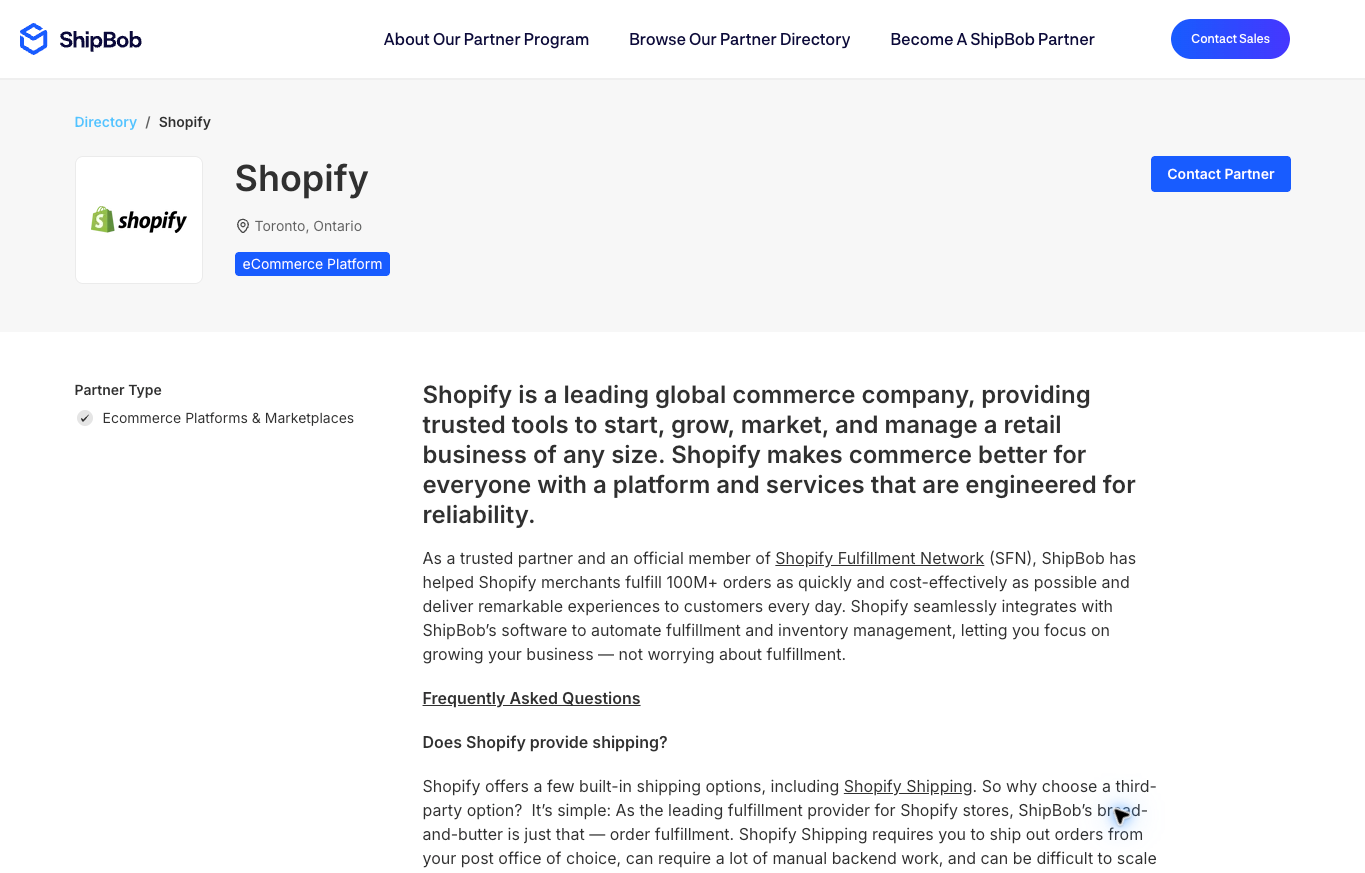
ShipBob’s public integration information describes Shopify connections for importing orders and exchanging data. Its Shopify partner information describes inventory synchronization and warehouse-level stock visibility. Treat those descriptions as provider statements until your own workflow is evaluated.
The company also describes additional services such as packaging, bundling, freight and return integrations. Confirm which services belong in your proposal. A listed capability does not establish the cost, eligibility or handling standard for a particular product.
The public pages direct merchants toward a fulfillment-pricing conversation. Request a quote using the actual order profile rather than adopting a general online pick-fee estimate. Specify destinations, packaging and the required service level.
I would investigate ShipBob when the business needs outsourced storage and shipping for owned inventory. The dated Shopify partner capture does not prove an installed integration, order accuracy or a completed shipment.
2. ShipMonk for detailed Shopify order controls

ShipMonk’s current Shopify page describes product, order and inventory synchronization. The page also describes tag-based holds and routing, location mapping, inventory buffers and split-order handling.
These controls deserve attention when your operation involves several locations, kits or orders needing review before release. Confirm the exact rule and exception process. A feature description does not establish a hold will behave correctly in your store.
The provider presents real-time synchronization and accuracy claims. I am not treating those claims as measured results from this article. No product mapping, stock update, order cancellation or operational trial was performed.
My comparison would focus on the proposed receiving, storage and order-handling arrangement. Ask which services, minimums and additional work appear in the quote, and keep the actual responsibilities clear before moving inventory.
3. Amazon MCF for the appropriate stock and country setup
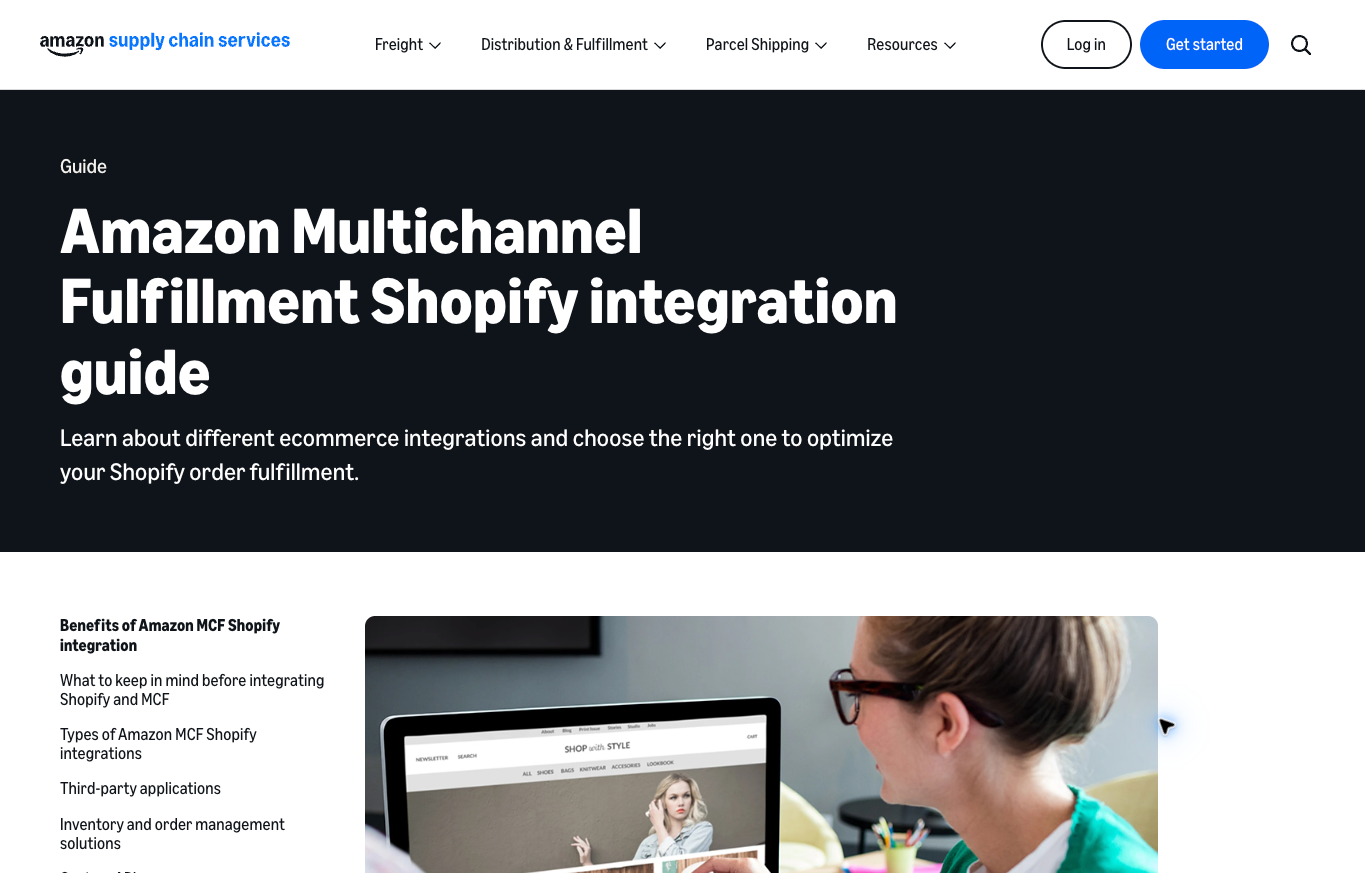
Amazon Multi-Channel Fulfillment uses inventory stored with Amazon to fulfill orders from other channels. Amazon’s Shopify overview describes a free app connecting the store with MCF. Free app access is separate from inventory, storage and fulfillment charges.
Amazon’s user guide lists October 13, 2026 as the scheduled deactivation date for the older Amazon MCF: US Fulfillment app and provides migration steps for the newer MCF and Buy with Prime app. Existing users should confirm the installed app version and follow the current migration procedure before relying on the old connection. This guide has not verified shutdown execution or migrated a store.
The official guide describes automatic product mapping when Shopify and Amazon SKU values match. Different SKU values require custom mapping. Confirm the product identifiers and selected shipping preferences before relying on an automated order path.
Country coverage needs particular care. The current overview includes Japan in its app list, while the detailed guide describes Japan and Australia as requiring third-party integrations. Those public pages conflict. Confirm the selected country’s current supported arrangement with Amazon before committing.
The guide also says MCF returns are not directly supported through the Shopify app, and return postage is not covered by Amazon. Define the actual return workflow rather than assuming an order integration handles every exception.
I would compare MCF around the inventory and destinations involved. The dated official guide capture is reference material, not a connected Seller Central account or a shipment test. Buy with Prime is a separate eligibility and service decision.
Decide who owns and funds the stock
Write down whether the retailer buys inventory, uses stock already held elsewhere or works with an authorized supplier shipping directly to the buyer. These arrangements involve different cash commitments and responsibilities.
A fulfillment warehouse does not automatically provide the products you sell. In an owned-inventory model, someone funds the stock and arranges replenishment. Outsourcing packing changes the operational task, not the underlying product decision.
For supplier-direct orders, establish authorization, order submission, shipping and warranty handling with the actual supplier. Do not add a warehouse to the process solely because another retailer uses one.
Keep reported inventory separate from confirmed availability. A product record, imported catalog or warehouse photograph supplies no evidence a particular quantity is available for your next order.
Use the high-ticket dropshipping overview to understand the supplier-direct retail model. Compare the responsibilities before deciding whether outsourced inventory storage fits the business you want to run.
Describe a representative order before requesting prices
Prepare the product dimensions, weight, packaging and variation identifiers. Record how many items normally ship together and which items need special handling. A quote for one small parcel does not establish the cost of your actual order mix.
Describe destinations using real order information where available. Separate domestic and international demand, and identify any locations requiring a different service. Keep a forecast labeled as a forecast rather than presenting planned orders as actual history.
Include expected stock levels, replenishment frequency and seasonal peaks. A provider needs the proposed receiving and storage arrangement to quote the operation. Avoid reducing the comparison to the shipping fee alone.
For bundles and kits, define the exact components and whether assembly happens before storage or during picking. Record the identifiers and substitution rules. An advertised bundling capability does not define the work required for your particular offer.
If products have restrictions or specialist handling needs, resolve acceptance and documentation before shipment. Product eligibility deserves a direct decision with the provider and appropriate qualified advice. A broad industry page does not establish approval of every product in the category.
Compare the complete quote
Request receiving, storage, picking, packing, packaging, postage and any additional charges. Confirm onboarding costs, minimum monthly commitments and separately priced work. Read the actual proposal and agreement rather than treating a headline fee as the full cost.
Ask how dimensions, weight and order size affect the charge. A quoted average needs the underlying assumptions. Keep carrier surcharges, peak-period changes and unusual handling in the review where those items apply.
Here is an original hypothetical comparison, not a provider quote. One hundred orders with a $4 handling charge total $400 before postage. Adding $200 of storage and receiving brings the stated costs to $600, or $6 per order before remaining expenses.
At fifty orders with the same $200 fixed expense, the handling total is $200 and the combined total is $400, or $8 per order. The example illustrates how order volume changes an allocated cost. The numbers are not expected rates or a forecast of your actual operation.
Review a lower-volume case and a peak-period case before committing. Keep unsold stock, returns and customer-service costs in the business budget. A fulfillment provider’s efficiency claim does not establish your retail margin.
Put the quotes side by side using the same order volume, product dimensions and destinations. Mark packaging, return handling and other exclusions next to each price. Ask the provider to price missing work before choosing the cheaper proposal. Keep the written assumptions with your comparison so a later invoice has a clear reference.
Prepare receiving records and product identifiers
Confirm receiving requirements before dispatching inventory. Ask how the warehouse expects products, cartons and inbound shipments to be identified. Follow the agreed instructions for the actual product and location.
Keep SKU records consistent between the store and the fulfillment system. Identify each variation and unit of sale. A single item, a multipack and a kit need records matching the way the order should be picked.
Keep your dispatch count, the carrier’s delivery record and the warehouse’s receiving count together. Compare quantities by SKU and report missing or unexpected units through the agreed receiving process. Wait for the warehouse’s stock confirmation before adding those units to available inventory. Carrier delivery confirms arrival, not completed counting or availability for picking.
Review damaged, missing or unidentified inbound goods separately. Identify the evidence and responsible contact required to resolve the issue. Do not assume the provider’s ordinary receiving process includes every quality check you need.
Maintain the current product records outside the integration where appropriate. Keep dimensions, packaging revisions and stock ownership clear. A later change to a bundle deserves an updated operational record before the new offer goes live.
Separate order acknowledgment from shipment
Map the events in the order workflow. The Shopify order, fulfillment request, warehouse acknowledgment, packing stage and carrier handoff are different events. Decide which record establishes each step.
Write down which orders need a hold for payment review, address correction or product restrictions. Assign someone to review each exception and specify who releases the order after resolution. During an agreed pilot, check whether the warehouse receives the hold and respects the release decision. Do not assume a Shopify status alone controls warehouse picking.
Review cancellations and changes as separate workflows. An order already being packed deserves a different handling decision from an unreleased request. Establish the cutoff and communication route through the actual provider’s terms.
For split orders, inspect the customer experience and associated charges. Several warehouses or several product types often involve several shipments. Make the tracking and delivery expectation clear instead of implying everything arrives together.
Ask how failed synchronization becomes visible and who reviews the exception. A missing error notification is an operational problem even when most orders flow normally. Keep a process for checking unresolved requests.
Build the delivery promise from the actual service
Separate processing time from carrier transit and the total customer expectation. An advertised fast-delivery range does not establish a guarantee for every address, cutoff or product.
Confirm the route, service level and actual exclusions before publishing delivery language. Keep seasonal changes and carrier limitations in view. A provider’s sales page is the starting point for questions, not a replacement for the agreed service.
For bulky or high-ticket items, identify the delivery scope. Curbside delivery, unloading, appointment coordination and installation are different services. A parcel-fulfillment comparison does not establish a white-glove arrangement.
Use my shipping software comparison for the software decision. Correct product records and service selection still matter regardless of which tool displays the shipping options.
Give the customer a clear contact when an order has a problem. Keep the warehouse discussion behind a verified customer update rather than sending the buyer between several companies with unclear responsibility.
Define returns and damaged-order handling
Give customers a confirmed return address and authorization process before accepting a return. Agree with the provider on eligible products, receiving charges and the person approving exceptions. Keep the customer refund decision separate from warehouse receipt. Your store needs a refund procedure even when another company receives the parcel.
Set inspection and disposition instructions for returned stock. Specify who decides whether a product goes back into sellable inventory, needs further review or requires disposal. Record the condition, quantity and decision against the return. Reconcile the inventory adjustment with your store before offering the returned unit for sale again.
For damage or an incorrect item, preserve the order timeline, shipment information and relevant photographs. Follow the confirmed claim process. Identify the person deciding the remedy rather than promising reimbursement from an ambiguous policy.
Keep warranty support separate from return receiving. A warehouse handling a box does not become the manufacturer responsible for repairs or replacement parts. Establish the responsible party before making a customer promise.
Run a defined pilot before moving the entire operation
Choose a manageable product and destination scope for evaluation. Record what you intend to check, including receiving, stock updates, an ordinary order and the relevant exception routes.
Use an authorized trial or agreed pilot, and inspect the actual results. Keep order identifiers and dates with the evidence. This article did not run a pilot, so no integration accuracy or warehouse performance is presented as measured here.
Compare the billed charges with the proposed quote. Investigate differences before increasing the commitment. One successful delivery does not establish every product, destination or peak-period workflow will perform identically.
Set a decision condition for expansion. Resolve missing records, unclear issue ownership and operational defects before moving more inventory. A provider’s recognizable name is a weak substitute for evidence from the actual arrangement.
Before connecting the pilot, review the integration’s requested permissions and record who will access customer addresses and order details. Give contractors access suited to the agreed setup task, with a named business owner responsible for the account. Confirm how access ends after their work. Keep these decisions in your setup record rather than relying on a public feature list.
Review the exit process alongside onboarding. Ask how remaining inventory is counted, prepared and released if the relationship ends, and which charges apply. Keep the relevant product and order records available through the agreed process. Moving inventory to a provider without an exit plan creates another unresolved operational task.
Keep sourcing and fulfillment decisions connected
The high-ticket niches list supports product-category research. Choose a focused customer need and investigate the actual fulfillment demands before assuming every niche suits a standard parcel warehouse.
Follow the high-ticket supplier research guide for dealer relationships. Confirm authorized-sale rules, product data, shipping and warranty ownership from the actual supplier.
Supplier Paradise is an owned research resource. Verify each lead and the proposed operating process before relying on the relationship for customer orders. A directory entry does not prove stock allocation or approval of a retailer.
Use the business formation guide for setup questions. Keep commercial agreements and account responsibilities tied to the actual business and appropriate professional review.
For help defining the next task, review Ecommerce Paradise coaching. Confirm the service scope before purchasing. Coaching does not replace a warehouse quote or inspection of your actual order process.
My sourcing agents comparison covers finding and coordinating products. Sourcing and fulfillment deserve separate responsibilities even when one provider offers both services.
The private-label manufacturers guide adds production context. Keep the approved specification and quality evidence connected to the inventory later received by a warehouse.
Review the wholesale suppliers comparison for another buying route. A wholesale order still needs confirmed quantities, authorization and receiving instructions.
For supplier-direct alternatives, read my dropshipping suppliers guide. Choose the relationship around the actual stock ownership and customer expectations rather than a broad fulfillment ranking.
Send the shortlisted providers the same order profile and request a written scope with the complete quote. Resolve receiving, holds, returns and issue ownership before moving inventory. Then judge an agreed pilot against those requirements. The screenshots in this guide document public provider information. Your decision still needs evidence from your own proposed operation.

Trevor Fenner is the founder of Ecommerce Paradise. His main projects are Ecommerce Paradise, Supplier Paradise, and Review Paradise, which is currently in development. TrevorFenner.com publishes research-based reviews and practical guides to online business tools and remote-work services, with clear affiliate disclosures.