

The best sourcing agent is the one that fits the buying process you actually need. Finding a factory, coordinating a supplier you already use and fulfilling individual customer orders are three different jobs. Pick the wrong type and you’ll pay for it later.
So before you ask anyone for a quote, define the product, the destination market and the order model. A service fee headline does not tell you the total purchase cost or who’s responsible when something shows up broken.
This guide compares JingSourcing, SourcinBox and HyperSKU as unlinked research options. Their public pages describe services, not verified performance on your products. No purchase, factory visit, inspection or fulfillment trial was completed for this comparison.
I’ve been selling online since 2005, and at Ecommerce Paradise I teach a different route than most sourcing guides. I prefer USA-based authorized suppliers that ship high-ticket products straight to your customer. If that model is new to you, start with my guide on how high-ticket dropshipping works. Imported inventory and an authorized domestic dropshipping relationship carry very different responsibilities.
The JingSourcing comparison image was captured October 15, 2026. The SourcinBox and HyperSKU images keep their October 12, 2026 capture dates. Confirm current pricing, product scope and written terms before you pick an agent, because a public screenshot does not prove reseller authorization, inventory availability or a completed inspection.
Disclosure: I own Ecommerce Paradise and Supplier Paradise. The three third-party sourcing providers in this comparison are unlinked because this guide does not have verified affiliate destinations for them. Some other tools mentioned later are affiliate links, and I may earn a commission at no extra cost to you.
Choose the service around the order
| Option | Public service scope | Question to resolve |
|---|---|---|
| JingSourcing | Sourcing and production coordination, or support for your existing supplier | Which plan applies, what the unit price includes and who bears quality losses |
| SourcinBox | Dropshipping sourcing and fulfillment through an app | Actual product and destination shipping quote, order handling and issue owner |
| HyperSKU | Sourcing, warehousing and ecommerce fulfillment | Selected service eligibility, stock commitments, storage and fulfillment charges |
Treat these names as starting points for research. No provider gets a universal quality ranking here. Compare each written proposal against one defined product and order model.
JingSourcing: distinguish Pro from Basic
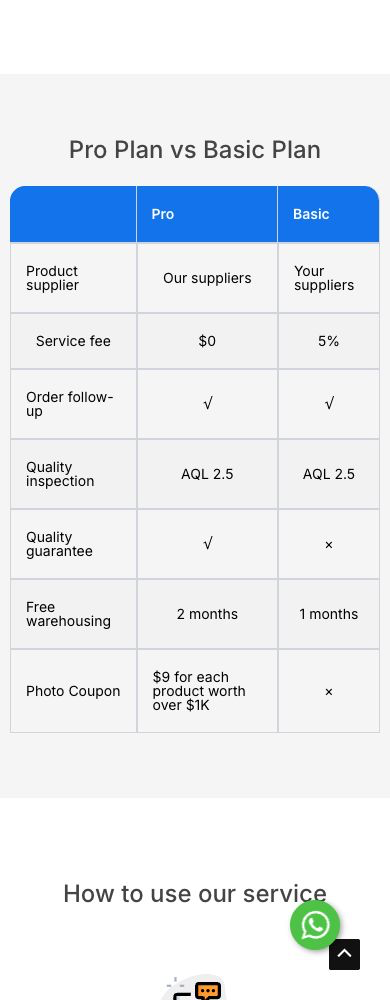
JingSourcing’s current pricing page separates Pro orders through its supplier network from Basic support for your own suppliers. Pro has a stated $0 service fee, with costs included in the product’s unit price. Basic lists 5% of product value with a $100 minimum.
The page also describes different quality loss responsibility. Pro advertises a quality guarantee. Basic describes negotiation with your supplier, with the final loss carried by you or the supplier, so get the written terms instead of treating the headline as an unconditional remedy.
Supplier identity is another decision point. JingSourcing says Pro supplier details are generally not disclosed. Its default inspection description uses AQL 2.5, with higher-ratio or individual inspection quoted separately, so ask what evidence you’ll receive and what the inspection covers for your product.
Here’s how I’d handle this one. Compare the actual unit quote and the responsibilities before you compare the fee percentage, because an included cost is still a cost. The dated public capture shown here does not prove the quality of any sample or shipment.
SourcinBox: investigate the fulfillment workflow
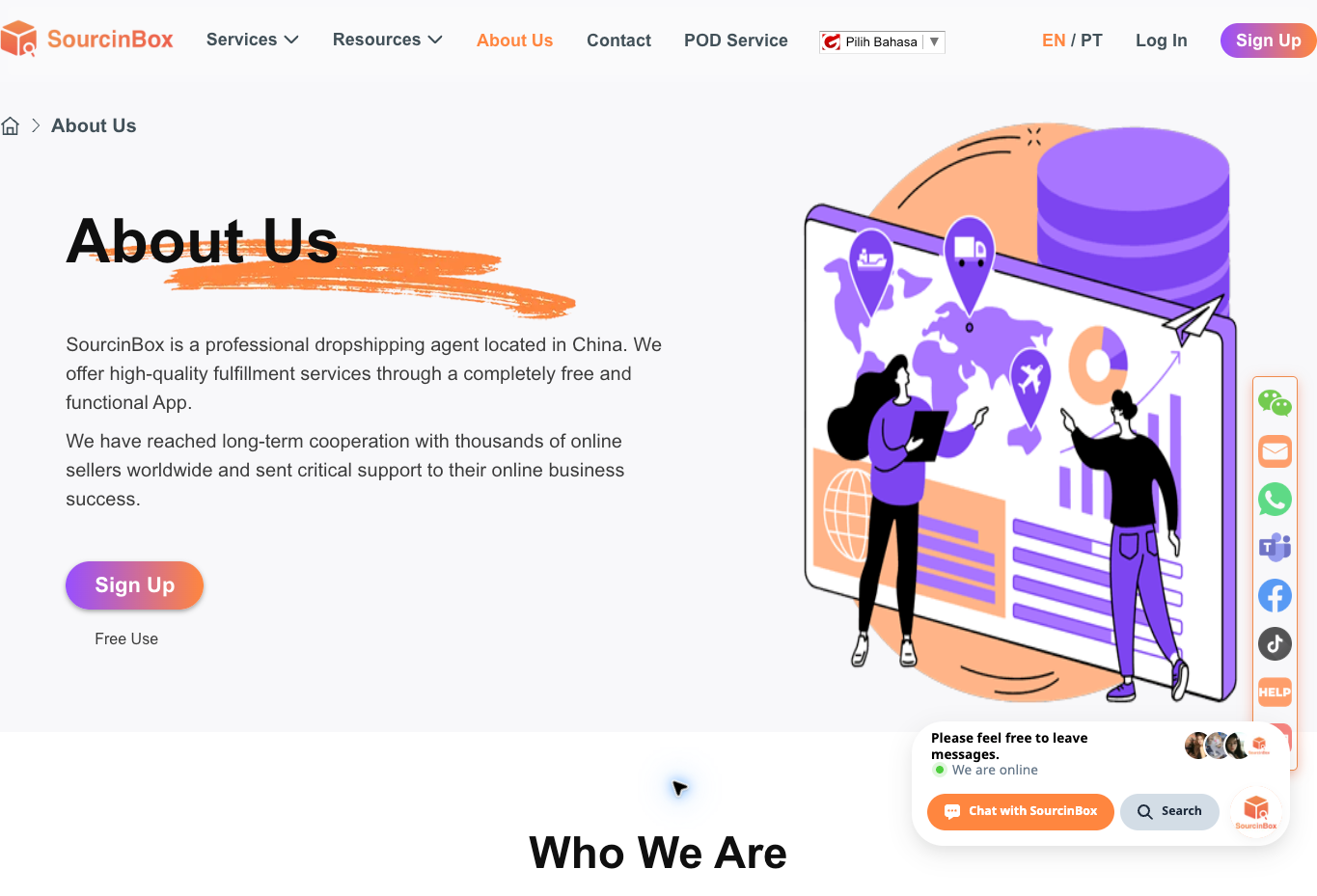
SourcinBox describes itself as a China-based dropshipping agent with free app access. Its company page describes store order syncing, combined or split orders and shipping charges based on a fixed fee plus weight.
Keep in mind that free app access does not give you free inventory, postage or customer support remedies. Ask for a quote on your actual product, packaging and destination. Find out how availability and price changes reach your store before you assume the public workflow fits your operation.
Keep reported capacity and quality statements separate from your own evidence. A company overview does not prove how your order would be acknowledged, inspected or delivered. No store was connected and no customer data was sent during this comparison.
I’d look at this option for a defined individual order workflow. If you need factory disclosure, custom inspection or a specific return arrangement, settle those requirements in the proposed scope before you fund an order.
HyperSKU: separate platform access from order costs
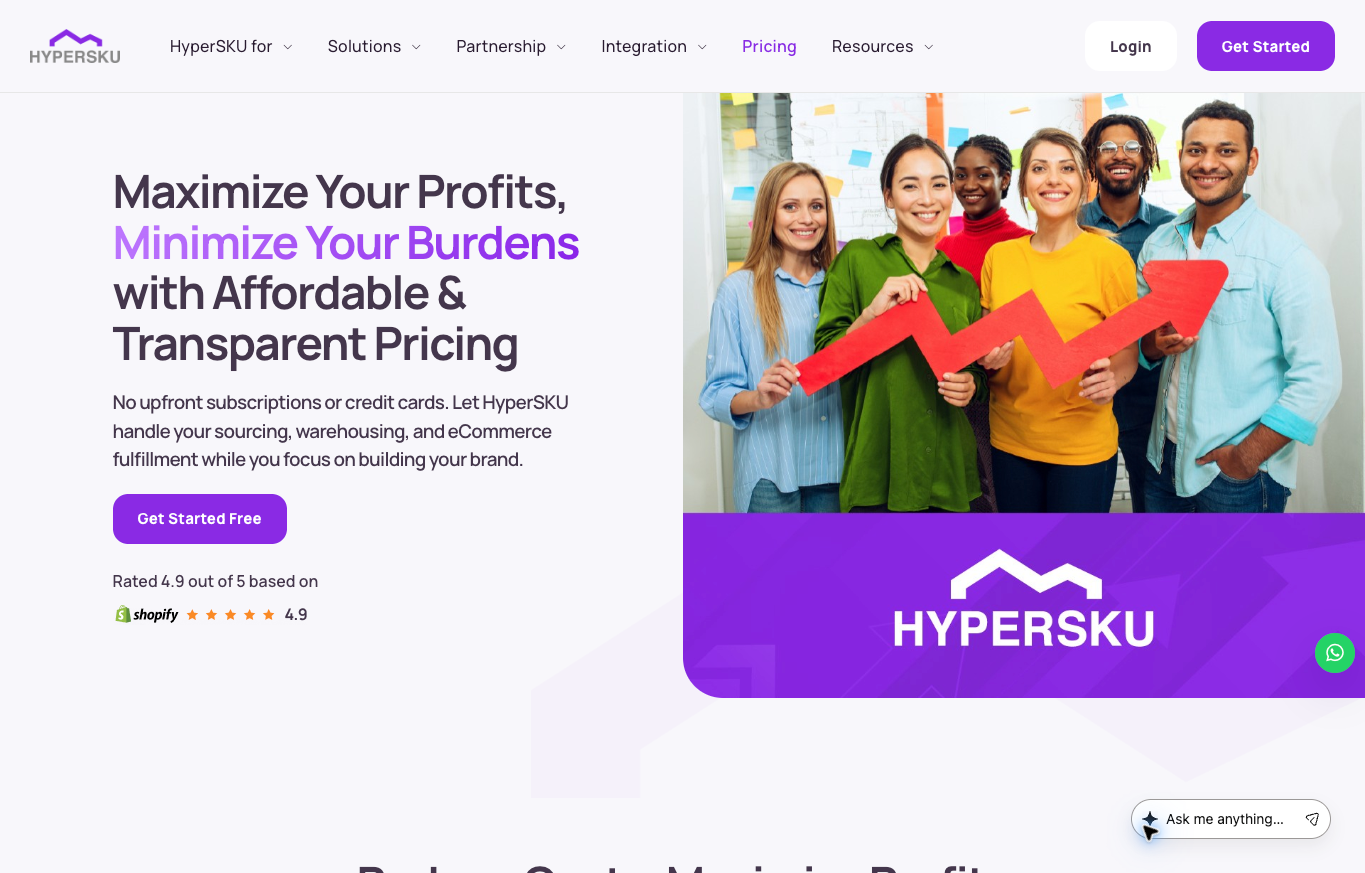
HyperSKU’s current pricing page describes sourcing, warehousing and ecommerce fulfillment with no upfront subscription. The displayed Free and Premium tables both list $0 monthly pricing, with different service allowances. Don’t assume identical eligibility or service scope from the price alone.
The page lists up to 10 connected stores, with $10 per additional store. Free plan storage is listed as up to 30 days in China warehouses, compared with up to 60 days in the Premium table. Confirm eligibility, storage timing and charges after the stated period in your actual proposal.
Public delivery range and cost saving statements do not set a committed timeline for your shipment. Get the product cost, freight route, destination and handling details. The public image documents the pricing overview, not a completed fulfillment trial.
My comparison would focus on the product and route you plan to sell. A platform’s listed capabilities are good questions for a pilot, not proof of order accuracy or margin.
Define the buying model before requesting quotes
Write down if you’re buying a production batch, purchasing ready-made inventory or coordinating individual customer orders. Each choice changes the questions about capital, stock ownership, delivery and returns.
A production project starts with specs, samples and a manufacturing schedule. Individual order fulfillment starts with availability, order acknowledgment and a shipping route. Asking both kinds of provider for their lowest fee does not give you a meaningful comparison.
For an existing factory relationship, name the task you want to hand off. Inspection, consolidation and freight coordination are separate responsibilities, so name the responsible party for each one instead of dumping every issue on an undefined agent.
If you sell branded products, confirm the actual sales authorization and territory rules. A sourcing contact or public catalog does not give you permission to represent a manufacturer or use its product media. This is a big reason I like working with authorized brands that publish MAP pricing and dealer terms in writing.
Keep a record of confirmed facts, reported claims and unknowns. A written quote confirms the offered price under its stated conditions. A testimonial reports another buyer’s experience, and neither proves your future order will go the same way.
Write a specification another person understands
Define the product’s dimensions, materials, color, included parts and packaging. Record the exact variation instead of using a photo as the whole spec. Similar-looking products often differ in details your customers care about.
Include the intended use and destination market. Ask which documentation, labeling and testing requirements need review by qualified specialists. For U.S. sales, the CPSC’s business and manufacturing resources cover testing, certification and import safety, and an agent’s general assurance is no substitute for product-specific compliance evidence.
For customization, specify artwork files, placement, finish and acceptable variation. Name who approves the final sample and how changes get recorded. A chat message about a new color is a poor substitute for an updated, agreed spec.
Describe unacceptable defects in terms an inspector can actually check. A loose part, a missing accessory or a wrong measurement needs a defined checking method. Vague language about premium quality leaves too much open.
Keep the current revision number and approval date with the spec. Share one controlled version through the whole buying process. When requirements change, get a revised quote and schedule before you assume the original agreement still fits.
A clean shared workspace helps here. I’d use Google Workspace for this because shared Docs and Sheets keep one live version of the spec, and you get a professional email on your own domain for supplier talks.
Compare the total quote and the cash commitment
Ask for product cost, agent charges, sampling, packaging, inspection, storage, shipping and any separate destination costs. Compare equal quantities and delivery arrangements. A low unit price with exclusions is not the same as a complete quoted service.
Ask which currency applies and how long the quote stays valid. Record payment fees and the conditions for a price change. Keep an estimate separate from a fixed commitment, especially when freight or exchange rates are still open.
If you pay overseas suppliers, look at how currency conversion affects the real cost. Wise is worth checking here. I like it for international supplier payments because its business account is built for sending money across currencies, but always compare the fees shown at the time you pay.
Here’s an original calculation, not a provider quote. Buying 100 units at $12 each costs $1,200 before other charges. Adding $300 for defined handling and shipping gives you $1,500, or $15 per unit, before any remaining expenses.
If 5 units from this hypothetical order are unusable, dividing the same $1,500 by 95 sellable units gives roughly $15.79 per sellable unit. This shows a sensitivity check, not an expected defect rate or a forecast of your margin.
Retail margin needs more than the landed product cost. Account for payment processing, customer delivery, returns and advertising where they apply. Don’t publish a selling price based only on a sourcing page’s cost saving claim.
Track cash timing as well as unit economics. Identify the deposit, balance, storage charges and stock commitment. A profitable-looking spreadsheet does not prove you have the cash to fund the order and handle a problem.
Keep that cash in a dedicated business account. Mercury is a solid option, and I like it because it’s built for online businesses and keeps supplier deposits separate from personal money. Pair it with simple bookkeeping like FreshBooks so every deposit and balance payment is recorded.
Approve the sample against the written requirements
Order the right sample through the agreed process before you commit to a bigger purchase. Check the exact spec and packaging instead of approving it because it looks fine at a glance.
Document measurements, included parts and any defects you see. Photograph the relevant details and keep the sample identifier. Separate what you observed from what the provider says will change during production.
Approving a sample does not guarantee identical results across a production batch. Ask how the approved sample ties to the manufacturing spec and inspection records. Confirm the process for a requested change before you approve the next stage.
For a product that needs specialist testing, use qualified review. A visual inspection does not confirm electrical safety, material composition or regulatory compliance. Keep each claim attached to the evidence that supports it.
Write down the decision and anything still open. Approve a defined version only after the requirements are met. If the provider proposes a substitution, ask for the updated details instead of assuming a similar product meets the original spec.
Establish inspection scope and issue ownership
Specify who inspects the goods, when inspection happens and which checks are included. Ask whether the report covers a sample or every unit. A reported inspection standard does not mean your whole batch is defect-free.
Confirm the records you’ll get before releasing the shipment. Product identifiers, quantities, photos and the relevant test or checking results show what happened. A simple passed message lacks the detail you need to settle a later disagreement.
Define the remedy for a bad result in the proposed agreement. Clarify rework, replacement, repeat inspection, freight and payment responsibility. Don’t assume reimbursement from a public quality headline without reading the applicable terms.
Record an escalation contact and a response process. If a product arrives damaged or wrong, name the evidence required and the person who reviews the issue. Keep the timeline instead of letting several parties point you somewhere else, which is a real pain in the butt when you’re out money.
Separate the customer-facing promise from the supplier’s proposal. Your buyer needs accurate expectations based on confirmed policy. An unresolved warranty arrangement does not belong in a published guarantee.
Map order acknowledgment, shipping and returns
For individual order fulfillment, define how the order reaches the provider and how acceptance is confirmed. A connected app does not prove stock allocation, payment or shipment. Name the event that proves the order has entered the actual fulfillment process.
Ask how availability updates reach your store and how substitutions are handled. Decide who pauses sales when an item becomes unavailable. An old product import or a warehouse photo is no evidence of current inventory.
Separate processing time, carrier transit and the total delivery expectation. Record the selected route and destination. Don’t turn a broad advertised shipping range into an unconditional promise for every order.
For U.S. customers, the FTC’s business guide to the Mail, Internet, or Telephone Order Merchandise Rule explains the need for a reasonable basis behind shipping promises and how to handle delays and refunds. This is not legal advice, so review what applies to your business.
Clarify tracking, failed delivery and damage handling before you expand. Ask where returns go, who authorizes them and which costs apply. A low purchase price loses its appeal fast when the exception process is undefined.
For freight or large items, get the actual delivery scope and buyer requirements. Curbside delivery, unloading and installation are different services. Never imply one service includes another without written terms that back it up.
Use my shipping software comparison when you review the software side of your operation. A shipping platform still depends on correct package information, service selection and the carrier’s terms.
Before you connect an order app, review the requested permissions and the customer information involved. Give access to the person handling fulfillment and remove unnecessary permissions through normal account controls. Keep a record of which system receives orders, who reviews exceptions and how access ends if the relationship stops.
Run a defined pilot before increasing the commitment
Choose one product, one variation and a manageable destination scope for the first trial. Set the order size around the exposure you’re prepared to accept. A pilot needs a defined purpose, not a vague plan to see how it goes.
Record the expected acknowledgment, inspection evidence, dispatch and tracking milestones. Compare what actually happens with the written proposal. Keep the dates and supporting records so a delayed response doesn’t turn into an argument from memory.
Look at how the exception process works, not just a successful shipment. See how the provider responds to a documented concern and whether the agreed owner follows through. One delivery does not prove consistent performance across every product and destination.
Don’t expand just because the first unit looked good. Review packaging, total cost, communication, stock accuracy and any open defects. Repeat the relevant check when the factory, product version or shipping setup changes.
To be clear, this article did not run a sourcing pilot. The process here is a framework for your own evaluation, so keep your conclusions limited to the products, quantities and routes your actual evidence covers.
Choose between sourcing and an authorized supplier relationship
Imported inventory is one retail model. An authorized supplier shipping directly to the buyer is another, and it’s the one I teach. My high-ticket dropshipping overview explains who handles what before you choose a workflow.
If you do import, the U.S. Customs and Border Protection page on import and export basics explains your role as the importer, including fees and payment. Customs, duties and product rules are extra work you need to plan for when you import.
My high-ticket niches list organizes product category research. Look at the customer need and supplier access instead of assuming a popular imported product fits the business you want to run. Go deep before you go wide.
Follow my high-ticket supplier research guide when you investigate dealer relationships. Confirm authorized sale rules, product data, order handling and warranty ownership. Agent sourcing does not give you manufacturer authorization.
Supplier Paradise is my own research resource for finding supplier leads. A lead still needs verification of the actual commercial and operational arrangement. Record what the supplier confirms and what’s still unknown.
Use my business formation guide for setup questions. Legal, tax and import obligations deserve current advice for your situation, separate from a sourcing provider’s sales pitch.
Many suppliers want to see a registered business before they approve you. Northwest Registered Agent is my default pick for LLC formation and registered agent service, and I like it because the offer is focused and easy to understand.
If you need help choosing your next business task, look at Ecommerce Paradise coaching. Confirm the actual scope and your responsibilities before you buy. Coaching does not replace the quote, agreement or inspection evidence for your order.
Continue the comparison with a specific decision
For branded production, read my private label manufacturers comparison. Keep product development, minimum quantities and quality evidence tied to the proposed production relationship.
My wholesale suppliers guide covers another buying route. A wholesale account still needs confirmed pricing, sale authorization and order terms. Don’t transfer an agent’s public promises to a separate supplier.
For category selection, use my high-ticket dropshipping niches comparison. The category decision comes before funding inventory, and a sourcing service’s availability does not prove demand or profit.
My dropshipping suppliers guide adds context for supplier selection. Match the actual fulfillment relationship to the customer expectations you plan to publish.
So with that said, here’s the bottom line. For JingSourcing, settle the selected plan and quality loss terms. For SourcinBox, settle the product, destination and order workflow. For HyperSKU, settle the selected service scope and order costs.
Choose from written evidence, not a broad ranking or a zero-fee headline. Sourcing takes real money, time and follow-up, and nobody can promise you results. If you want a model with less import risk, the authorized supplier route is where I’d start, and my free high-ticket dropshipping mini course walks you through it step by step.

Trevor Fenner is the founder of Ecommerce Paradise. His main projects are Ecommerce Paradise, Supplier Paradise, and Review Paradise, which is currently in development. TrevorFenner.com publishes research-based reviews and practical guides to online business tools and remote-work services, with clear affiliate disclosures.