
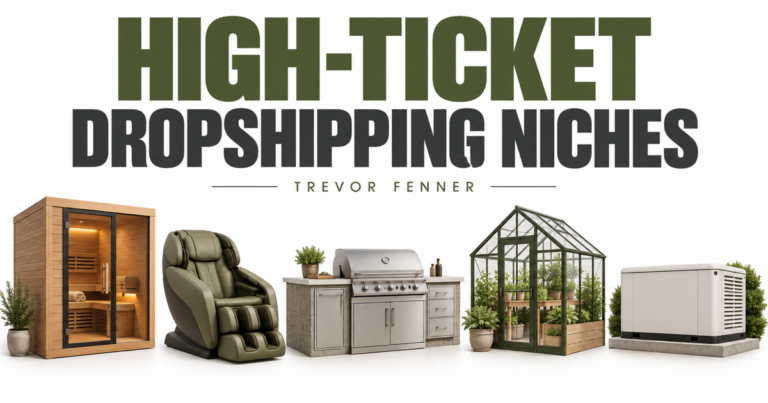
The best high-ticket dropshipping niches fit a real customer need and an operating model you actually understand. That’s the starting line. A high retail price on its own doesn’t prove supplier access, demand or profit.
This shortlist covers saunas, massage chairs, outdoor kitchens, greenhouses and backup generators as research candidates. None of them comes with a promise of easy sales or a blanket claim that any retailer can get approved.
So pick a focused customer and product category before you build a broad store. The questions that matter are about the actual supplier, product, delivery and support arrangement.
At Ecommerce Paradise, I focus on the responsibilities behind the retail model. I break that model down in my guide to what high-ticket dropshipping is. A niche needs evidence beyond a nice product photo and a big price tag.
I’ve been selling online since 2005, and today my team builds stores in high-ticket categories for clients. Through Ecommerce Paradise I also build done for you stores and handle supplier recruiting for clients. So I’ve seen how much the operating details matter once orders start coming in.
The 2 real research-tool and platform captures keep their October 11, 2026 dates. No supplier agreement, customer demand experiment, keyword query or store launch was completed for this comparison.
Disclosure: I receive compensation when a qualifying affiliate referral earns a commission, without adding to your purchase price. I own Ecommerce Paradise and Supplier Paradise.
Compare the question each category needs answered
Here’s the quick view. Each category has its own buyer decision and its own operating proof you’ll need before you sell it.
| Candidate | Customer decision | Required operating evidence |
|---|---|---|
| Saunas | Model, site and installation arrangement | Freight, unloading, assembly and the actual heater requirements |
| Massage chairs | Fit and the chosen model | Delivery configuration, doorway clearance and service ownership |
| Outdoor kitchens | Compatible components for the project | Actual dimensions, fuel configuration and installation scope |
| Greenhouses | Structure and intended site | Model instructions, foundation, anchoring and included parts |
| Backup generators | Portable or standby arrangement | Product eligibility, qualified installation and service support |
Keep each category on hold until the material questions are answered. A relative ranking is a research aid, not evidence of guaranteed revenue.
1. Saunas: define the delivery and site requirements
A sauna category needs a precise product and customer scope. Indoor and outdoor models raise different site questions, and the actual heater and assembly setup matter to the offer.
Almost Heaven’s current shipping policy describes LTL curbside delivery or dedicated flatbed arrangements, with separate responsibilities for moving components and some larger-model unloading. Those terms show one manufacturer’s delivery process. They’re not a universal policy for every sauna supplier.
For research, record the actual packaged dimensions, delivery access and included service. Curbside delivery doesn’t mean the carrier brings the product to the final installation spot or assembles the sauna.
Review the model’s site and electrical requirements with qualified professionals. Don’t turn a retail description into installation instructions or a health claim. Keep warranty and damage handling tied to the actual supplier agreement.
On health claims, the FTC’s Health Products Compliance Guidance explains that health-related ad claims need competent and reliable scientific support. That’s a big reason I’d keep sauna copy focused on the product itself.
I’d hold the category when the delivery promise or support owner is unclear, no matter how good the headline price looks.
2. Massage chairs: check the specific model and access path
A massage-chair shortlist needs more than a general width measurement. The selected chair, delivery configuration and route into the building all belong in the buying process.
Human Touch’s current doorway guidance lists different clearances by model and configuration. Some measurements apply only when specific parts are removed. The manufacturer explicitly cautions against assuming every model supports disassembly.
Treat that as a reason to get the actual model’s delivery requirements, not as a general instruction to remove chair parts. Doorways, turns and the final room need review by the responsible delivery team.
Define the scope of delivery, setup and after-sales service. A chair arriving at the property is different from a chair installed in the intended room. Confirm who handles parts, warranty questions and an unsuitable delivery.
Don’t promise medical results or universal comfort. The research decision should rest on product fit, supplier access and a service arrangement you’re prepared to explain.
3. Outdoor kitchens: compare the complete configuration
Outdoor-kitchen products are often part of a bigger project. A grill, side burner and other components need compatible dimensions and the intended fuel configuration.
Bull’s public side-burner information and installation material show why the exact model matters. Product dimensions and installation cutouts belong to a specific component, not a broad promise that every item fits every island.
Prepare a configuration record showing the actual components, included parts and open compatibility questions. A general category photo doesn’t mean the buyer receives every item in the scene.
Keep product supply separate from construction and qualified installation. Gas connections, clearances and local requirements need the manufacturer’s instructions and professional review. This guide supplies no installation procedure.
A focused product-and-customer scope beats advertising complete outdoor projects before the supplier and service responsibilities are confirmed. Go deep before you go wide here.
4. Greenhouses: investigate the structure and foundation
A greenhouse category needs the actual model, intended site and assembly arrangement. A similar-looking structure doesn’t have identical dimensions, included hardware or ratings just because it looks alike.
Canopia’s public product and assembly information shows model-specific foundation and anchoring requirements. Its anchoring kit lists compatible product families. An accessory marketed for several models isn’t proof it fits every greenhouse.
Record the supplied components, required separate purchases and who handles assembly. Don’t turn a nominal floor-size label into a complete site plan or an assumed allowance for every local condition.
Use the actual model documentation for the foundation and installation review. Environmental ratings and exclusions need their own confirmation before you repeat them to a buyer.
I’d hold the category when missing parts, assembly responsibility or the damage process gets in the way of a clear customer offer.
5. Backup generators: separate the product from the installation
Portable generators and permanently installed standby systems involve different buying and service arrangements. Define which product scope you’re researching instead of treating all backup-power products as one simple shipping category.
Generac’s current standby quote guidance describes a complete project involving the unit, transfer switch, installation labor, electrical work, fuel connection and site preparation where applicable. A unit’s retail price is not the full project’s price.
The manufacturer describes qualified installers evaluating sizing, site conditions and local requirements. Keep those responsibilities clear. A product-only retailer doesn’t automatically provide the same installation and service arrangement as an authorized local dealer.
Safety belongs in the research too. The CDC’s carbon monoxide basics page notes that portable generators produce carbon monoxide and should never run inside a home or garage, so your product information has to handle that seriously.
Confirm authorized-sale rules, product eligibility and support ownership before you consider a store commitment. Don’t publish a broad capacity, placement or installation promise from a generic category description.
For this shortlist, the category stays a research candidate. It’s not a recommendation to buy stock, accept an agreement or perform installation work.
Start with the buyer’s actual decision
Define the customer, intended use and product scope. A homeowner replacing one component faces a different decision than somebody planning a complete installation.
Write down the questions the customer needs answered before buying. Fit, compatibility, delivery, installation and service often matter as much as the advertised features. Keep the real questions instead of assuming every expensive product sells through the same process.
Review the available product information and customer feedback for the specific category. Separate an observed question from an assumption about buyer demand. A review describing a problem points to a research topic, not the size of a market.
Choose a scope you’re willing and able to learn and support. A big order value is a weak reason to enter a category when you can’t explain the actual offer or resolve basic operating questions.
The high-ticket niches list gives you a broader research starting point. Use a list to organize your investigation, not to treat every entry as a validated opportunity.
Separate public product information from supplier permission
A retail listing shows what the merchant presents publicly. It doesn’t prove a manufacturer will approve your store, give you wholesale pricing or ship orders for your business.
Keep authorized-sale rules, territory, pricing restrictions and fulfillment responsibility in a separate supplier record. Mark each item confirmed, reported or unknown. A plausible operating assumption deserves confirmation before it becomes a customer promise.
Follow the high-ticket supplier research guide for the dealer-recruiting framework. I always push for USA-based authorized suppliers. Prepare your unanswered questions for review instead of declaring approval from a public website.
Supplier Paradise is a research resource I own. A supplier lead from it still needs verification of the actual commercial and operational arrangement.
Record who handles order acknowledgment, stock allocation, delivery changes, returns and warranty support. A familiar manufacturer name doesn’t settle those responsibilities for your proposed retailer relationship.
Check the fit with your time and support capacity
Write down the hours you have and the tasks you’re prepared to handle. A remote retailer still needs a process for supplier replies, buyer questions and delivery exceptions. Being location independent doesn’t remove the work when a customer has a problem.
Fewer, more expensive orders don’t automatically mean less support work. One freight or warranty dispute is a very different job than answering a basic product question. Evaluate the actual service arrangement instead of assuming a high price simplifies the operation.
For a solo business, identify which questions need specialist help and how the buyer reaches the right person. Your laptop and a product catalog don’t supply installation expertise. Keep the technical decision with the qualified provider and explain that boundary clearly.
Choose a scope that matches the category knowledge you’re willing to develop. Researching a focused model family is far more manageable than presenting yourself as an expert in every expensive household product. Keep the learning and support requirements in the niche comparison.
Compare the complete competing offer
List the manufacturers, specialist retailers, marketplaces and local installers that show up for the actual buying question. They serve different roles. A seller quoting a complete installed project is different from a website showing the product-only price.
Compare the same model and the actual included service. Record delivery, assembly, warranty handling and the limits of the advertised offer. Similar photos or category names don’t mean the competing products and obligations are identical.
Don’t declare a market gap before checking the evidence. Missing information on one page is a question to investigate, not proof the whole market is underserved. A proposed advantage needs a credible operating process behind it.
Keep the research date and exact product with your notes. Supplier policies and offers change, so a past competitor example doesn’t establish current pricing or eligibility. Use the comparison to spot unresolved requirements before you make a commercial commitment.
Calculate contribution with actual terms
Begin with the actual retail price and the confirmed cost available to your business. Keep a public retail listing separate from an approved dealer cost. Don’t invent a wholesale margin just because the category looks expensive.
Here’s an original hypothetical example, not a supplier quote. A $3,000 sale with a $2,100 product cost leaves $900 before other expenses. Subtract $180 shipping, $90 payment fees, $300 acquisition cost and a $60 planning reserve, and you’re left with $270.
That example is arithmetic, not an expected industry margin or a forecast. The remaining amount is before other operating expenses and tax. The reserve is a planning assumption, not a measured return rate.
Replace every assumption with the actual agreement, quote or observed data when you evaluate a specific offer. Discounts, freight exceptions, cancellations and customer-service work belong in the review where they apply.
Run a lower-contribution case as well as the favorable one. A sale is a bad business outcome when the real costs and obligations exceed the contribution.
Cash timing matters on orders this size too. I like Mercury for a dedicated business account because you can manage it online and watch supplier payments and customer funds in one place.
For keeping the records, my accounting software comparison covers a separate tool decision. A spreadsheet or report doesn’t validate an unconfirmed supplier price.
Research search intent without claiming proven demand
Start with product, model and buying questions in your target market. Separate installation research, comparison searches and ready-to-buy questions. A big broad keyword doesn’t mean the reader intends to buy from your store.
KWFinder through Mangools supports keyword and competitor research with location and language settings, which is why I like it for niche research on a budget. Confirm the selected market and the current tool allowance before you interpret a result.
If you want a wider view of competitors and their traffic, Semrush is a tool I’d compare because it covers keyword, competitor and site research in one account. Same rule applies, though. Its numbers are estimates.
Keep estimated volume, difficulty and advertising figures separate from actual orders. The public interface image records the research tool, not a completed query or a proof of profitability.
Read the actual search results for the relevant question. Manufacturer pages, large retailers and project installers serve different needs. Identify the information a focused retailer would need to provide, without assuming a visible content gap guarantees rankings.
My keyword research tools comparison adds workflow context. A subscription helps organize evidence, but the category decision still needs supplier and operational validation.
Choose test, hold or pass from the evidence
Use a clear status instead of a precise-looking score that no data supports. A category with unanswered supplier permission or installation responsibility belongs on hold until the material questions are resolved.
A research test needs a defined question, scope and acceptance condition. A content comparison or customer-question review is different from a commercial trial with listings, spending or supplier commitments.
Keep real commercial commitments separate from a research exercise. Supplier contracts, ad budgets and listings need a defined business decision backed by the missing evidence. Record the next required fact and the person responsible for reviewing the decision.
Pass on an offer when confirmed terms or support requirements don’t fit the business you’re prepared to run. A high selling price is no reason to ignore a disqualifying obligation.
If you come back to a category later, keep the earlier reason and the new evidence together. A changed product, supplier agreement or delivery arrangement deserves a fresh review, not an automatic reversal of the previous decision.
Choose the platform after defining the operation
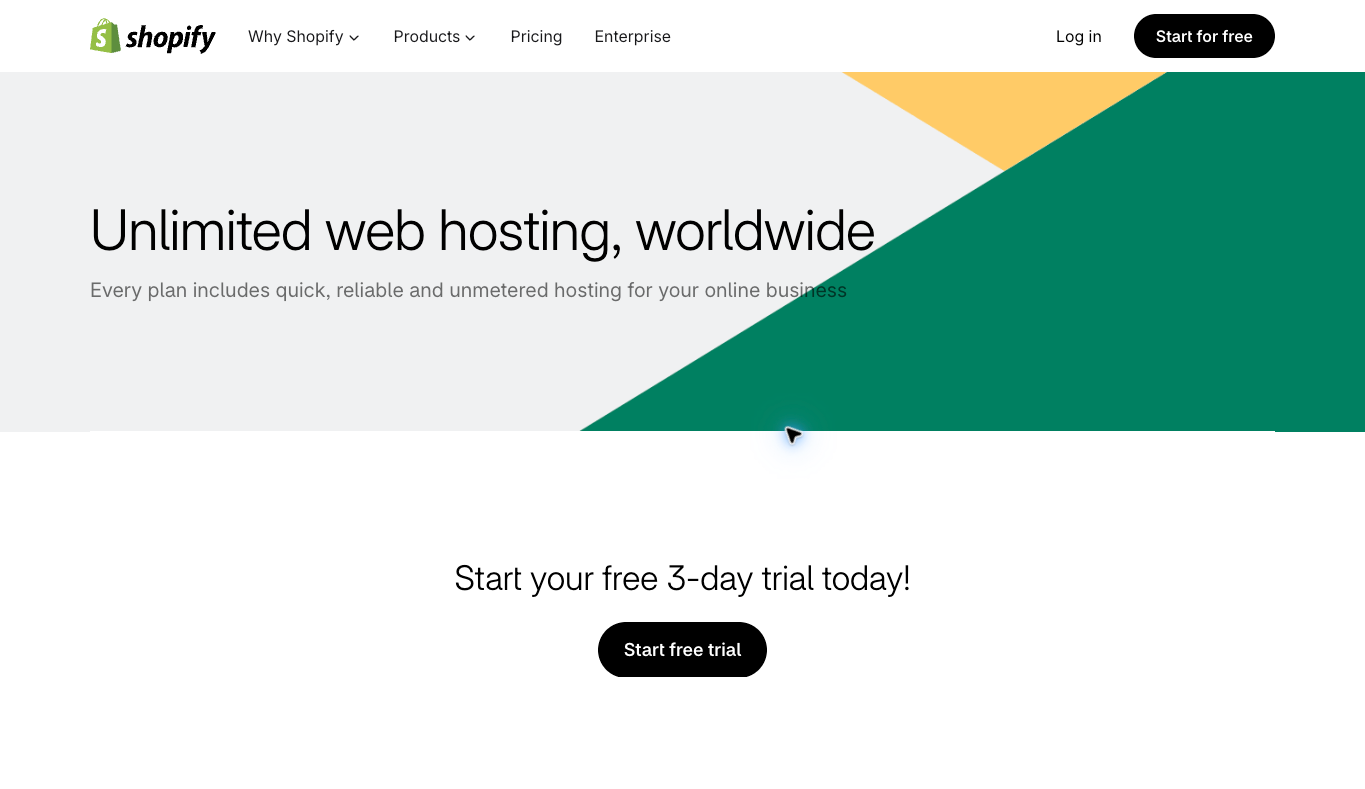
Shopify gives you a commerce platform with included storefront hosting, and it’s what my team uses for client store builds. The platform doesn’t supply your niche validation, dealer agreement or product-support process.
Compare the actual store requirements before you choose a plan or extra apps. A product page needs accurate specs and a confirmed delivery offer, whatever theme you use to present it.
The dated platform capture shows the public included-hosting explanation. No store, checkout or customer order was tested for this article. A platform subscription is a separate spending decision from choosing the category.
My ecommerce platform selection guide adds context for the software decision. Keep the operational requirements ahead of an unnecessary infrastructure purchase.
Build the business foundation around confirmed responsibilities
Use the high-ticket dropshipping overview to understand the retailer and supplier roles. The business model involves real agreements and customer obligations, not just a list of expensive products.
The business formation guide adds setup questions. Legal, tax and installation obligations need current advice for your actual business and location.
I run my business through a Wyoming LLC. If you’re forming one, Northwest Registered Agent is a service I’d look at because it includes registered agent service with the filing. This is educational, not legal or tax advice.
Delivery promises are part of that foundation too. For US sellers, the FTC’s guide to the Mail, Internet, or Telephone Order Merchandise Rule covers shipping promises, delays and refunds, which matters a lot with freight items.
For help defining your next task, look at Ecommerce Paradise coaching. Confirm the service scope before buying. Coaching is separate from supplier authorization or approval of a particular product.
The wholesale suppliers guide covers another research route. A supplier’s catalog still needs the actual pricing, sale authorization and shipping arrangement confirmed.
My shipping software comparison covers a different tool decision. A shipping label or displayed estimate doesn’t establish an agreed freight or installation service.
So with that said, choose one focused research file and keep the unresolved evidence visible. Saunas, chairs, outdoor kitchens, greenhouses and generators each deserve their own product-and-supplier review. No category in this guide is presented as approved, tested or guaranteed profitable.
Here’s the recap. Pick the category where you understand the buyer’s decision, can confirm supplier permission and can explain delivery, installation and service honestly. Then run the contribution math with real terms before you commit to a store. If a category fails one of those checks today, park it with a note and move to the next one.
High-ticket stores can be pretty cool to run once the operating details are solid. But the work is in the details, and it is what it is. That’s exactly why I’d rather you go narrow and get it right.
If none of these 5 feels like the right fit, grab my free list of 1,000+ niches and run each candidate through the same questions. Go check that out.

Trevor Fenner is the founder of Ecommerce Paradise. His main projects are Ecommerce Paradise, Supplier Paradise, and Review Paradise, which is currently in development. TrevorFenner.com publishes research-based reviews and practical guides to online business tools and remote-work services, with clear affiliate disclosures.