

The best CRM software for ecommerce is the one that supports a clear customer follow-up process. So before you compare features, figure out the conversation, the person responsible and the next action. A customer database does not tell you what’s in stock, and it won’t fix every fulfillment problem.
A simple checkout purchase and a contractor asking for a project quote need very different workflows. The quote involves requirements, versions and follow-up before an order even exists. Choose software around your actual process, not some general idea of what every store is supposed to own.
I’ve been running online stores since October 2010, and today I build them for clients through Ecommerce Paradise. At Ecommerce Paradise, I focus on business operations people can actually understand. Your team needs to know where information lives and who keeps each record up to date, because another subscription adds little when those jobs are still fuzzy.
This is especially true in the high-ticket dropshipping model I teach, where a lot of sales start with questions and quotes instead of a quick checkout. Follow-up software supports that kind of operation, but it doesn’t replace supplier relationships or order responsibilities.
This shortlist compares HubSpot and Keap using public provider information. You’ll learn how to decide whether you need a CRM at all, how to define records and owners, how to review integrations by object and direction, and how to budget the full setup. No installation, customer-data import, store integration or sales-performance test was performed for this article.
The existing provider screenshots keep their October 11, 2026 capture dates. Confirm current plan, billing and implementation terms against your own requirements. A dated pricing screen is not a complete startup quote.
Disclosure: qualifying purchases through affiliate links earn me a commission at no extra cost to you. I own Ecommerce Paradise and Supplier Paradise. This guide does not authorize an account connection, customer-data transfer or tracking change.
Compare the customer workflow
| Platform | Workflow to investigate | Cost starting point | Important check |
|---|---|---|---|
| HubSpot | Customer records, deal follow-up and documented Shopify data sync | Free CRM entry point. Paid features and limits vary | Required plan, object-specific sync and implementation scope |
| Keap | Managed lead follow-up and quote-led sales automation | October 13 view $299/month, billed monthly, for two users and 1,500 contacts | Required implementation services and actual integration arrangement |
HubSpot for shared customer context
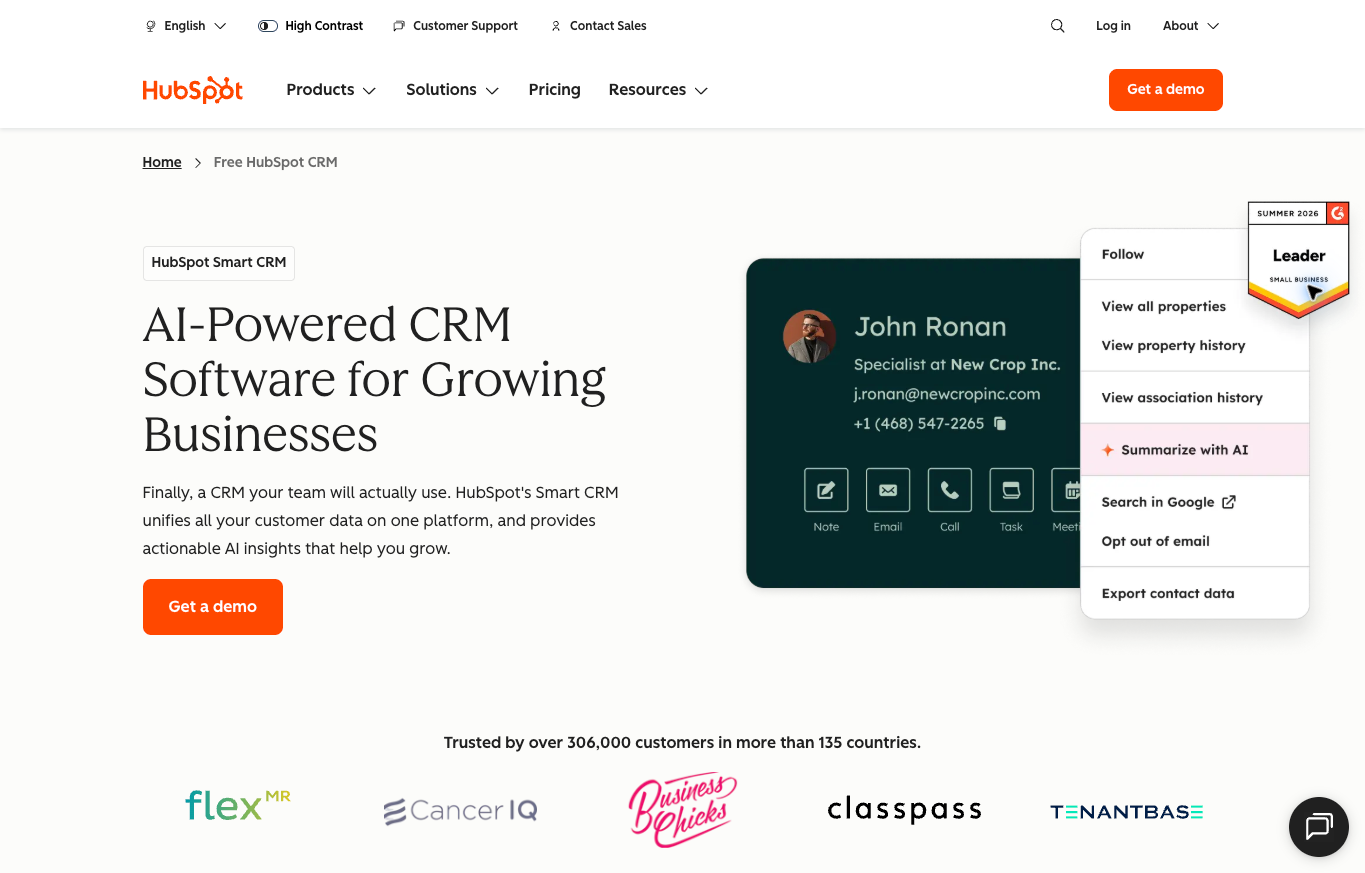
HubSpot presents contact records, communication history, deals, tasks and pipelines. I’d look at it when several people need clear customer context and clear follow-up ownership.
Its free CRM is an entry point, not proof of a complete free ecommerce setup. Figure out the users, reporting, automation and connected information you need. Confirm the exact product and plan before you call the setup free.
HubSpot’s current Shopify Data Sync documentation separates customer, company and product connections from one-way order and cart imports. Shopify orders can’t be edited back through HubSpot. Order and cart imports also don’t automatically merge duplicates.
Review variant support separately from base-product sync. HubSpot’s dedicated guide to syncing Shopify product variants requires a connected Shopify store and product sync first. The variant sync runs one way from Shopify to HubSpot, with changes managed in Shopify, and turning off product sync also turns off variant sync.
The general connection guide still lists a variant limitation. Check the dedicated configuration against your account instead of assuming every base-product connection includes variants or leaves them out entirely. No variant connection was configured for this comparison.
Custom field mappings and company data need their documented plan and store requirements checked. Metafield support is a separate limit. Installation also adds tracking code to your store, so connecting it needs deliberate permission and a data review.
No Shopify integration was installed or tested for this comparison. Review each object, direction, mapping and operational effect with the account owner before you rely on the connection.
Keap for a defined quote and follow-up process
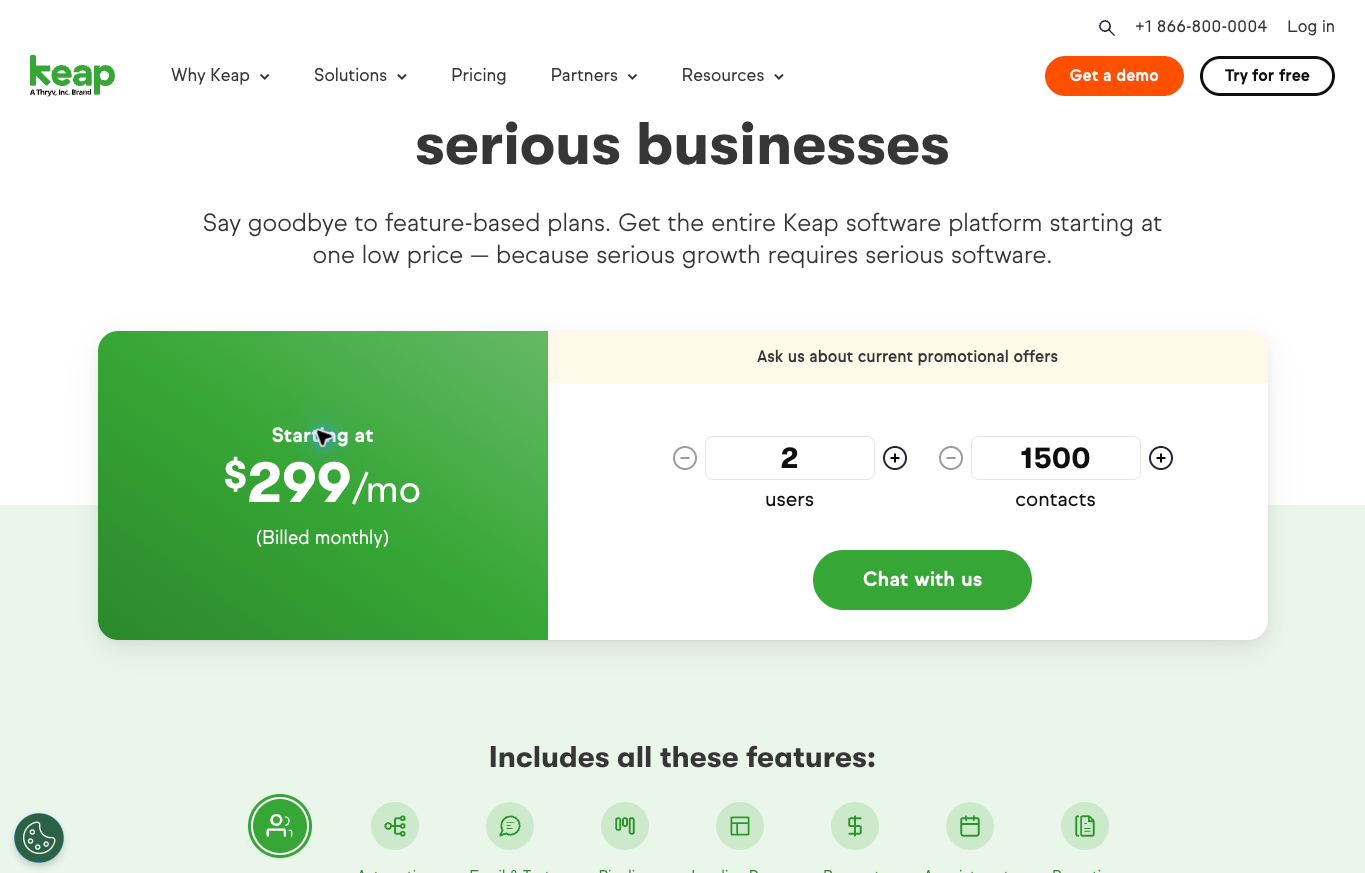
Keap presents contact and company records, notes, tasks, custom fields, quotes and pipeline automation. I’d look at it for a business with a defined inquiry and follow-up process.
The public view checked October 13 showed $299 monthly, explicitly billed monthly, with 2 users and 1,500 contacts. Required implementation services were listed separately. The preserved October 11 screenshot shows the same starting setup, not a complete startup quote.
Ask for the full implementation scope and ongoing commercial terms before you commit. Define what the provider handles, what your team supplies and how future changes get managed. A software price doesn’t cover every migration or training obligation.
For a store, confirm the exact integration arrangement instead of assuming a complete Shopify workflow from a general integrations page. Field direction, timing and exception handling all need their own check. No store connector, customer import or automation was tested here.
Keep the sales record separate from inventory and fulfillment. A scheduled follow-up does not confirm stock, supplier approval or delivery timing. Check the responsible operating records before you make those promises to a buyer.
Decide whether the store needs a separate CRM
Write down the follow-up problem first. Forgotten quotes, unclear ownership and customers asked for the same requirements twice are worth investigating. Inventory availability and shipment tracking belong to different processes.
Look at how complex the conversations really are. A handful of simple checkout questions is very different from several people handling longer project sales. Find the information that gets lost in the handoff instead of assuming every store needs another platform.
Compare the proposed CRM with the tools your team already uses. Sometimes a shared process with clear ownership fixes the immediate gap. A separate subscription needs a defined purpose and someone responsible for keeping the records clean.
Here’s what I’d do. Bring one real inquiry to the evaluation and follow it through clarification, quoting and the next response. A demo built around those steps gives you better evidence than a tour of features that have nothing to do with your business.
Define the record and its owner
Keep the information you need to act. Record the customer’s request, open requirements, the responsible person and the due date for the next response. Another employee should understand the conversation without digging through several inboxes.
Only add a field when the value supports a decision or a responsibility. A long list of optional fields usually makes admin harder. Your team needs a clear reason to maintain every item.
Give each open opportunity one accountable owner. Others can contribute, but the owner checks whether the next customer message got handled. Shared access without assigned responsibility leaves everyone assuming someone else replied.
Use stage labels in plain language. Inquiry received, requirements clarified and quote sent are hypothetical examples, not required defaults. A stage should describe something that actually happened and is supported by the record.
A drafted quote is not a delivered quote. An interested buyer is not a confirmed order. Keep those distinctions so the pipeline shows real work instead of an optimistic forecast.
Attach an actionable next step
Write the next action beside the stage. Waiting on a supplier answer means someone has to go get it. Waiting on a buyer’s decision needs the agreed follow-up date and an owner.
Include the information needed before the action can happen. A salesperson shouldn’t promise delivery while access constraints are still open. Keep that uncertainty visible to anyone picking up the conversation.
Review overdue actions at a regular time. Figure out whether the owner needs information, someone else’s approval or a new deadline. A dashboard showing overdue work doesn’t solve the underlying question.
Close the action when the work is actually done. Keep the response and any new question that came out of the conversation. A checkbox should reflect the customer process, not replace proof of the response.
Keep fulfillment facts in their authoritative records
The CRM explains the buyer’s requirements and conversation. Supplier documents, order records and fulfillment systems hold the operational details. Decide which source you use for stock, delivery, returns and warranty statements.
When a buyer asks about an unusual delivery constraint, record the question and who’s checking the answer. Don’t turn an unconfirmed estimate into a permanent field that another employee repeats as fact.
Set up the order handoff after confirmation. Identify who checks payment and order details, where fulfillment gets managed and who tells the buyer about changes. A tidy sales record only covers part of the operation.
Decide how exceptions reach the customer-facing team. A shipment change needs an agreed notification route. Otherwise a salesperson keeps talking to the customer with outdated information, even with a CRM open in front of them.
Review integrations by object and direction
Document what information moves from each source to each destination. Customer records, products, orders and carts each behave differently. The word sync alone doesn’t mean a two-way connection for every object.
Name the owner of each field. If a value changes in both systems, the team needs a conflict rule and a way to investigate. Two people who each think they control the same record create confusion you could have avoided.
Review existing imports before you turn on another connection. Historical records already in both systems need deliberate matching and duplicate handling. Don’t assume another import is harmless just because the connector shows up in a marketplace.
Spell out the setup each specialized piece of information needs. Product variants and custom mappings have their own documentation. A general product connection doesn’t automatically cover every specialized field or workflow.
Include tracking, permissions and access in the setup review. Installing a connector is an operating change, not a read-only research step. This article does not authorize connecting accounts or transferring customer records.
Plan a small authorized integration check
Define the expected record before you test. Identify the source, destination, field mapping and the condition that triggers movement. Use properly authorized sample information, not private customer records, during a sales demo.
Watch an ordinary record and an exception that matters to your operation. A success message is not proof of correct mappings, duplicate handling or a completed handoff. Keep the actual results and the open questions.
Check notifications and customer-facing messages separately from record movement. A correctly imported contact doesn’t give you permission to start a marketing sequence. Every automated action needs its purpose, recipient and authorization reviewed.
No integration check was performed for this comparison. The process here is a proposed evaluation for the account owner. Neither provider is presented as passing a store-specific test.
Budget the complete implementation
Write down the people, contacts, features and connections your actual operation needs. A starting price describes one particular configuration. Confirm the setup you need instead of assuming every seat or service is in the headline fee.
Separate software access from implementation, migration and maintenance. Someone has to define stages, prepare records, review templates and train users. Even a package labeled onboarding needs its actual scope explained.
For a hypothetical calculation, a $300 monthly subscription plus a $600 setup fee totals $900 in the first month before internal labor. 10 hours of preparation is still a separate resource commitment. These figures are for planning, not a provider quote or a return-on-investment prediction.
Review the billing period and the exit process. Monthly billing, an annual contract and a displayed monthly equivalent are all different commitments. Get the current cancellation and export terms for the plan you pick.
Name the ongoing administrator. Changes to forms, fields, stages and message templates need an owner after setup. The initial implementation does not remove future maintenance, and keep that in mind when you compare prices.
Distinguish a customer inquiry from marketing permission
A product question gives the team a reason to handle that inquiry. The conversation doesn’t automatically give you permission for every promotional message. Keep the original purpose separate from a newsletter or sales automation.
Record the contact source and the basis for the next permitted action. A marketing field needs a clear meaning and supporting evidence. Never invent a consent history after a complaint or an unsubscribe request.
For U.S. commercial email, the FTC’s CAN-SPAM compliance guide explains that marketing messages need a clear way to opt out and that opt-out requests must be honored within 10 business days. Build those rules into your workflow before you turn on any automated sequence.
Limit access to the people who need the information for their jobs. Useful customer context does not belong in a public screenshot. Demos should use suitable sample records, not real contact details.
Keep internal notes factual. Record the open requirement, the promised response or the agreed timing. Unsupported judgments about a person make the record less reliable for the next employee.
This is an operating framework, not a complete legal or security review. Get qualified guidance for the requirements that apply to you. Provider access controls don’t guarantee a safe configuration or a permitted message for every business.
Follow one hypothetical project inquiry
Say a contractor asks for equipment for a project. This fictional example is not a customer result or an account test. The first record identifies the request and the person responsible for responding.
Clarify quantity, specifications and delivery constraints before you prepare the offer. Keep open requirements visible. Moving the opportunity to another stage should never hide missing information.
After confirmation, record the quote version and what was sent. A later change in requirements needs an updated proposal with the context kept. An old quote should never look like it describes the current arrangement.
Follow the timing you agreed with the buyer. A decision expected next week needs a relevant follow-up, not automatic enrollment into daily messages. The system supports the conversation without replacing judgment.
If the opportunity turns into an order, use the defined fulfillment handoff. If not, record the actual outcome and any permitted next step. A buyer choosing another route doesn’t mean the software failed.
Prepare the migration and team instructions
Identify the information that has to be preserved. Contact details, open opportunities, owners, notes and permission records each serve a different purpose. An address export is not a complete customer-process migration.
Keep a recoverable copy of the authorized records and settings before you move anything. Agree on a transition owner and the point when the new system becomes the source of truth. Don’t leave two competing places for the same opportunity update.
Teach the actual handoff to the people using the system. They need to know where customer requests arrive, how ownership changes and what happens when information is missing. Having the technology available doesn’t make the process complete.
Review the first routine before you add more automation. A small pipeline everyone understands is easier to maintain than lots of stages with no defined actions. Add complexity to solve a real need you’ve observed, not just because the platform allows more fields.
Connect the CRM to the wider business
Software is the easy part. The hard part is a business with a clear audience, real suppliers and a defined process. I teach systems and SOPs for exactly this reason, so the follow-up process doesn’t live in one person’s head.
Use the niches list for category research. A defined audience helps you shape the inquiry and quote process before you pick software.
The supplier sourcing guide covers commercial verification. I teach working with USA-based authorized suppliers, so get the actual supplier arrangement in place before you record promises about stock or delivery.
Supplier Paradise is a research resource I own. Directory leads support your investigation, not confirmed approval or delivery terms.
My business foundation checklist frames administration and ownership. Keep the CRM’s billing and access under clear business responsibility.
For help with the bigger business decisions, take a look at my private coaching. Store-specific integration, legal and security reviews are still separate tasks.
Choose around the customer process
I’d look at HubSpot’s current CRM options when shared records and store context are the defined need. Confirm the actual product, plan and object-specific connections.
Look at Keap’s CRM and implementation arrangement if your business is ready to define and maintain guided follow-up. Compare the full scope and ongoing charge with your process.
Start the evaluation with a written workflow. Describe how an inquiry arrives, who owns the response, what the quote needs and how the order handoff works. Whatever subscription you pick needs a clear role in that sequence.
Frequently asked questions
Does every store need another CRM? Identify the actual follow-up problem before buying. Inventory and fulfillment issues need their own operating review.
Does a free CRM mean a complete free setup? Confirm the required users, features and connections against the current plan.
Are all Shopify sync objects two-way? Review each object’s documentation. Orders and carts behave differently from customer and product records.
Does Keap’s starting price include every setup cost? Required implementation services need a separate scope and a complete quote.
Should every follow-up be automated right away? Define the purpose, owner, timing and permitted message before you turn on the workflow.
My take: process first, software second
So with that said, here’s the recap. Write down how an inquiry arrives, who owns it, what the quote needs and how the order gets handed off. A CRM only helps when it has a clear job inside a process your team already understands.
HubSpot is worth a look when several people need shared customer context, as long as you check each Shopify sync object and direction. Keap is worth a look when you have a defined quote and follow-up process and you’re ready for its separate implementation scope. Either way, budget the full setup, not just the monthly price.
Keep fulfillment facts in their real source, keep marketing permission separate from customer inquiries and test any connection with authorized sample data first. Go deep before you go wide, and add automation only after the basic routine works.
If you’d rather skip the trial and error on the store itself, my done-for-you store build service is where my team builds a high-ticket store for you. Go check that out if you want the foundation set up before you layer tools like a CRM on top.
Related guides
The ecommerce platform comparison covers the storefront foundation.
My live chat guide covers another way customers get in touch.
Read the business phone comparison when calls are part of the process.
The assistant hiring guide helps you define admin responsibilities.
My HubSpot solo-consultant guide covers a different customer workflow.

Trevor Fenner is the founder of Ecommerce Paradise. His main projects are Ecommerce Paradise, Supplier Paradise, and Review Paradise, which is currently in development. TrevorFenner.com publishes research-based reviews and practical guides to online business tools and remote-work services, with clear affiliate disclosures.