
The best email marketing software for affiliate marketing is the platform that permits your actual content and gives you a practical way to serve the people who asked to hear from you. A long automation feature list is not much use if the provider does not accept your business model.
I would check that before comparing prices. A creator newsletter with occasional product recommendations is different from a business that mainly sends affiliate offers. Software companies can treat those two situations differently, even when both involve affiliate links.
At Ecommerce Paradise, I focus on building a useful business around a specific audience. Email should support that relationship. It should not become a way to push every offer in the affiliate catalog into the same inbox.
This guide compares AWeber and a conditional Kit use case using official public information checked October 11, 2026. It is a research-based shortlist, not a deliverability test or an account approval. I have not imported subscribers, sent campaigns or tested these platforms for this article.
Affiliate disclosure: some links are affiliate links, and I may earn a commission at no additional cost to you. I own Ecommerce Paradise and Supplier Paradise. A referral link does not mean the email provider has approved your content or business.
Check the newsletter workflow and content fit first. Review AWeber’s current email options →
Quick comparison: two different newsletter use cases
| Option | Use case to investigate | Inspected monthly price | Important boundary |
|---|---|---|---|
| AWeber | Permission-based newsletter with relevant recommendations | Lite $15 or Plus $30 at 0–500 subscribers | Direct permission required; public affiliate templates are not blanket approval |
| Kit | Creator business with limited, properly disclosed affiliate content | Creator $39 or Pro $79 at 1,000 subscribers | Not a fit for an entirely affiliate-based email business; restricted topics apply |
Those are different subscriber tiers, not an equal-size price contest. Prices were read with monthly billing selected. Annual commitments, temporary offers, taxes and other charges need a separate review at the time you choose a plan.
Check the affiliate policy before the feature list
Start by describing your business honestly. What do subscribers receive? How much of the content is your own information, product or service? Which merchants and categories will you recommend? Give the provider something more concrete than saying you are a blogger.
Also distinguish the provider’s affiliate program from the provider’s rules for sending email. Being able to earn a commission for referring customers to an email platform does not prove that the platform permits every affiliate campaign you want to send through it.
I would keep a dated copy of the relevant policy and any account-specific clarification. If the content is near a restriction, ask the provider before moving the list or paying for a long commitment. A vague sales answer is not a dependable operating plan.
Do not hide a restricted offer behind a redirect or remove identifying details to get around a review. The issue is the actual content and business model, not merely the visible URL. Choose a workflow the provider permits rather than trying to make the campaign look like something else.
The two platforms I would investigate
1. AWeber: a permission-based newsletter option
AWeber is worth investigating for a newsletter that combines useful information with relevant product recommendations. Its public email-copy resources include an affiliate-product-promotion template. That is a useful signal, but it does not approve every niche, list source or message.
The service agreement is clear about the list: people must have specifically requested information from you. It prohibits purchased leads and also names co-registration services and free leads from other sources. A spreadsheet full of addresses is not evidence of permission.
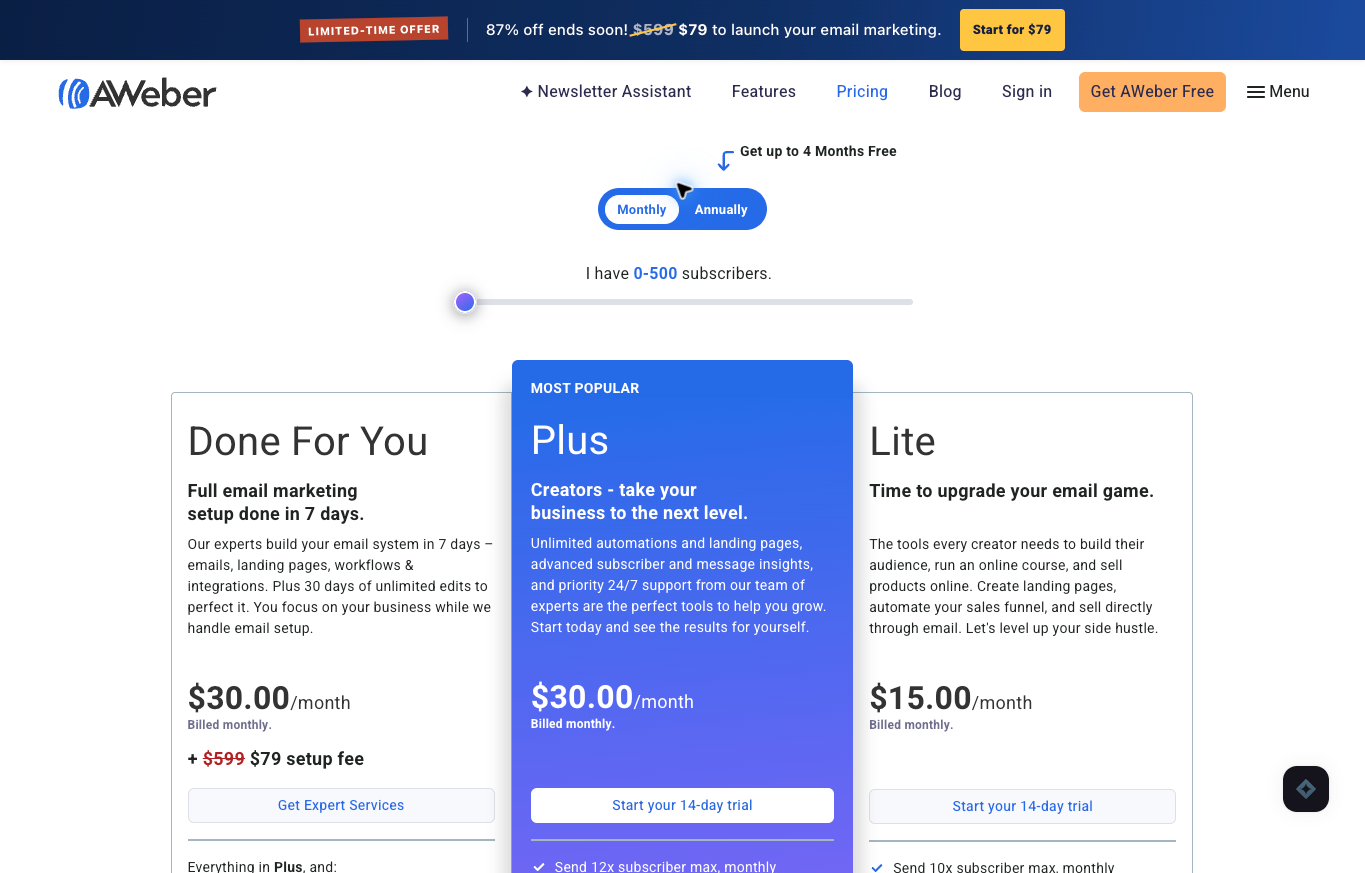
The inspected pricing page showed Lite at $15 a month and Plus at $30 a month for the 0–500 subscriber tier. Lite listed three automations, three landing pages and one custom segment. Plus listed unlimited automations and custom segments, with different sending allowances.
I would map the welcome sequence and segmentation you actually need before choosing the higher plan. If one clear newsletter and a straightforward welcome workflow do the job, a larger feature set may not be the immediate priority. If your operation needs several distinct journeys, check those limits carefully.
Also check which contacts count toward billing and what happens when the list grows. A starting price does not establish the cost at 2,500 or 10,000 subscribers. Write the expected list size beside the plan comparison so you are not comparing unrelated tiers.
The practical next step is to review AWeber’s plan limits against your proposed newsletter. Confirm your content and list source before importing anything. Do not mistake an available template for an unrestricted sending policy.
2. Kit: only for a creator business that fits its affiliate rules
Kit is a conditional option, not my recommendation for a business that only sends affiliate offers. Its help guidance requires your own business or content outside affiliate marketing, with affiliate recommendations clearly identified and limited within that wider content.
The dedicated affiliate-policy article gives an illustrative balance of roughly 70–80% your own content and 20–30% affiliate content. It also excludes affiliate links for education, loans, online pharmacies and get-rich-quick software. Do not assume an otherwise useful newsletter makes a restricted category acceptable.
For example, a creator sharing original work with a relevant, disclosed recommendation is a different proposal from an offer-only email sequence. I would assess the actual campaign, not use the creator label as a shortcut. If your model does not fit, choose another route.
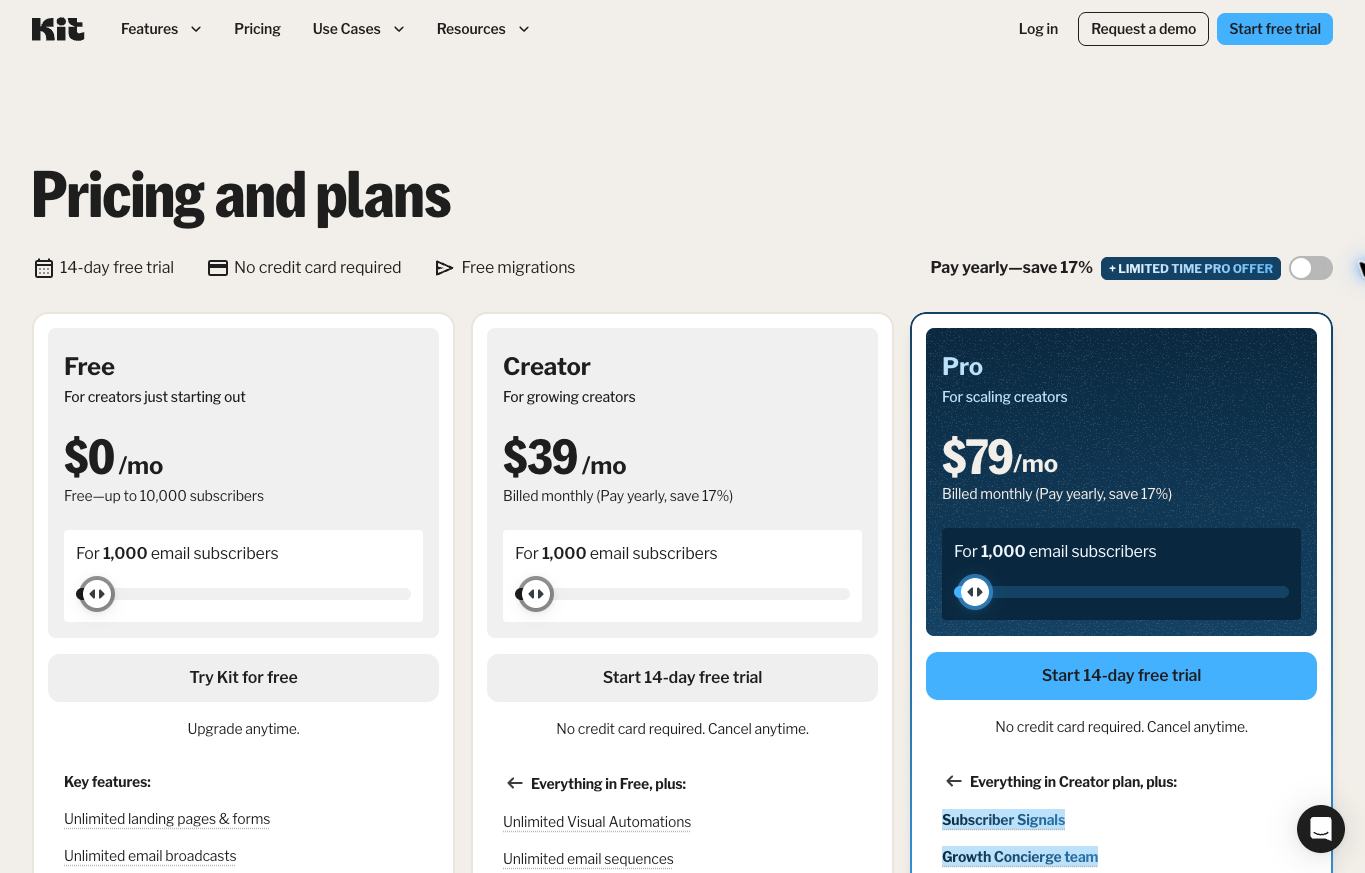
The inspected monthly pricing view showed Creator at $39 and Pro at $79 for 1,000 subscribers. The public free plan supports up to 10,000 subscribers, while Creator adds unlimited visual automations and email sequences. A free audience limit is not the same thing as having the paid workflow features.
The annual page initially displayed a rounded monthly equivalent and a separate first-year Pro promotion. Those are not the same as month-to-month billing. Check the total billed, renewal terms and selected subscriber tier before comparing the cost with another provider.
If your creator business and proposed offers meet the rules, compare Kit’s current newsletter plans with the workflow you need. If affiliate promotions are the whole business, I would not buy it on the assumption that an affiliate-friendly comparison article overrides its policy.
Define the audience before adding another tool. Explore the free niches resource →
Why an ecommerce email platform is not automatically the answer
An ecommerce store’s email workflow and an affiliate publisher’s newsletter are not the same job. A store may use order history and its own catalog. A publisher may recommend products sold by other merchants. Do not treat an ecommerce integration as permission for an affiliate-only business.
Omnisend’s inspected acceptable-use policy restricts affiliate marketing where the sender has no direct relationship with the merchant or product beyond commissions. That is why I am not presenting it as a blanket option for affiliate publishers here. Its own partner program is a separate question.
More generally, a platform can be useful for one of your businesses without fitting another. Review the specific publication, audience and content you intend to move. Do not transfer a recommendation from a Shopify app comparison without checking the new use case.
Build a list around a clear subscription promise
Tell people what they are subscribing to before they enter an address. A practical-tools newsletter, a weekly research update and a daily deal alert create different expectations. Make the description accurate enough that a reader can decide whether it belongs in their inbox.
I would keep the signup promise narrow at first. If the site covers business tools, start with useful business-tool content rather than adding unrelated travel, investing and wellness offers. Having a commission link does not make the recommendation relevant to the person who subscribed.
Keep a record of the signup source and what the form said. That is useful when a subscriber asks why they received a message or when the provider reviews a list. Do not invent consent records after a problem appears.
A contact who emailed you about a project is not automatically a newsletter subscriber. Likewise, a publicly displayed business address is not an invitation to add that person to a campaign. Keep one-to-one outreach and an opt-in publication as separate workflows.
Give readers a straightforward way to unsubscribe and honor that choice across the relevant automations. A removed reader should not reappear because an old import or another form overwrote the suppression. Check the actual behavior before calling a workflow complete.
This is a practical operating approach, not a complete legal checklist. The provider’s rules and applicable requirements still need review for your circumstances. A platform having an unsubscribe feature does not make every list or message appropriate.
Write a welcome sequence that earns attention
The first email should deliver what the signup promised and explain what comes next. If someone requested a resource, send the resource rather than turning the message into a different sales pitch. A clear start makes the relationship easier to understand.
For a hypothetical business-tools newsletter, I would make the next email about one useful decision: how to identify the job a tool needs to do. The following message could show a practical comparison, including its limitations. An affiliate recommendation belongs where it helps answer that question.
Use a direct disclosure when a recommendation is compensated. Do not make another company’s product look like your own service. Explain why it is relevant and who should skip it, rather than relying on a button and a vague claim that it is the best.
Keep the sequence small enough to review. Three useful messages are easier to maintain than a long collection of offers nobody checks. Expand only when you know the next message serves a real audience need.
Before activating it, read every message as a new subscriber. Does the timing make sense? Is the resource correct? Does a reply go to someone who will read it? Those are simple checks, but they matter more than an impressive automation diagram.
Connect the tools to an actual business foundation. Review the Ecommerce Paradise store build service →
Segment readers and check the sender setup
Group readers by interests, not just offer availability
A person who signs up for a supplier-research guide may not need the same next email as someone researching accounting software. Record a small number of meaningful interests so the newsletter can remain useful without becoming complicated.
I would begin with a clear signup source and one or two stated interests. Add more detail only when it changes what you send. A large collection of tags is not valuable if nobody understands what the labels mean.
Also define which event changes a subscriber’s path. Finishing a welcome sequence, choosing a topic or becoming a customer can require different follow-up. Do not assume a click proves a purchase or that one purchase makes every future offer relevant.
Give one person responsibility for the tagging rules. If several people create nearly identical labels, the segments become difficult to trust. Document what each label means and check a small sample of records before using it for an important send.
Keep the mailbox and newsletter sender setup separate
Your business mailbox handles conversations. An email marketing platform handles the newsletter and its sending configuration. The same visible address can be involved in both, but setting up a mailbox does not prove the newsletter is authenticated or ready.
Follow the current instructions from the selected provider for the specific domain and account. Do not copy another site’s records or a generic screenshot into your DNS. Preserve the records supporting services that already work.
I would verify the intended sender name, reply address and domain setup before a launch. A message that looks professional should also reach the right reply workflow. If a reader asks a question, the response should not disappear into an unattended account.
Do not make unrelated security changes just to get a campaign out. If a required setup step needs account access or technical help, resolve that step deliberately. A deadline is not a good reason to remove protections or share credentials in a public screenshot.
Technical configuration is only one part of delivery. I have not measured inbox placement for these platforms, and I would not promise a universal delivery rate. The list, content, provider rules and recipient systems all matter.
Measure results and compare operating costs
Do not invent commission attribution
A campaign report and an affiliate dashboard answer different questions. The email platform can show engagement with a message. The merchant or network determines the tracked referral and commission under its own terms. Do not call every click a sale.
Keep a dated campaign record with the topic, audience and destinations used. Then compare it with actual affiliate reporting when you have appropriate access. If the network supports campaign identifiers, use only its documented method rather than changing tracking parameters by guesswork.
A reader may click today and buy later, use another device or interact with another referral source. Those situations can affect attribution. A useful report should show the uncertainty instead of manufacturing a precise revenue number the available data cannot support.
Separate estimated commissions from approved and paid commissions. Returns, cancellations and program rules can change the final amount. The purpose of the newsletter is to build a sustainable relationship, not turn an optimistic dashboard into a guaranteed income claim.
I would also watch negative signals, such as complaints or unexpected unsubscribes. If a message is poorly matched to the audience, sending more of it is not the solution. Review the promise, content and segment before adding another offer.
Compare the cost at the list size you expect
Use a realistic subscriber estimate and a specific workflow when comparing plans. Otherwise, a low starting price can distract from the tier you will actually need. Include the billing commitment and the features required to run the sequence.
Here is a hypothetical example, not a projection. Suppose a platform costs $30 a month and a campaign produces $80 in approved commissions. The $50 difference is not automatically net profit: content production, traffic costs, refunds outside that figure and other business expenses still need review.
If the same campaign produces $80 in pending commissions but none are approved yet, record that distinction. A subscription bill is a real cost even when a referral has not become payable. Do not build a budget around unconfirmed commission totals.
For the inspected starting tier, AWeber’s current pricing is a useful place to compare a simple workflow with a more segmented one. Confirm the actual subscriber tier and checkout terms rather than assuming the starting price applies indefinitely.
Plan a migration before cancelling the old service
Before moving a list, identify what needs to come with it. Active subscribers, consent records, tags, forms, automations and suppression data have different jobs. A file of addresses alone is not a complete newsletter migration.
I would record which service currently receives each signup and sends each sequence. That helps avoid running two welcome campaigns at the same time or leaving a form connected to an account you are about to cancel.
Decide how you will verify the move using appropriately authorized test records. Check the resource delivery, sender details, links and unsubscribe path. This article describes that checklist; it does not claim I performed those tests in either platform.
Keep a recoverable copy of the relevant settings and an agreed transition owner. If something fails, that person should know which part of the process needs attention. Do not delete the old account before the replacement is confirmed.
Also review what a migration service includes. Subscriber transfer, template work and automation rebuilding may have different scopes. Get the actual arrangement instead of assuming the word migration means every historical setting will be reproduced.
Match the email strategy to the wider business
Affiliate publishing and running a high-ticket store can support similar audiences, but the economics and responsibilities differ. My high-ticket dropshipping guide explains the retail model. It is not a promise that an affiliate newsletter will earn the same way.
The niches list can help you explore a focused category. Use it to understand the audience, then validate the actual business rather than subscribing to more software before choosing a direction.
If you operate a store, the supplier sourcing guide covers a different relationship from an affiliate referral. A supplier agreement, an affiliate program and an email platform account do not replace one another.
Supplier Paradise is another discovery resource I own. A directory listing is not approval to promote a brand by email or a guarantee of commercial terms. Confirm the actual relationships relevant to your business.
The business foundation checklist helps organize the broader setup. Keep account ownership, billing and responsibilities clear so the newsletter does not depend on a pile of undocumented logins.
Learn the wider model before committing to another stack. Explore the Ecommerce Paradise masterclass →
How I would choose the best email marketing software for affiliate marketing
I would start with the business model, content policy and list source. Then I would compare the specific welcome workflow, segmentation and cost. That order keeps the decision grounded in what the platform needs to permit and what the reader needs to receive.
AWeber is an option to investigate for the permission-based newsletter described here. Kit is conditional on having a wider creator business and staying within its affiliate restrictions. Neither mention is an account approval or a reason to skip the provider’s current rules.
Keep the first setup manageable. One clear signup promise, a useful welcome sequence and a small number of meaningful segments give you a foundation you can review. Add complexity when it solves a real problem, not because another automation feature is available.
The next useful step is a short written brief: your audience, list source, proposed messages, offer categories and required workflow. Compare the plans against that brief and clarify critical unknowns before paying or moving subscribers. You should be able to explain why the chosen service fits.
Frequently asked questions
Can I use any email platform for affiliate marketing?
No. Providers can distinguish occasional recommendations from an affiliate-only business and restrict particular content. Check the actual policy and account-specific fit before choosing.
Is Kit suitable for a newsletter made entirely of affiliate offers?
Its inspected policy does not permit entirely affiliate-based content. Kit belongs in this shortlist only for a creator business that meets its limits and topic restrictions.
Can I import a purchased list into AWeber?
Its inspected service agreement prohibits purchased leads and other specified third-party list sources. Use direct permission records rather than treating possession of an address as consent.
Does an affiliate link mean an email campaign is approved?
No. Your referral agreement and the email provider’s sending rules are separate. The merchant’s rules for promoting its offer also need review.
Which price should I compare?
Compare the same expected list size, required features and billing commitment. Keep monthly billing, annual equivalents, temporary discounts and renewal costs distinct.
Need help connecting the tools to a clear business plan? Explore Ecommerce Paradise coaching →
Related guides
My affiliate marketing tools comparison separates publisher research from merchant program management.
The affiliate programs guide is a starting point for reviewing actual referral terms.
Read the keyword research tools comparison when you need clearer audience questions.
My accounting software guide covers another part of keeping costs and records organized.
The Shopify hosting guide explains why a store platform and a business mailbox are separate services.

Trevor Fenner is the founder of Ecommerce Paradise. His main projects are Ecommerce Paradise, Supplier Paradise, and Review Paradise, which is currently in development. TrevorFenner.com publishes research-based reviews and practical guides to online business tools and remote-work services, with clear affiliate disclosures.