

The best sourcing agents fit the buying process you need. Finding a factory, coordinating an existing supplier and fulfilling individual customer orders are different jobs.
Define the product, destination market and order model before asking for a quote. A service-fee headline does not establish the total purchase cost or the provider’s responsibility for a defect.
This guide compares JingSourcing, SourcinBox and HyperSKU as unlinked research options. Their public pages describe services, not verified performance on your products. No purchase, factory visit, inspection or fulfillment trial was completed for this comparison.
At Ecommerce Paradise, I focus on understanding the actual retail operation before committing money. Imported inventory and an authorized domestic dropshipping relationship involve different responsibilities.
The JingSourcing comparison image was captured October 15, 2026. The SourcinBox and HyperSKU images retain their October 12, 2026 capture dates. Confirm current pricing, product scope and written terms before selecting an agent. A public screenshot does not prove reseller authorization, inventory availability or a completed inspection.
Disclosure: I own Ecommerce Paradise and Supplier Paradise. The three third-party providers in this comparison are unlinked because this guide does not have verified affiliate destinations for them.
Choose the service around the order
| Option | Public service scope | Question to resolve |
|---|---|---|
| JingSourcing | Sourcing and production coordination, or support for your existing supplier | Which plan applies, what the unit price includes and who bears quality losses |
| SourcinBox | Dropshipping sourcing and fulfillment through an app | Actual product and destination shipping quote, order handling and issue owner |
| HyperSKU | Sourcing, warehousing and ecommerce fulfillment | Selected service eligibility, stock commitments, storage and fulfillment charges |
The names are starting points for investigation. No provider receives a universal quality ranking here. Compare the written proposal against one defined product and order model.
JingSourcing: distinguish Pro from Basic
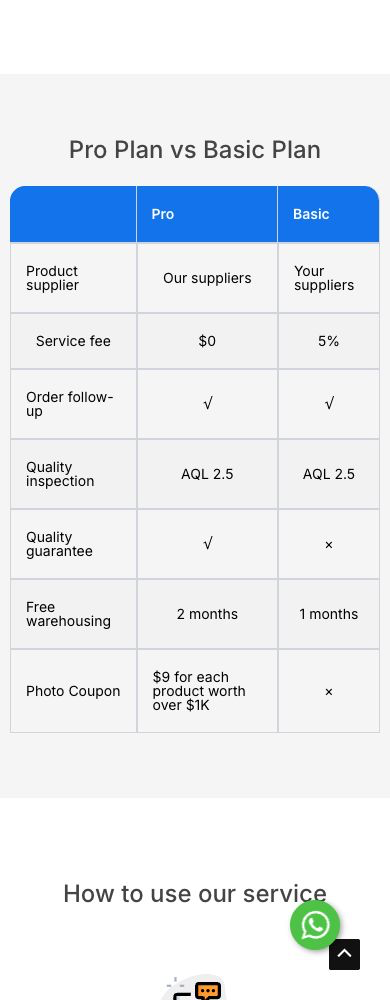
JingSourcing’s current pricing page distinguishes Pro orders through its supplier network from Basic support for your own suppliers. Pro has a stated $0 service fee with costs included in the product’s unit price. Basic lists 5% of product value with a $100 minimum.
The page also describes different quality-loss responsibility. Pro advertises a quality guarantee. Basic describes negotiation with your supplier, with the final loss borne by you or the supplier. Obtain the applicable written terms rather than treating the headline as an unconditional remedy.
Supplier identity is another decision point. JingSourcing says Pro supplier details are generally not disclosed. Its default inspection description uses AQL 2.5, with higher-ratio or individual inspection quoted separately. Clarify the evidence you receive and the inspection scope for your product.
For this option, I would compare the actual unit quote and responsibilities before comparing the service-fee percentage. An included cost is still a cost. The dated public capture shown here does not prove the quality of any sample or shipment.
SourcinBox: investigate the fulfillment workflow
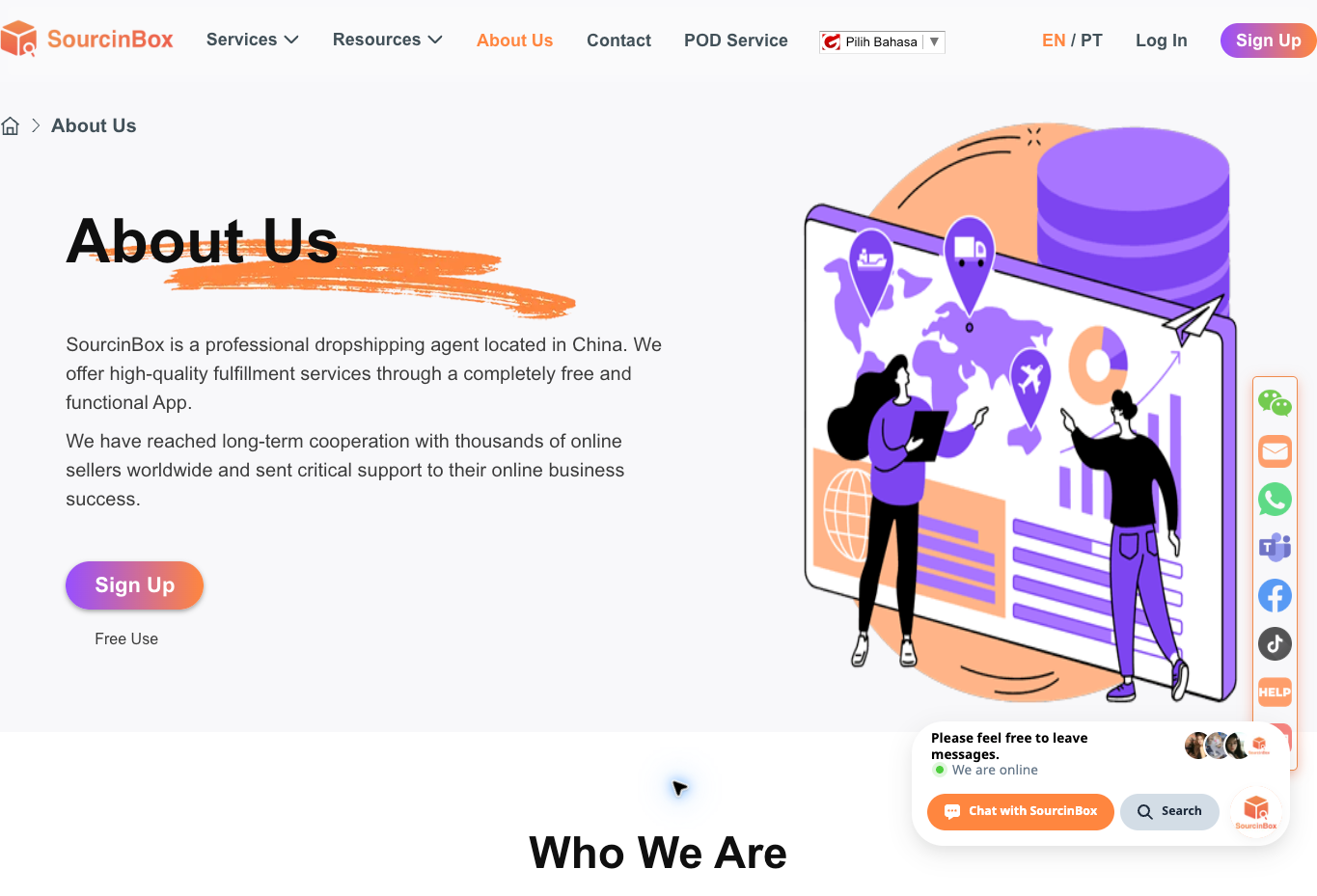
SourcinBox describes a China-based dropshipping agent and free app access. Its company page describes store-order synchronization, combined or split orders and shipping charges based on a fixed fee plus weight.
Free app access does not supply free inventory, postage or customer support remedies. Ask for the quote on your actual product, packaging and destination. Establish how product availability and price changes reach your store before assuming the public workflow fits your operation.
Keep reported capacity and quality statements separate from your evidence. A company overview does not prove how your order would be acknowledged, inspected or delivered. No store was connected and no customer data was transmitted during this comparison.
I would investigate this option for a defined individual-order workflow. If you need factory disclosure, customized inspection or a particular return arrangement, resolve those requirements directly in the proposed scope before funding an order.
HyperSKU: separate platform access from order costs
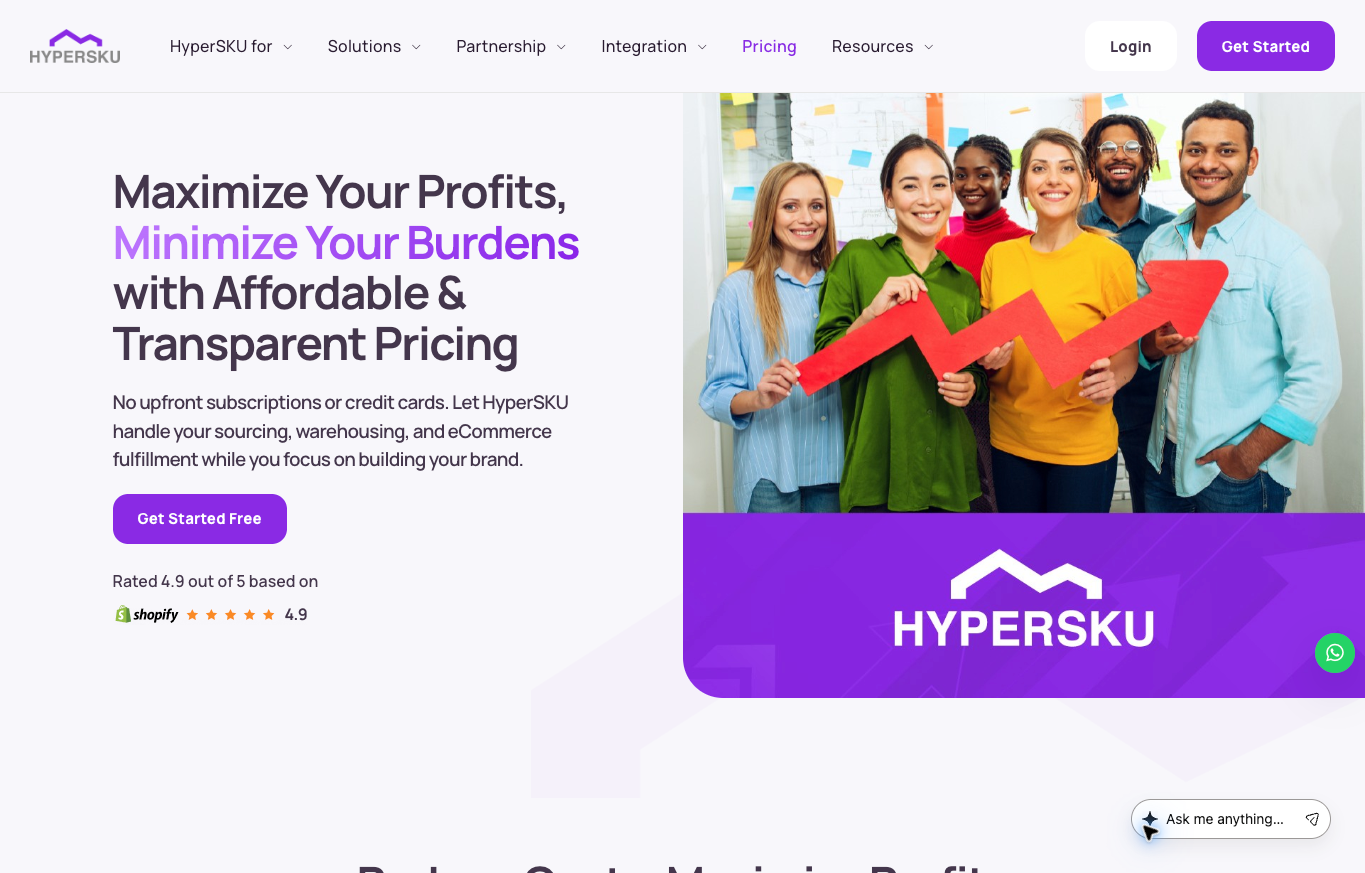
HyperSKU’s current pricing page describes sourcing, warehousing and ecommerce fulfillment without an upfront subscription. The displayed Free and Premium tables both list $0 monthly pricing, with different service allowances. Do not infer identical eligibility or service scope from the price alone.
The page lists up to ten connected stores with $10 per additional store. Free-plan storage is listed as up to thirty days in China warehouses, compared with up to sixty days in the Premium table. Confirm eligibility, storage timing and charges after the stated period in your actual proposal.
Public delivery-range and cost-saving statements do not establish a committed timeline for your shipment. Obtain the product cost, freight route, destination and handling details. The public image documents the pricing overview rather than a completed fulfillment trial.
My comparison would focus on the product and route you intend to sell. A platform’s listed capabilities are useful questions for a pilot, not proof of order accuracy or margin.
Define the buying model before requesting quotes
Write down whether you are buying a production batch, purchasing ready-made inventory or coordinating individual customer orders. These choices change the questions about capital, stock ownership, delivery and returns.
A production project starts with specifications, samples and a manufacturing schedule. Individual-order fulfillment starts with availability, order acknowledgment and a shipping route. Asking both providers for their lowest fee does not produce a meaningful comparison.
For an existing factory relationship, identify the task you want delegated. Inspection, consolidation and freight coordination are separate responsibilities. Name the responsible party for each task instead of assigning every issue to an undefined agent.
If you are selling branded products, establish the actual sales authorization and territory requirements. A sourcing contact or public catalog does not establish permission to represent a manufacturer or use its product media.
Keep a record with confirmed facts, reported claims and unknowns. A written quote confirms the offered price under its stated conditions. A testimonial reports another buyer’s experience. Neither proves your future order will perform the same way.
Write a specification another person understands
Define the product’s dimensions, materials, color, included parts and packaging. Record the exact variation rather than using a photograph as the entire specification. Similar-looking products often differ in details important to customers.
Include the intended use and destination market. Ask which documentation, labeling and testing requirements need review by qualified specialists. Do not treat an agent’s general assurance as a substitute for product-specific compliance evidence.
For customization, specify artwork files, placement, finish and acceptable variation. Identify who approves the final sample and how changes are recorded. A chat message about a new color is a poor substitute for an updated, agreed specification.
Describe unacceptable defects in terms someone inspecting the item understands. A loose component, missing accessory or incorrect measurement needs a defined checking method. General language about premium quality leaves too much unresolved.
Keep the current revision number and approval date with the specification. Share one controlled version throughout the buying process. When the requirements change, obtain the revised quote and schedule before assuming the original agreement still fits.
Compare the total quote and the cash commitment
Request product cost, agent charges, sampling, packaging, inspection, storage, shipping and any separately assigned destination costs. Compare equivalent quantities and delivery arrangements. A low unit price with exclusions is different from a complete quoted service.
Ask which currency applies and how long the quote stays valid. Record payment fees and the conditions for a price adjustment. Keep an estimate separate from a fixed commitment, especially when freight or exchange rates remain unresolved.
Here is an original calculation, not a provider quote. Buying one hundred units at $12 each costs $1,200 before other charges. Adding $300 for defined handling and shipping produces $1,500, or $15 per unit, before any remaining expenses.
If five units from this hypothetical order are unusable, dividing the same $1,500 by ninety-five sellable units produces roughly $15.79 per sellable unit. This illustrates a sensitivity check, not an expected defect rate or a forecast of your actual margin.
Retail margin needs more than the landed product cost. Account for payment processing, customer delivery, returns and advertising where those costs apply. Do not publish a selling price based solely on a sourcing page’s cost-saving claim.
Track cash timing as well as unit economics. Identify the deposit, balance, storage charges and stock commitment. A profitable-looking spreadsheet does not establish you have enough cash to fund the agreed order and handle a problem.
Approve the sample against the written requirements
Order the relevant sample through the agreed process before committing to a larger purchase. Check the exact specification and packaging rather than approving the sample because the general appearance looks acceptable.
Document measurements, included parts and observed defects. Photograph the relevant details and retain the sample identifier. Distinguish an observed result from something the provider says will change during production.
A sample approval does not establish identical results across a production batch. Ask how the approved sample relates to the manufacturing specification and inspection records. Confirm the process for a requested change before approving the next stage.
For a product requiring specialist testing, use appropriate qualified review. A visual inspection does not establish electrical safety, material composition or regulatory compliance. Keep each claim attached to the evidence supporting the claim.
Write down the decision and unresolved items. Approve a defined version only after the requirements are met. If the provider proposes a substitution, request the updated details rather than assuming a similar product satisfies the original specification.
Establish inspection scope and issue ownership
Specify who inspects the goods, when inspection occurs and which checks are included. Ask whether the report covers a sample or every unit. A reported inspection standard does not establish your entire batch is defect-free.
Confirm the records you receive before releasing the shipment. Product identifiers, quantities, photographs and the relevant test or checking results help establish what happened. A simple passed message lacks the detail needed to resolve a later disagreement.
Define the remedy for an unacceptable result in the proposed agreement. Clarify rework, replacement, repeat inspection, freight and payment responsibility. Do not infer reimbursement from a public quality headline without reviewing the applicable terms.
Record an escalation contact and a response process. If a product arrives damaged or incorrect, identify the evidence required and the person responsible for reviewing the issue. Preserve the timeline instead of allowing several parties to refer you elsewhere.
Separate the customer-facing promise from the supplier’s proposal. Your buyer needs accurate expectations based on confirmed policy. An unresolved warranty arrangement does not belong in a published guarantee.
Map order acknowledgment, shipping and returns
For individual-order fulfillment, define how the order reaches the provider and how acceptance is confirmed. A connected app does not establish stock allocation, payment or shipment. Identify the event proving the order has entered the actual fulfillment process.
Ask how availability updates reach your store and how substitutions are handled. Decide who pauses sales when an item becomes unavailable. An old product import or warehouse photograph supplies no evidence of current inventory.
Distinguish processing time, carrier transit and the total delivery expectation. Record the selected route and destination. Do not convert a broad advertised shipping range into an unconditional promise for every order.
Clarify tracking, failed delivery and damage handling before expanding. Ask where returns go, who authorizes the return and which costs apply. A low purchase price loses its appeal when the exception process is undefined.
For freight or large items, obtain the actual delivery scope and buyer requirements. Curbside delivery, unloading and installation are different services. Never imply one service includes another without the written terms to support the statement.
Use my shipping software comparison when reviewing the software side of your operation. A shipping platform still depends on correct package information, service selection and the carrier’s applicable terms.
Before connecting an order app, review the requested permissions and the customer information involved. Assign access to the person handling fulfillment and remove unnecessary permissions through the normal account controls. Keep a record of which system receives orders, who reviews exceptions and how access ends if the relationship stops.
Run a defined pilot before increasing the commitment
Choose one product, one variation and a manageable destination scope for the initial trial. Set the order size around the exposure you are prepared to accept. A pilot needs a defined purpose rather than a vague plan to see how everything goes.
Record the expected acknowledgment, inspection evidence, dispatch and tracking milestones. Compare actual events with the written proposal. Keep the dates and supporting records so a delayed response does not become an argument from memory.
Evaluate the exception process alongside a successful shipment. Determine how the provider responds to a documented concern and whether the agreed owner follows through. One delivery does not establish consistent performance across every product and destination.
Do not expand solely because the first unit looked good. Review packaging, total cost, communication, stock accuracy and any unresolved defects. Repeat the relevant check when the factory, product version or shipping arrangement changes.
This article did not run a sourcing pilot. The process described here is a framework for your own evaluation. Keep your conclusions limited to the products, quantities and routes covered by your actual evidence.
Choose between sourcing and an authorized supplier relationship
Imported inventory is one retail model. An authorized supplier shipping directly to the buyer is another. Start with the high-ticket dropshipping overview to understand the division of responsibilities before choosing a workflow.
The high-ticket niches list organizes product-category research. Evaluate the customer need and supplier access rather than assuming a popular imported product fits the business you want to run.
Follow the high-ticket supplier research guide when investigating dealer relationships. Confirm authorized-sale rules, product data, order handling and warranty ownership. Agent sourcing does not establish manufacturer authorization.
Supplier Paradise is an owned research resource for finding leads. A lead still requires verification of the actual commercial and operational arrangement. Record what the supplier confirms and what remains unknown.
Use the business formation guide for setup questions. Legal, tax and import obligations deserve current advice for your actual circumstances, separate from a sourcing provider’s sales proposal.
If you need help choosing the next business task, review Ecommerce Paradise coaching. Confirm the actual scope and your responsibilities before purchasing. Coaching does not replace the quote, agreement or inspection evidence for your order.
Continue the comparison with a specific decision
For branded production, read my private-label manufacturers comparison. Keep product development, minimum quantities and quality evidence attached to the proposed production relationship.
The wholesale suppliers guide covers another buying route. A wholesale account still needs confirmed pricing, sale authorization and order terms. Do not transfer an agent’s public promises to a separate supplier.
For category selection, use the high-ticket dropshipping niches comparison. The category decision comes before funding inventory. A sourcing service’s availability does not establish demand or profitability.
My dropshipping suppliers guide adds context for supplier selection. Match the actual fulfillment relationship to the customer expectations you plan to publish.
For JingSourcing, resolve the selected plan and quality-loss terms. For SourcinBox, resolve the product, destination and order workflow. For HyperSKU, resolve the selected service scope and order costs. Choose from written evidence rather than a broad ranking or a zero-fee headline.

Trevor Fenner is the founder of Ecommerce Paradise. His main projects are Ecommerce Paradise, Supplier Paradise, and Review Paradise, which is currently in development. TrevorFenner.com publishes research-based reviews and practical guides to online business tools and remote-work services, with clear affiliate disclosures.