

The best dropshipping suppliers fit your product category, customer destination and selling channel. A large catalog does not establish delivery reliability or an approved dealer relationship. I would start with the products you intend to sell before choosing software.
A supplier fulfills the product. A directory helps identify businesses. Automation moves product information and orders between systems. Some services combine these functions, but the retailer still needs a clear operating agreement.
At Ecommerce Paradise, I put the niche and supplier relationship before the import tool. Choose a focused product set and understand the expenses before adding a broad catalog.
This comparison reviews Inventory Source, Spocket, Wholesale2b and SaleHoo using public provider sources checked October 14, 2026. The four retained provider images were captured October 13. No subscriptions, store connections, imports, sample orders or supplier-performance tests were completed.
Affiliate disclosure: qualifying purchases through the documented links provide compensation subject to program approval and terms. I own Ecommerce Paradise and Supplier Paradise. A listing or platform subscription does not guarantee supplier approval, delivery performance or profit.
Inventory Source for the required automation
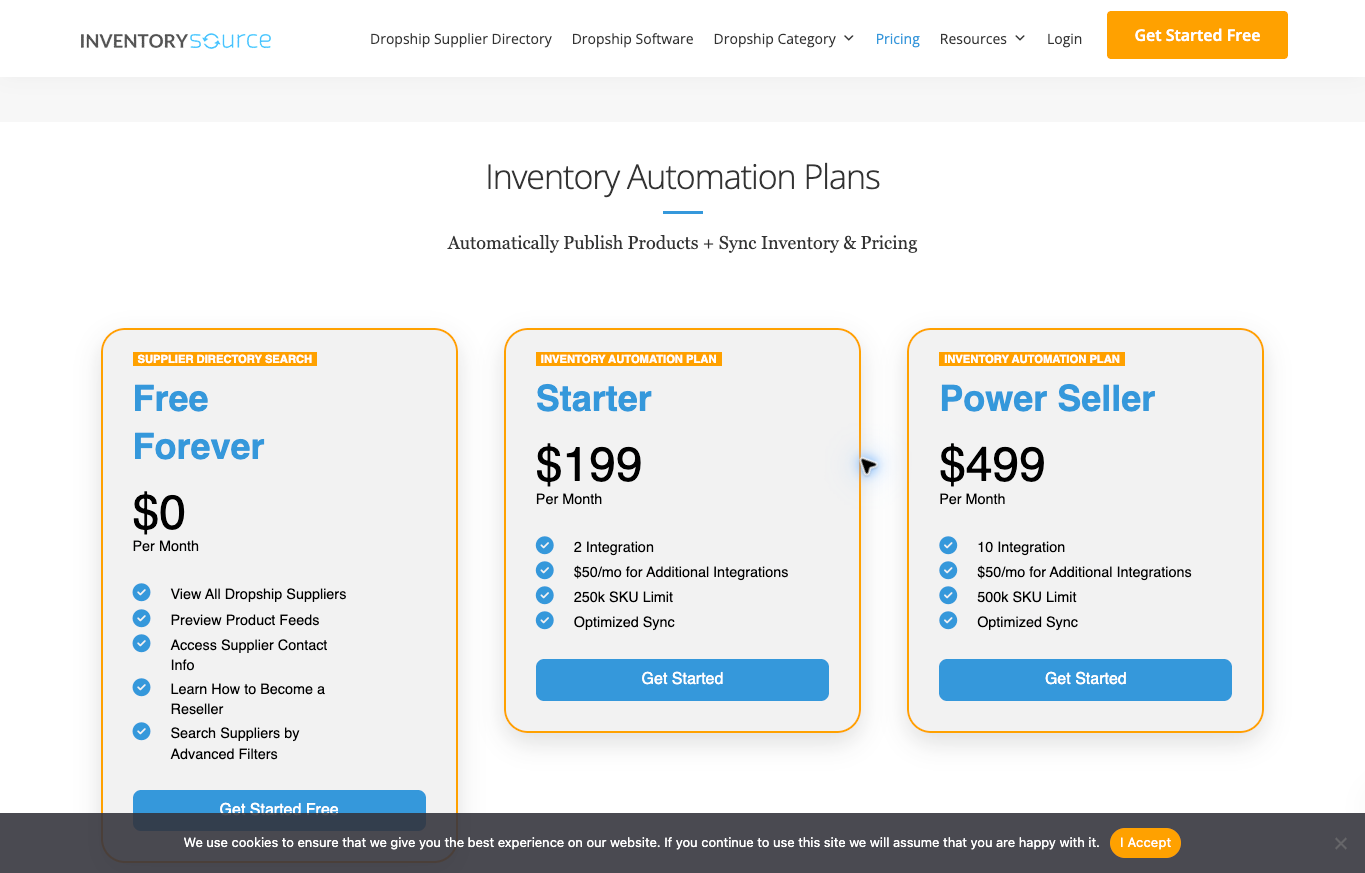
Inventory Source separates its free supplier directory from paid automation. Choose the service according to the work needed, rather than assuming every plan processes orders.
Inventory Automation Starter lists $199 monthly, two integrations and a 250,000-SKU limit. Full Automation Starter lists $299 monthly, two integrations and 500 monthly orders. Additional orders on the latter plan are listed at $0.30 each.
Inventory Automation addresses product data, prices and inventory. Full Automation adds order routing and shipment-tracking synchronization. Confirm the selected supplier and integration before committing to either arrangement.
The provider distinguishes ordinary software services from US Direct. Do not carry US Direct’s approval arrangement into every supplier connection. Feed accuracy still depends on the underlying source information and your approved settings.
Spocket for a defined product shortlist
Spocket deserves evaluation when its actual products and store workflow fit the business. A regional supplier label does not establish delivery timing for every item or destination.
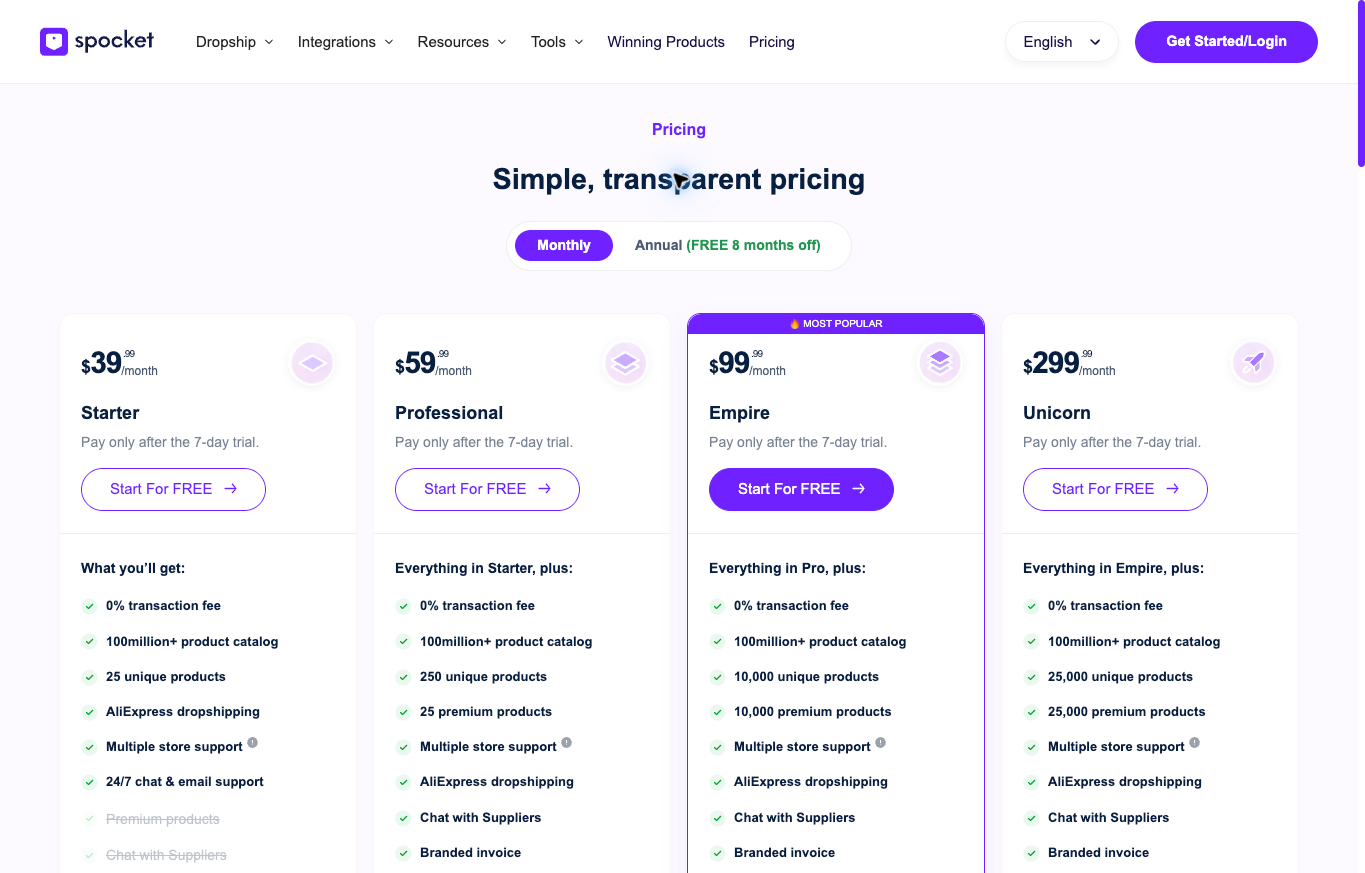
The current Monthly view lists Starter $39.99, Professional $59.99, Empire $99.99 and Unicorn $299.99. Starter lists 25 unique products. Professional lists 250 unique products and 25 premium products.
The displayed trial is seven days, followed by payment. Confirm the actual billing and cancellation arrangement before starting. A trial and a permanent free selling plan are different offers.
Spocket’s supplier requirements distinguish manufacturers or businesses holding warehouse inventory from resellers without inventory. The stated supplier discount requirement is not your net profit. Shipping, acquisition and operating expenses still need calculation.
Wholesale2b for the selected channel
Review Wholesale2b for the exact store integration you need. A platform connection, product-data download and provider-built store involve different operating arrangements.
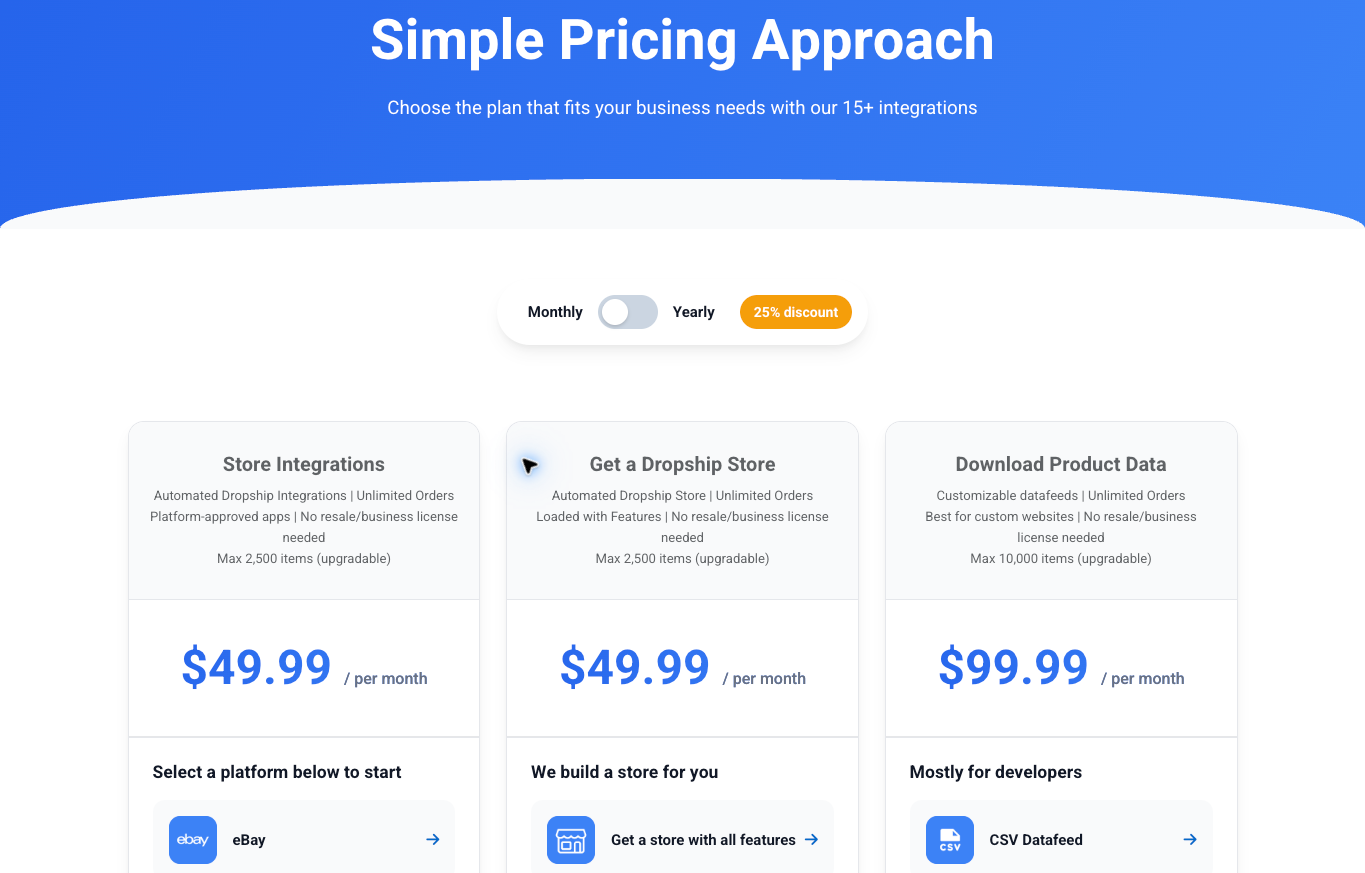
The current Store Integrations card lists $49.99 monthly and a 2,500-item allowance described as upgradable. Amazon is separately listed at $99.99 monthly. The product-data download service is another $99.99 monthly option.
The page describes handling supplier orders, tracking and returns. Ask what those functions mean for the selected product and issue. A general service description does not settle every item’s return authorization, shipping expense or warranty coverage.
Marketing language about licenses does not establish a legal exemption for your business. Review the actual selling, tax and channel requirements with appropriate guidance. Platform access is separate from compliance.
SaleHoo for research and current plan tools
SaleHoo provides a supplier-discovery starting point with store-related allowances. Review the current package rather than copying an old directory subscription from another comparison.
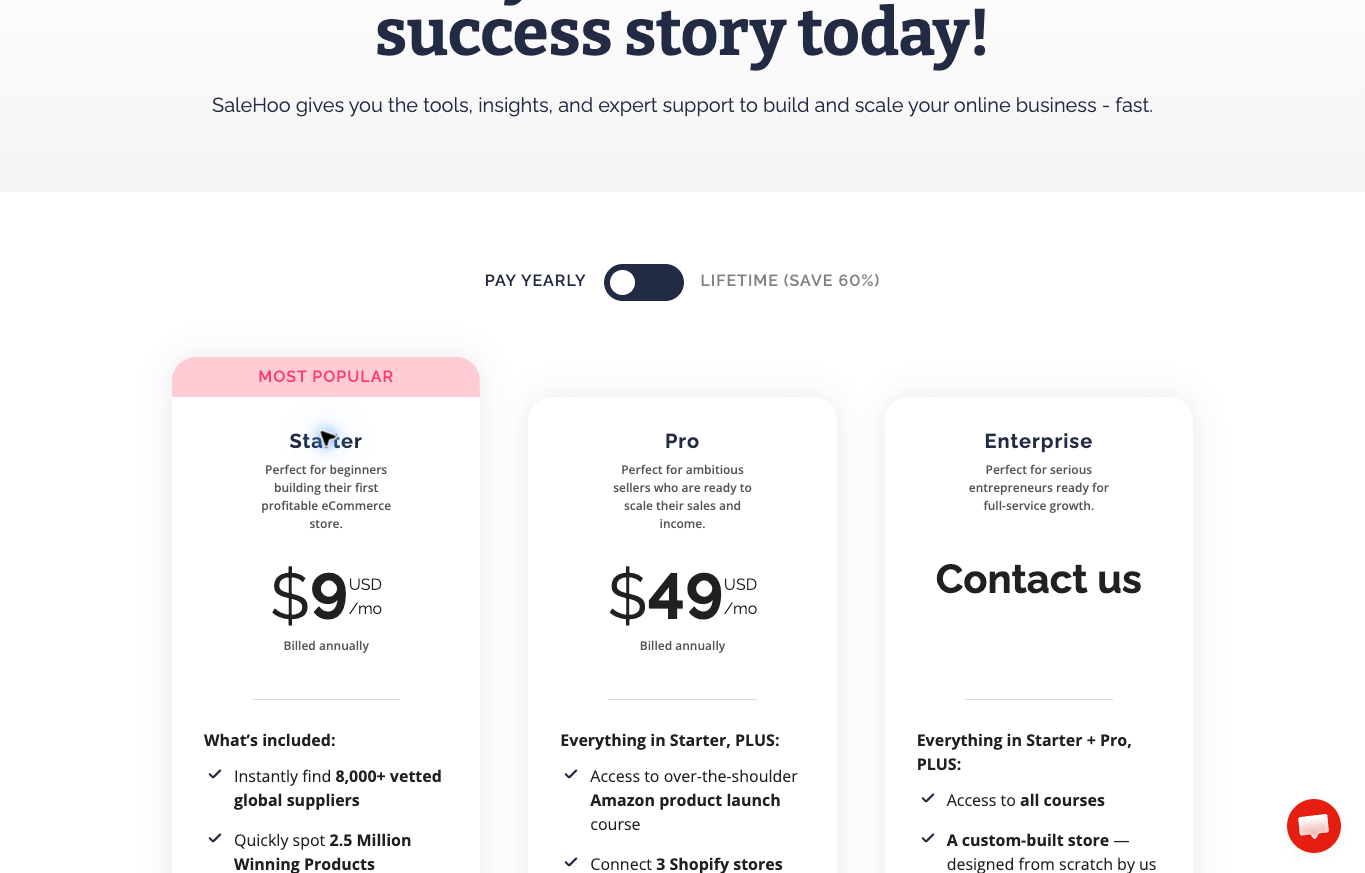
The Pay Yearly view lists Starter at a $9 monthly equivalent and Pro at $49, both billed annually. Starter lists one Shopify store, 200 monthly product imports and contact with up to 100 suppliers monthly.
Simple multiplication produces $108 and $588 over twelve months before applicable taxes or purchase-specific conditions. Those equivalents do not establish monthly billing. Confirm the actual commitment and renewal arrangement.
The pricing FAQ describes contacting support within 60 days of signup for a refund and requests 48 hours’ cancellation notice before renewal. Refund eligibility and cancellation are separate matters. Supplier terms require their own review.
Compare the platform job and subscription
| Platform | Job to evaluate | Reviewed cost | Separate check |
|---|---|---|---|
| Inventory Source | Directory and feed automation | Free directory. Inventory Starter $199 monthly | Full order automation and supplier approval |
| Spocket | Defined catalog workflow | Starter $39.99 monthly | Selected products, plan allowances and destination |
| Wholesale2b | Specific channel integration | Store Integrations $49.99 monthly | Amazon and data-download alternatives |
| SaleHoo | Supplier research and included tools | Starter $9 monthly equivalent billed annually | Actual annual commitment and research limits |
These subscriptions are separate from the delivered order. Product, shipping, selling and support expenses require their own calculation. Choose the actual arrangement before comparing starting prices.
Map the responsibility before importing products
Write down who owns the stock, accepts the order and ships the item. Identify who supplies tracking and who approves a return. A product-import tool does not answer these questions for every supplier in the catalog.
The store owner also needs a customer-support process. If a parcel arrives damaged, the buyer needs a clear next step. A connection between dashboards does not establish which business investigates the claim or funds a replacement.
I would review the actual agreement before putting the product on sale. Keep confirmed terms separate from promotional descriptions and unanswered questions. A supplier saying shipping is fast is different from a defined handling estimate for a particular warehouse and destination.
Ask how the parties communicate when an order fails. An unavailable variant, rejected address and incorrect item need different responses. Record the person or team responsible for each decision rather than assuming automation handles every exception.
Choose a product set small enough to review
Start with one category and a manageable group of products. Record the brand, model, variant and intended customer. Similar product titles do not establish identical materials, compatibility or included accessories.
Review dimensions, specifications and the source of product images. The listing needs confirmed information for the exact item. A catalog photo of one variant should not illustrate a different product without a clear explanation.
Use the Spocket product workflow to evaluate the shortlist, rather than selecting a larger allowance before reviewing the items. Plan capacity is separate from a reason to sell the product.
Write down what would disqualify an item. Unsupported destinations, unsuitable delivery arrangements or missing warranty information deserve attention before import. A large catalog does not remove the need for a product decision.
Confirm the selling channel and approval
A listed supplier does not automatically approve your store. Ask which channels and territories the arrangement supports. Marketplace selling, a standalone store and an authorized dealer relationship involve different requirements.
Keep the relevant written approval and product restrictions with the supplier record. If a brand sets pricing or advertising conditions, review the actual terms before promotion. A software connection does not override those conditions.
The Inventory Source directory and automation options deserve review alongside the supplier relationship. Directory access and approved reseller access are separate decisions.
Do not turn platform marketing about business licenses into legal advice. The applicable business, tax and product requirements depend on the actual arrangement. Get qualified guidance when a requirement is unclear.
Calculate the delivered order rather than a markup
Record the retail price and supplier charge separately. Add shipping, payment costs, acquisition, allocated subscriptions and relevant support expenses. Label missing inputs rather than filling the budget with an unsupported estimate.
For an original hypothetical example, assume a $200 sale, $120 supplier charge, $20 shipping and $6 payment costs. The remaining $54 is before advertising and other expenses. The $80 difference between retail and supplier price is not net profit.
If acquisition costs $25 and allocated platform expense is $5, the remaining contribution is $24 before other costs. These figures illustrate arithmetic, not a provider quote or tested store result. Use your actual product and destination.
Review the selected Wholesale2b integration as one budget line. A channel-specific subscription does not include every product, delivery or selling expense.
Compare a realistic product mix rather than one attractive starting price. A larger variant, another warehouse or an unsupported shipping region changes the calculation. Keep the date and source beside each quoted cost.
Plan inventory updates and rejected orders
Ask where the stock information originates and when the supplier updates the feed. A quantity received earlier in the day does not establish the item is reserved for your customer. Review what happens between checkout and supplier acceptance.
Decide who handles an unavailable product after payment. The store needs an approved response for confirming the problem and contacting the buyer. Do not silently substitute a different variant or promise a replacement without authorization.
Review the automation arrangement against those exceptions. Inventory synchronization, order routing and tracking are different functions. The selected plan needs the functions your operating process requires.
Keep failed orders visible to the responsible operator. A dashboard status deserves an explanation, not an assumption of successful fulfillment. Record acknowledgement and shipment as separate events when reviewing the order process.
Separate handling, transit and freight delivery
Confirm the exact warehouse and destination before writing a delivery estimate. Handling time starts before carrier transit. A broad domestic-shipping claim does not establish service to every address or delivery type.
For freight items, ask about appointments, access, unloading and any paid delivery options. Do not promise installation or room placement from a general shipping statement. The buyer needs confirmed expectations for the selected product.
For several items, check whether the order ships together. Different suppliers or warehouses create separate parcels and potentially different dates. A single storefront checkout does not guarantee a single delivery.
Keep the source and date of the shipping terms. Update the listing when the approved arrangement changes. A supplier conversation about one product should not become a store-wide promise covering unrelated items.
Prepare return, damage and warranty questions
Ask who authorizes a return, where the item goes and which deadlines apply. Record any confirmed restocking charge and shipping responsibility. An advertised return-handling feature does not establish every claim is reimbursed.
A damaged delivery and a change-of-mind return are different issues. Ask what evidence is needed and how the buyer should report the problem. Get usable instructions before a shipment goes wrong.
Warranty coverage needs its own review. Identify the warrantor and the actual product coverage, including exclusions and the claim process. Do not advertise a broad lifetime or replacement promise from an unrelated catalog item.
Review Wholesale2b’s managed arrangement against the selected products. Coordinating a return and accepting financial responsibility for every return are different commitments.
Your customer-facing obligations also deserve separate guidance. Supplier reimbursement terms do not settle every obligation to the buyer. Keep the store policy consistent with the confirmed agreement and applicable requirements.
Keep order payment and settlement separate
A customer paying at checkout does not establish the funds settle before the supplier charges for the order. Review the actual processor and supplier timing. The operating budget needs enough available funds for the approved arrangement.
Include costs the business absorbs during a refund or replacement. A subscription fee and an order charge affect cash differently. An apparently positive product contribution does not establish enough cash for every payment deadline.
For SaleHoo plan research, distinguish annual commitment from its monthly equivalent. Budget the actual payment schedule rather than assuming the displayed equivalent is charged monthly.
Keep renewal and cancellation dates in the internal record. A refund request, subscription cancellation and removal of a store connection serve different purposes. Confirm the actual process before depending on a free-trial or cancellation headline.
Evaluate the workflow without inventing a test result
Plan a contained review of the chosen product and integration. Decide what the check needs to establish, who approves the work and which records to keep. This guide did not connect a store, import products or place orders.
An authorized sample order should record the exact item, destination and dates. Inspect what arrived against the approved specification. One successful shipment provides evidence about one order, not every supplier or route.
Review the customer-facing listing alongside the operating process. An accurate internal SKU mapping is useful only when the buyer sees the right variant and expectations. Keep corrected product information with the current approved version.
Separate observed outcomes from assumptions. A public provider screenshot documents the page on its capture date. The image does not demonstrate delivery speed, support quality or a completed integration.
Keep direct supplier relationships on the shortlist
A focused high-ticket store often needs direct manufacturer or authorized-distributor research. Do not assume a broad catalog platform is the only sourcing path. Choose the relationship according to the product and operating requirements.
The supplier research guide helps organize those questions. An introduction and a signed dealer agreement represent different stages of the process.
Supplier Paradise is a discovery resource I own. The directory does not approve dealers, reserve stock or guarantee a supplier’s performance.
Use the high-ticket niches list to organize category research. Narrow the choice using actual customer, product and supplier information rather than expanding the catalog immediately.
The high-ticket dropshipping guide explains the broader retail model. Supplier software is one part of the business, not the business itself.
My business foundation checklist addresses wider setup responsibilities. Platform membership does not replace the relevant administrative work.
Ecommerce Paradise coaching is a separate paid service for business planning. Bring the intended category and unresolved supplier questions before adding subscriptions.
The Ecommerce Paradise Academy describes current classroom and enrollment options. Review the offer separately from supplier approval and product-order expenses.
Questions before choosing supplier software
Does a directory approve my store?
No. Research access and an authorized selling arrangement are separate. Confirm the actual brand, supplier, territory and channel conditions.
Does inventory automation route orders?
Not necessarily. Inventory Source distinguishes Inventory Automation from Full Automation. Review the selected plan’s actual functions.
Are annual monthly equivalents paid monthly?
No such conclusion follows from the equivalent. SaleHoo’s reviewed Pay Yearly plans are billed annually. Confirm the actual payment and renewal terms.
Does a supplier discount equal profit?
No. Delivery, payment, acquisition and other operating expenses belong in the calculation. Use the exact product and destination.
Does an imported item establish delivery quality?
No. Import access is separate from an observed shipment. This comparison did not test individual supplier performance.
Related sourcing and store guides
My wholesale supplier research guide covers different ways to build a focused lead list. A lead still needs qualification.
The sourcing-agent comparison distinguishes buying assistance from directory access. Choose according to the work required.
Review the high-ticket niche shortlist before selecting a broad catalog. The category decision belongs before subscriptions.
The Shopify fulfillment comparison covers a separate inventory and order arrangement. A warehouse service is different from supplier discovery.
My free Shopify apps guide starts with the job the app needs to perform. Avoid adding tools without an operating purpose.

Trevor Fenner is the founder of Ecommerce Paradise. His main projects are Ecommerce Paradise, Supplier Paradise, and Review Paradise, which is currently in development. TrevorFenner.com publishes research-based reviews and practical guides to online business tools and remote-work services, with clear affiliate disclosures.