
The best quiz builders support a useful result and an appropriate follow-up. Write the result before generating questions. If every answer leads to the same sales pitch, reconsider whether the offer needs a quiz.
My shortlist is Interact for result-based lead magnets, Typeform for questionnaires with score or outcome logic, and Outgrow for quizzes alongside calculators and other interactive formats. Choose the workflow before comparing templates.
At Ecommerce Paradise, I teach an online-business operating model. A quiz needs accurate information, a clear offer and someone responsible for the next conversation.
Research date: October 15, 2026. This guide uses public product, pricing and help information. I have not built live campaigns, collected customer answers, connected private records or measured conversions for this comparison. The implementation checks below describe proposed work for your authorized project.
Disclosure: I own Ecommerce Paradise and Supplier Paradise. The quiz providers are unlinked because the current catalog does not document verified affiliate destinations. A merchant homepage alone does not establish referral attribution.
Best quiz builders by result workflow
| Builder | Review for | Logic requirement | Plan check |
|---|---|---|---|
| Interact | Result-based lead magnets | Result categories and follow-up | Free: 100 completions per billing cycle, including visitors who skip opt-in. No integrations. |
| Typeform | Questionnaires with different endings | Supported scoring and branching | Account-wide monthly response pool. Deleted responses still count. |
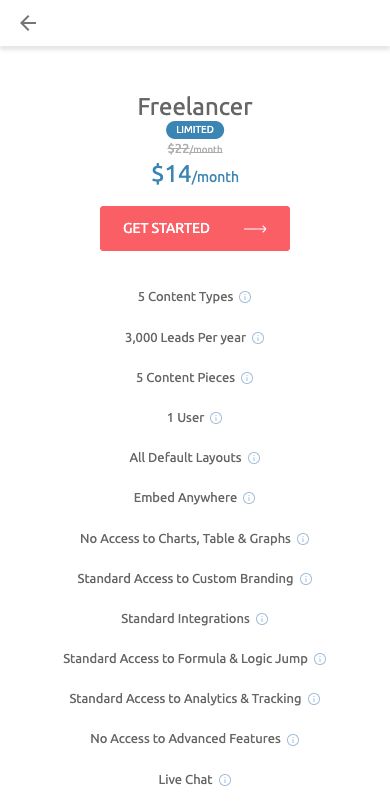
| Outgrow | Several interactive-content formats | Quiz, calculation or recommendation workflow | Freelancer Limited annual view: 3,000 leads per year and five content pieces. Confirm content-type access. |
A knowledge check, marketing category and product recommendation use different criteria. Compare the supported logic and selected plan around the intended result.
Interact

Interact’s Free plan lists two quizzes, one user, 100 completions per billing cycle and lead capture, with Interact branding and no integrations. Its help page includes lead-only analytics, while the pricing card says no analytics. Confirm the reporting available in the selected account before building your measurement process around the feature.
A completion counts when someone reaches the result, whether or not they submit an email address. The Free plan help states quizzes stop at 100 completions until the next billing cycle. The reset follows the signup date rather than the first day of the calendar month. Counting email addresses alone understates the resource used.
Paid plans have different email-lead allowances and plan-dependent branching, integration and branding features. Lite displayed $27 per month paid annually. The figure is not a verified month-to-month billing quote.
Public pages gave conflicting trial descriptions. Confirm the selected terms before supplying billing information. Interact is my first direction for a result-based lead magnet with suitable email follow-up.
Typeform
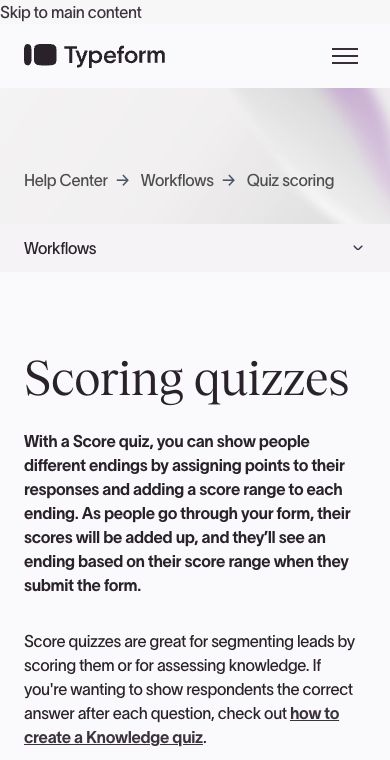
Typeform supports score quizzes, outcome quizzes and branching in its public product and support material. Not every question type supports the same logic. Check compatibility before designing the answer-to-result mapping.
Response limits apply across forms in the account. Unused responses do not carry over, and deleting an answer does not restore the monthly allowance.
The response documentation describes forms entering Private mode after the limit is reached, until the next period or an appropriate upgrade. Review add-ons and automatic-upgrade terms for the selected arrangement.
Choose Typeform for closer investigation when the questionnaire and ending logic are the main job. Review the result and follow-up separately from the form’s appearance.
Outgrow
Outgrow describes quizzes, calculators, assessments and other interactive formats. Review the wider toolkit when a category quiz alone does not fit the information the visitor needs.
Plans separate content types, active content, leads and other resources. The entry package does not automatically include every recommendation format, integration or branding option.
Under the annual billing selection, Outgrow’s Freelancer Limited detail panel displayed $14 per month, 3,000 leads per year, five content types, five content pieces and one user. The monthly equivalent totals $168 for a year before taxes or separate services. An annual lead total does not establish a monthly quota. Confirm the selected commitment and the exact content types before buying.
Ask what happens after a lead or traffic allowance is exceeded. Obtain the selected terms before treating the subscription as an unlimited fixed-price service. No Outgrow campaign, CRM connection or conversion improvement was tested for this guide.
Define the useful result before the questions
Describe what the person should understand after completing the quiz. A shopping exercise might explain relevant product features. A knowledge check evaluates understanding against a reviewed answer key. A marketing category groups ordinary preferences or situations.
Keep the promised result useful without an email address. An unexplained category label followed by a purchase button supplies little information to the person answering.
For a fictional product exercise, write the result explanation first. Identify the verified feature differences and the details still requiring a conversation. Only include questions serving those distinctions.
State the commercial context. If the quiz recommends your own products or services, do not present the result as an independent market evaluation.
Choose the next action associated with each result. The action should fit the information supplied and the business’s prepared process. Avoid sending every answer pattern into a generic campaign.
Record the approved result descriptions beside the logic specification. A later product change needs review of both the explanation and the answer mapping.
Keep scores and categories proportionate to the evidence
A knowledge score compares answers with criteria. A marketing category groups preferences. A recommendation matches requirements with an offer. None automatically establishes a validated assessment of a person.
Do not describe a simple marketing category as a scientifically validated personality test. A generic builder also does not supply medical diagnosis or eligibility decisions for high-impact services.
Use appropriately qualified processes and people for consequential medical, legal, financial and other specialist decisions. Scoring features do not establish the required validation.
Keep the result language within the answers and verified information. Explain the relevant preference without making claims about the person’s intelligence, health, finances or future.
For a fictional shopping quiz, a result about preferred product features should stay about those features. The same answers do not justify an unrelated judgment about the buyer.
No real person was assessed and no specialist assessment was validated for this comparison.
Write an understandable logic specification
Document how each answer affects the result. For points, record the intended ranges and their purpose. For categories, explain the connection between answers and endings.
Make the specification readable outside the builder account. Someone needs to understand the rules when the offer changes or an unexpected result appears.
Define ties, skipped questions and uncertain answers. A fallback should explain the unresolved information rather than force an unsupported match.
For a fictional answer map, label each result and the question affecting the result. Review conflicting combinations before implementing the rules. The example is a planning method, not tested logic in any provider.
Use a review sheet with the proposed answer combination, expected ending and reason for the route. Leave a space for the observed ending during your authorized test. Record a mismatch beside the relevant rule, then assign the correction. This separates the written intention from the configured behavior without relying on memory of a preview.
Include an answer combination requiring more information. The ending should explain the unresolved requirement and the appropriate contact route. Avoid declaring a complete product match when the questionnaire lacks an important fact. The reviewer needs the approved product information and the result explanation together before confirming the route.
Keep the test cases fictional and within the approved scope. A basic marketing evaluation does not need a real person’s private health, financial or employment information. If an example introduces a consequential eligibility decision, remove the example from the marketing workflow and obtain the appropriate specialist process.
Review the ending after a content update, not only after changing a score. A revised product description or linked offer alters the information delivered to the visitor. Record the approved version and repeat the relevant checks before launching the revision.
Keep wording and routing aligned. A question asking for a preference should not quietly drive an unrelated claim or consequential decision.
Preserve the approved version and the reason for a change. A screenshot of the final result alone does not explain how the questionnaire reached the ending.
Collect the minimum information needed
Start with the answers supporting the promised result. Remove questions with no clear purpose. A longer questionnaire introduces more review and data-handling work.
Use ordinary preferences or requirements when sufficient for the task. Do not request sensitive details simply because the builder offers another field type.
Explain the handling of answers and contact information. Record the receiving systems, authorized users and appropriate retention process for review.
Separate delivery of a requested result from permission for ongoing marketing. Review the requirements applying to your audience with appropriate professional help.
A fictional preference quiz needs only the information used in its explanation. Real customer records are unnecessary for a basic demonstration. No private answer set or contact list was uploaded for this guide.
Resolve unknown data-handling responsibilities before launching. A friendly form layout does not complete the privacy work behind collection.
Explain the email request before the person starts
If an email address is required for the intended delivery, explain the condition before someone spends time answering. Avoid promising an immediate result and introducing a different requirement at the end.
Keep the result specific enough to reward the person’s attention. Explain the relevant answers, recommendation limits and useful next action.
Give the person a clear choice about further communication. A large list of misunderstood signups is a poor foundation for a relevant relationship.
Review the message following submission. The delivery email should match the promise on the first screen. Promotional follow-up needs its own approved purpose and applicable permissions.
For a fictional resource-delivery workflow, record the sending service, expected content and responsible owner. The specification helps distinguish an undelivered result from a separate promotional campaign.
No email campaign or customer message was sent as part of this comparison.
Map recommendations to verified product information
Use verified dimensions, compatibility, materials and supported use when matching products. An AI-generated guess is insufficient support for a buying claim.
A short quiz for an expensive or specialized product often serves as the start of a conversation. Identify which details require a person to review the requirements.
Do not promise suitability, performance or delivery solely because a score produced a match. The catalog and fulfillment arrangement must support the explanation.
When the catalog changes, review linked offers and result rules together. An unavailable product or outdated feature description changes the usefulness of the recommendation.
My supplier research guide addresses the commercial verification behind an offer. Supplier Paradise supplies research leads, not proof of approved relationships or delivery commitments.
Keep the approved product facts with the result specification. A later editor should have access to the basis for the recommendation without reconstructing several promotional pages.
Specify the integration and follow-up owner
Identify the information passed to the email platform or CRM. A contact address, result category and consent record serve different purposes.
Review the selected connector’s field support. A product page naming the CRM does not prove the required result reaches the right field in your account.
For a fictional lead handoff, list the destination of the email and category, then assign the person handling the next conversation. Include an authorized backup for absences.
Check who controls messaging and opt-outs. Two applications should not send overlapping sequences because ownership of the communication is unclear.
Define how duplicate contacts and repeated answers are handled. A new response does not necessarily represent a new customer. Keep the rule in the implementation notes.
A record arriving in a database is only one part of the handoff. The next action needs a responsible owner and enough context for an accurate response.
Review the published experience and result paths
Check the quiz inside the final website. A provider preview and an embedded page use different surroundings. Review the first screen, answer controls and ending at the intended size.
Keep important text readable and labels descriptive. Essential information should not depend on mouse hovering or an unexplained decorative image.
Review keyboard access, focus and relevant error messages for the selected implementation. A visually attractive template does not establish accessible configuration.
Prepare suitable fictional answer combinations covering each intended result. Include ties, incomplete answers and requirements outside the catalog. Compare the displayed ending with the written rules.
For educational material, use a qualified reviewer for the answer key. For a product result, check the feature mapping and unresolved requirements. Keep the result within the reviewer’s expertise.
The checks are proposed implementation work, not device or logic tests performed for this provider comparison.
Best quiz builders: compare the resource boundary
Read the allowance by resource. Completions, responses, email leads, visits, published quizzes, users and integrations are separate limits.
Estimate activity with visible assumptions. If many visitors complete the quiz without opting in, a completion or response allowance matters before an email-lead limit.
Confirm the behavior at the boundary. A quiz pause, required upgrade or additional charge needs consideration before traffic reaches the live campaign.
Compare the full commitment with the displayed monthly equivalent. Review the quota period and optional services alongside the annual total.
A hypothetical $30 monthly software allowance totals $360 over a year before design, review and separate services. The calculation is not a provider quote or proof of returns.
Include maintenance, privacy handling and follow-up in the project budget. Paying the subscription does not assign owners or verify the question logic.
Measure the workflow without a conversion promise
Keep starts, completions, opt-ins and relevant conversations separate. Each event answers a different question. A large email count does not prove a useful result or appropriate sales demand.
Investigate confusing questions and unexpected routes. Some visitors will decide the offer is unsuitable. An honest description helps the business understand this difference.
For a change comparison, record the altered element and the evaluation method. A few unexplained visits do not establish a winning headline.
Check the consistency of audience, offer and period before interpreting a result. Preserve uncertainty about missing data or overlapping campaigns.
A provider’s attribution dashboard does not prove the quiz caused every later sale. This guide includes no measured conversion improvement or campaign revenue.
Use evidence from your authorized setup for claims about performance. Keep provider examples separate from the results the business verified.
Review AI suggestions and the wider store plan
AI assistance supports brainstorming and drafting without establishing correct facts or answer keys. Check claims against appropriate sources and the approved specification.
Remove an unsupported specialist judgment rather than polishing the wording. Do not upload unnecessary sensitive records merely to personalize a demonstration.
My high-ticket dropshipping guide explains the retail model behind the offers I teach. A quiz supports a buying conversation without establishing the catalog or business.
The niches list gives you categories to research. Product recommendations still need verified information about the chosen offer.
The business foundation checklist frames ownership and administration. A quiz builder does not complete the entity, privacy or legal-review work.
Frequently asked questions
Are completions the same as email leads? No. A quiz completion does not automatically produce a lead. Check the resource counted by the selected plan.
Does every Typeform have the full account allowance? Current documentation applies response limits across forms in the account.
Does a marketing score diagnose a person? No. A generic builder does not establish a validated specialist assessment.
Does a quiz guarantee sales? No. The audience, offer, result and follow-up need evaluation. This comparison includes no performance test.
Should AI-generated questions be published immediately? Review facts, logic, result wording and the implementation before launch.
Related guides
- CRM software for ecommerce
- Email software for affiliate marketing
- AI content tools
- Online course platforms
- Small-business software

Trevor Fenner is the founder of Ecommerce Paradise. His main projects are Ecommerce Paradise, Supplier Paradise, and Review Paradise, which is currently in development. TrevorFenner.com publishes research-based reviews and practical guides to online business tools and remote-work services, with clear affiliate disclosures.