

The best stock research tools serve different information jobs. Use screening to organize symbols, news to identify developments and primary filings to examine company disclosures. A dashboard combining those functions does not remove the need to understand each source.
My shortlist is TradingView for screening and chart information, Benzinga Pro for financial-news workflows, and SEC EDGAR for public company filings. Choose the research question before purchasing the package.
At Ecommerce Paradise, my work is online-business education. The business resources linked here are not stock-picking services, investment advice or a trading course.
Research date: October 13, 2026. This comparison uses official product and support information. I have not connected a portfolio, placed trades, run backtests or measured provider performance. This is educational software information, not a recommendation to buy or sell securities. Investing involves risk. Use qualified financial help for your circumstances.
Disclosure: qualifying affiliate purchases through some links earn me a commission at no additional cost to you. I own Ecommerce Paradise and Supplier Paradise. TradingView and Benzinga referrals reached their documented destinations during research. SEC EDGAR remains an unlinked public research example.
Best stock research tools by information source
| Tool | Review for | Research job | Important check |
|---|---|---|---|
| TradingView | Screening and chart information | Organize symbols against defined criteria | Feed, timing, subscription and limits |
| Benzinga Pro | Financial news and related tools | Find and monitor relevant information | Source context, tier and add-ons |
| SEC EDGAR | Public company disclosures | Examine the filing behind a summary | Form, period, version and interpretation |
When the question concerns a company disclosure, start with the appropriate filing. A more expensive news package is not automatically the missing input. For market information, identify the feed and entitlement before treating two displays as equivalent.
TradingView
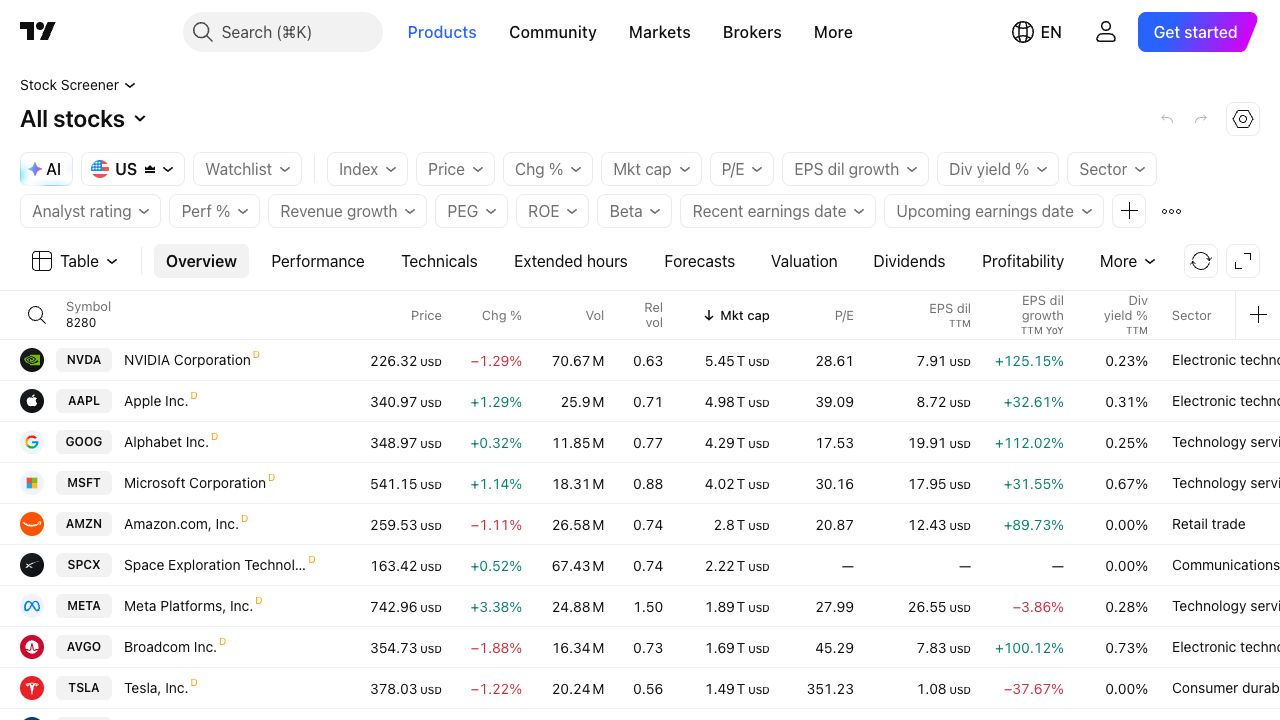
TradingView‘s screener walkthrough describes filters, configurable columns and table or chart views. The stock screener organizes information around criteria without determining investment suitability.
Its market-data documentation states paid software plans do not include additional real-time exchange fees. The relevant package depends on subscriber status and exchange rules.
Default U.S. stock data comes from Cboe and differs from primary-exchange data. Direct NASDAQ, NYSE or ARCA data requires review of the additional arrangement. Paid software access does not establish access to every primary feed.
Investigate TradingView for a defined screening or chart-information task. Check the selected limits and source. No screener, broker connection or indicator performance was tested for this comparison.
Benzinga Pro
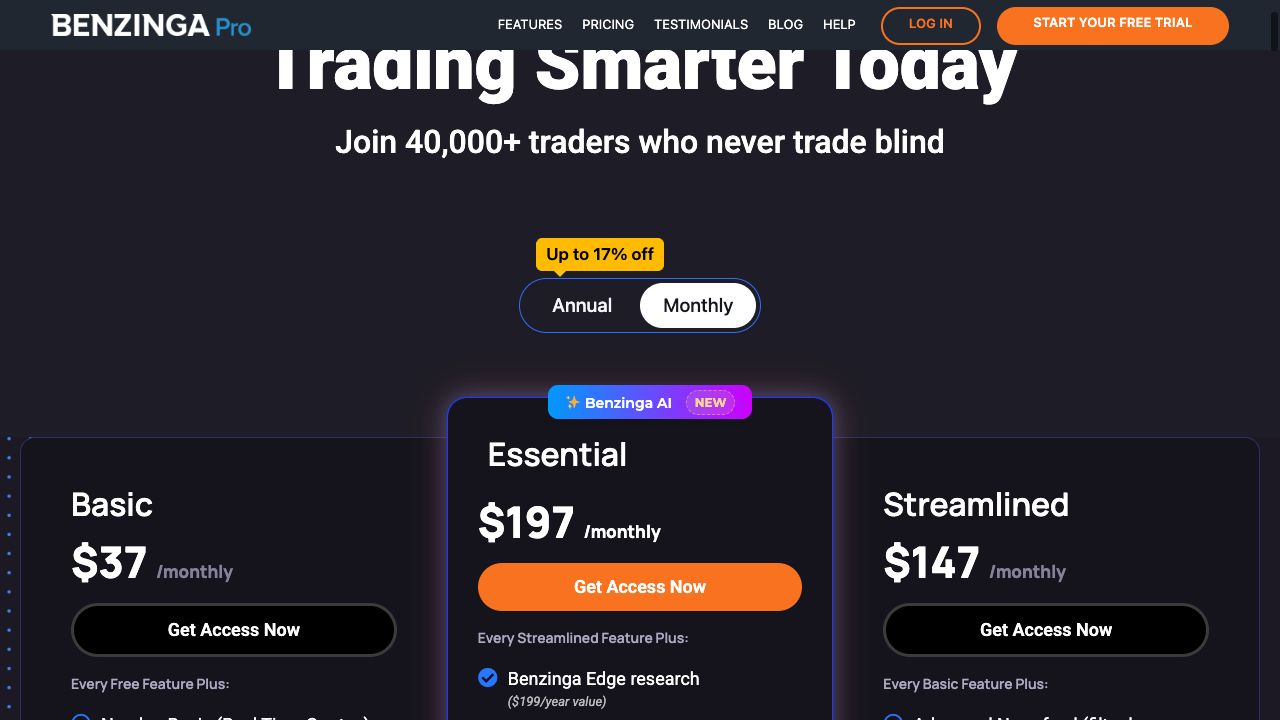
Benzinga Pro describes newsfeeds, watchlists, alerts and plan-dependent research features. Its scanner and screener supply information, not proof of profitable decisions.
The inspected page displayed monthly Basic, Streamlined and Essential offers at $37, $147 and $197, alongside lower annual equivalents. Confirm currency, commitment and selected terms rather than comparing monthly billing with an annual headline.
Feature access differs by package. High Beta Squawk was listed as a separate $99 monthly add-on. Do not assume the entry tier includes every audio, scanner or research feature.
News speed, alerts and performance testimonials were not tested here. Faster information does not guarantee correct interpretation or an investment return.
SEC EDGAR
Investor.gov describes EDGAR as free public access to corporate filings. Use the relevant filing to examine a disclosure behind a company summary or news story.
For domestic public companies, the guidance distinguishes annual Form 10-K, quarterly Form 10-Q and current Form 8-K. An appended /A identifies an amendment. Review the form and period before treating documents as comparable reports.
A public filing is not a government recommendation to purchase the security. Examine the business, financial statements and risk information in context.
This guide did not evaluate an issuer’s investment merits or audit financial statements.
Define the question before entering a symbol
Write the information task plainly. Identify whether you need a source check, a disclosure review or a comparison of data definitions. The question determines which product or public resource is relevant.
A list produced by a filter describes the criteria selected. The list does not establish the complete risks or suitability of each security.
Keep unresolved questions visible in the notes. If the available information does not answer the question, record the limitation instead of supplying a confident guess.
For a fictional research record, identify the source, reporting period and claim requiring review. Leave the conclusion unfilled until the evidence supports an appropriate statement. The exercise is information management, not a stock selection.
Separate the task from personal investment decisions. This comparison supplies no screening thresholds, allocation recommendations or trading instructions to copy into an account.
Keep the selected data definitions with the research question. A later reader should understand which information was examined without reconstructing the original dashboard.
Follow summaries to their source
A summary identifies material worth reading, but important qualifications often require the original source. Check where the information originated and whether the full disclosure explains a limitation omitted from the short version.
Review dates and reporting periods. A newly published story might discuss an older result. A company announcement, statement and analyst opinion describe different kinds of information.
Separate the source’s statement from an interpretation. A forecast is not a completed result. A market reaction does not establish a change in the reported financial figure.
Preserve the original reference in the research record. A source name, relevant document and date are more useful than memory of a headline.
If two sources differ, identify the unresolved issue before selecting the more appealing number. Review their periods, definitions and scope.
No private issuer data or personal portfolio information was accessed for this comparison.
Understand the figure before comparing applications
Similar labels do not establish identical calculations. Check currency, date range and whether the figure is reported, adjusted or estimated.
A ratio needs understandable inputs. If the provider’s definition is unclear, record the question and obtain clarification before relying on the comparison.
Keep price, revenue, profit and cash flow distinct. Those figures answer different questions. Precision on a screen does not make an inappropriate comparison reliable.
For a fictional comparison sheet, place the field definition beside the source value. Include the period and currency rather than separating context into an unlabeled note. The example does not evaluate a real issuer.
Separate a document’s publication date from the period covered by the statement. A recently filed report does not turn an earlier reporting period into current daily information. In your review sheet, label both dates and preserve the referenced version. If another application displays a figure under a shorter label, check the underlying definition before treating the values as equivalent. Record the unresolved difference rather than changing a number to make the comparison appear consistent.
Use a separate note for a revised definition or corrected source. The original record should explain which information supported the earlier observation. An amendment, different currency presentation or changed period deserves review of the comparison rather than an unexplained replacement. Keep any interpretation limited to the information examined. This procedure does not establish a finding about a particular company.
Use suitable financial expertise when interpretation matters. Displaying a figure does not resolve every accounting question behind the number.
Preserve uncertainty about missing or revised information. Do not turn an incomplete display into a definitive conclusion.
Check the feed and update timing
Identify the instrument and source. A platform supporting several markets does not give every chart identical timing, coverage or entitlement.
Review the relevant data-status description for the selected account and market. Keep a display’s refresh interval separate from the underlying feed’s timing.
Separate the exchange package from the software subscription. Subscriber classification and exchange rules affect the arrangement. Owning an online business does not automatically establish your classification.
For your authorized evaluation, confirm the selected terms with suitable non-private examples. This guide did not purchase a feed or verify a private account configuration.
More detailed information does not eliminate risk. The source supplies data without proving the user’s interpretation or future outcome.
Record changes to the selected feed when comparing observations over time. Otherwise, an apparent discrepancy might come from a changed information source rather than the conclusion being examined.
Read the relevant filing in context
Confirm the company, form, period and version. A document’s name helps identify its purpose without replacing review of the contents.
Investor.gov distinguishes audited annual statements from unaudited quarterly statements in the relevant domestic-company reports. Do not assign every disclosure the same review status.
Read appropriate business and risk material alongside the financial information. A short excerpt is insufficient when the omitted context affects interpretation.
Check amendments and later disclosures relevant to the document. Preserve the version used in your notes rather than treating a saved file as permanently current.
Public access begins a research task. The presence of a filing does not validate every interpretation or establish the security’s suitability.
This article contains no issuer-specific audit, recommendation or financial-statement judgment.
Keep news, commentary and promotion distinct
Identify the kind of material you are reading. Reporting, analysis, opinion and commercial promotion require different consideration.
A confident headline does not establish a verified fact. Read the context and the original evidence before adopting the claim.
Do not treat a testimonial about a subscription paying for itself as an expected result. One person’s claim does not establish repeatable returns for other readers.
Review claims of guaranteed outcomes or privileged information carefully. A research product should help examine evidence without implying ordinary uncertainty has disappeared.
Use appropriate professional help for a particular investment or personal concern. This software guide is not an adviser assessing your financial position.
No news-speed benchmark, alert test or provider performance claim was independently measured for the article.
Best stock research tools: compare the complete cost
List the tier, billing commitment, required data packages and optional products separately. The entry subscription does not include every feature displayed elsewhere on the website.
Compare the annual total with month-to-month billing. Review introductory terms, renewal conditions and cancellation requirements for the selected arrangement.
A hypothetical pair of research services costing $45 monthly totals $540 over twelve months before additional data or other expenses. This is a budget example, not a provider quote or investment-return forecast.
Do not justify the expense with an assumed winning trade. Evaluate the information need and authorized software budget separately from investment outcomes.
Check resource limits relevant to the task, including saved screens, alerts, historical coverage, exports and users. A wider allowance in one area does not remove other restrictions.
Before subscribing, record the required feature and the scope supporting the purchase. An unexplained broad bundle is harder to assess during renewal.
For a fictional software-purchase record, create separate entries for the base subscription, exchange entitlement and optional service. List the billing period and applicable renewal information beside each entry. Identify the person reviewing the invoice and the evidence supporting the selected scope. An unfamiliar charge should be compared with the approved order rather than treated as part of an undocumented total. The exercise describes subscription administration, not a financial-account transaction or provider quote.
Keep research records and data rights clear
Use notes identifying the source, definition, period and unresolved question. Distinguish observations from assumptions and interpretations.
For an export, check the selected plan’s support and applicable terms. A downloadable file does not establish permission to redistribute the feed commercially.
Preserve field definitions with the data. A later file containing several periods or currencies needs enough context for meaningful review.
Review the column label, timestamp, currency and definition supplied by the provider. Keep these fields with the file. A reader receiving the export needs enough information to distinguish the recorded observation from a later display. Do not silently remove context when combining files from different tools.
Record why the research changed. A revised source, corrected definition or new disclosure deserves a note explaining the difference.
Give shared notes a clear review status. A draft observation, unresolved source question and approved explanation should not appear identical to another reader. Assign the person responsible for checking the discrepancy and preserve the original reference. When the review is complete, describe the evidence examined and any remaining limitation. Avoid turning an organizational label into a claim of financial validation. The record supports collaboration without certifying the investment or a research method.
Keep the information within the authorized task and appropriate provider permissions. Convenient access is not ownership of every underlying dataset.
A thorough notebook does not eliminate investment risk. The notes support source review without promising a future result.
Separate research access from financial-account authority
Reading public information and connecting a financial account are different actions. Review the purpose and permissions before authorizing access.
Research does not require broker execution for every task. Understand an integration’s capabilities before granting authority.
Keep credentials, private holdings and account records out of public examples. Use appropriate non-private material for an interface demonstration.
No account was opened or connected for this comparison. No financial transaction, security change or permission expansion was performed.
Maintain a clear owner for authorized access and recovery. A contractor’s involvement does not remove the need for a controlled ownership arrangement.
Seek appropriate help for account-specific questions instead of treating a general product comparison as approval for a connection.
Review AI and historical examples without adopting their claims
AI assistance organizes material without verifying every statement. Check periods, figures and qualifications against the original source.
Keep facts and recommendations separate. If a generated answer suggests an investment, review the evidence and whether the output goes beyond the available information.
Do not upload unnecessary private account records merely to test an AI feature. Review the service terms and authorized purpose before transmitting sensitive information.
A platform’s historical tools, simulations or indicators do not establish a properly evaluated strategy. Historical results are not guaranteed future outcomes.
Distinguish a demonstration, hypothetical scenario and documented real result. A screenshot of a profitable example does not prove comparable performance in your use.
No backtest, paper trade, private-portfolio analysis or stock selection was performed for this guide.
Keep online-business education separate from investing
My high-ticket dropshipping guide explains an independent retail model with a catalog, suppliers, storefront and customer-service process. The model is not a securities strategy.
The high-ticket niches list supplies retail categories for investigation. Those categories are not stock picks or promises of investment returns.
My supplier research guide covers a commercial relationship. Supplier verification and securities research need separate scopes.
Supplier Paradise is a retail discovery resource I own, not a broker, investment adviser or financial-research platform.
The business foundation checklist frames administration. Use qualified legal, tax and financial professionals for the obligations and personal decisions outside general software information.
Frequently asked questions
Does a paid TradingView plan include all exchange fees? Current documentation excludes additional real-time exchange fees from the software plan. Review the selected market and subscriber arrangement.
Are screening, news and filings interchangeable? No. Each supplies a different research input with its own context.
Is EDGAR a recommendation service? No. Public filings are material to examine, not personalized advice to purchase securities.
Does a research subscription guarantee returns? No. Information access does not eliminate risk or establish a future outcome.
Did this comparison test a strategy? No. The guide includes no trades, backtests, private portfolios or performance result.
Related guides
- Small-business software
- Business bank accounts
- AI content tools
- Online-business brokers
- Online courses

Trevor Fenner is the founder of Ecommerce Paradise. His main projects are Ecommerce Paradise, Supplier Paradise, and Review Paradise, which is currently in development. TrevorFenner.com publishes research-based reviews and practical guides to online business tools and remote-work services, with clear affiliate disclosures.