

The best print on demand companies are the ones that fit the product you want to sell and the place your customer lives. That’s it. So before you pick a subscription, compare the exact blank, design placement, production arrangement and delivered cost, because a free account does not mean a free order.
Start with a small collection for a defined audience. A shirt, a mug and a poster each need different specs and shipping checks. A generic starting price tells you very little about the product your customer actually receives.
At Ecommerce Paradise, I focus on practical supplier relationships and operating costs. Print on demand is a fulfillment model, nothing more. Your business still needs a reason for someone to buy and a process for handling problems.
I started my business in October 2010, and my first store failed before my second one worked. The biggest lesson from that stretch was simple. Know your real cost per order before you spend a dollar on traffic.
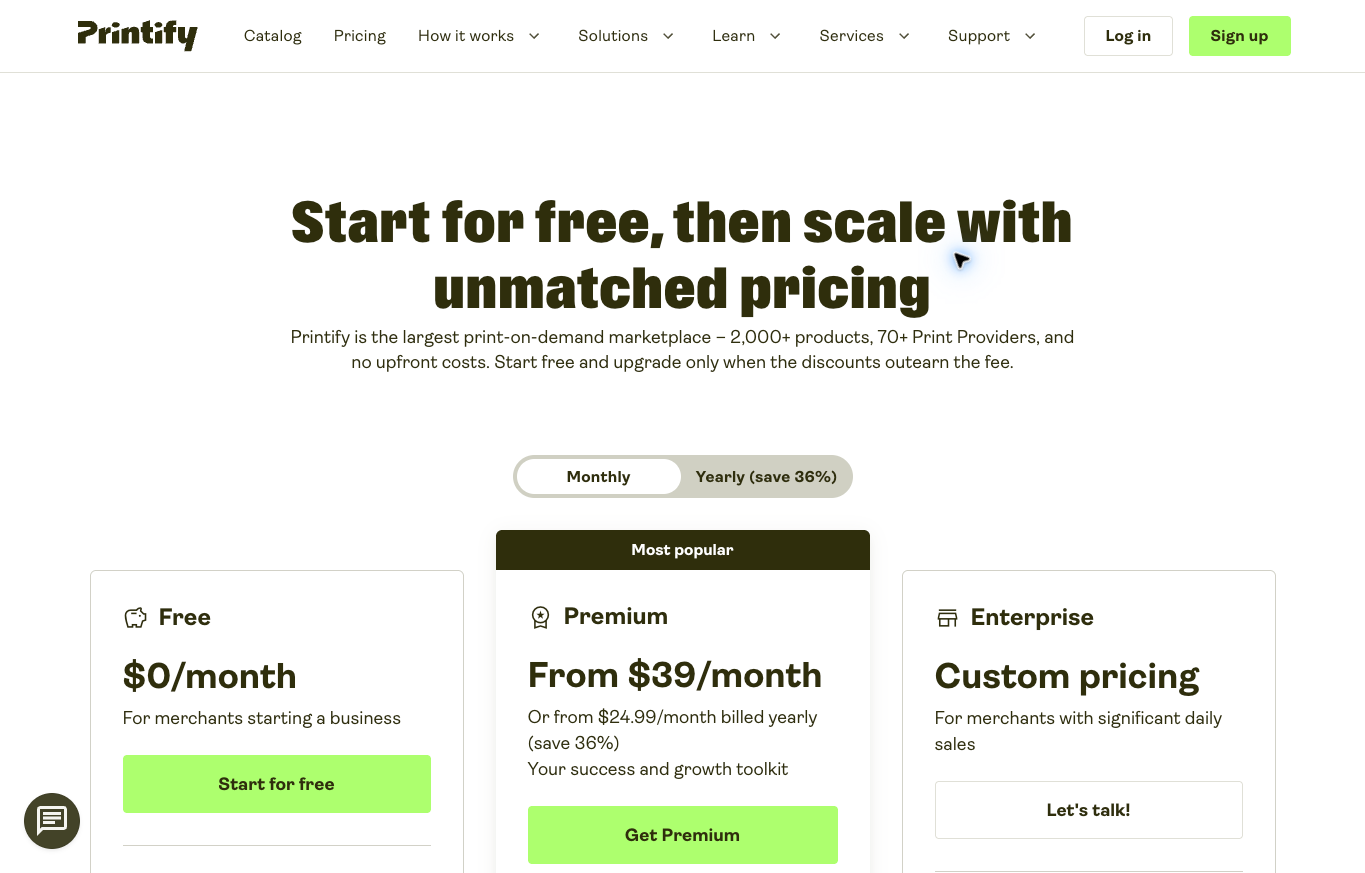
This comparison covers Printify, Printful and Gelato using public provider sources reviewed October 14, 2026. The retained Printify image was captured October 13. No samples were ordered, stores connected, designs uploaded or printed-product quality tested.
Affiliate disclosure: I receive compensation for qualifying purchases through the documented Printify links, subject to program approval and terms. The Shopify link later on is also an affiliate link. Printful and Gelato remain unlinked comparisons because the current catalog has no verified affiliate destination for either. I own Ecommerce Paradise and Supplier Paradise.
Printify for comparing provider options
Printify gives you a choice of print providers. That’s useful, but compare the exact provider and product. Don’t assume two similarly named blanks produce identical results.
The current Free plan lists 5 stores. Premium lists 10 stores and starts at $39 monthly or a $24.99 monthly equivalent billed yearly. Keep in mind that the subscription is separate from order production and delivery.
The page separates discounts of up to 33% on new products from up to 20% on all products. Those are maximum advertised percentages. They don’t tell you the saving on every variant or shipping charge.
Here’s what I’d do. Compare the selected Printify provider using the actual size, color, print method and customer destination. Work out the free-plan cost first, then decide whether paid-plan savings justify the subscription.
Printful for the selected product and customization
Printful separates its free account from Growth at $24.99 monthly. Its base product pricing covers the blank, one print or embroidery placement and fulfillment. Shipping, taxes and additional features need their own review.
Extra design placements, labels, packaging and embroidery setup all change the comparison. Price the customization you actually plan to use. Don’t assume a starting catalog price covers the full branded order.
Identify the exact material, size chart and production method before you choose. A great shirt doesn’t prove the same provider fits embroidered merchandise or wall art. Keep the product decision specific.
The site advertises a Growth sales-based fee waiver, but eligibility needs its own check. Don’t budget a waived subscription from an unrelated sales total, and don’t treat a marketing threshold as confirmed account approval.
Gelato for product and destination fit
Gelato’s production-network model deserves a look against the exact product and customer location. A broad local-production claim doesn’t prove availability or delivery timing for every variant.
The current Gelato+ page lists $29.99 monthly or a $19.99 monthly equivalent billed annually. The subscription and the delivered-product charge are different expenses. Confirm the complete selected offer before you commit.
The page also advertises a short-term shipping campaign. Temporary promotional shipping is separate from ordinary repeat-order pricing, so I’d leave the promotion out of a long-term cost forecast until the applicable terms are confirmed.
Compare production availability, delivery cost and the process for reporting a problem. Don’t turn a network-wide marketing claim into a promised arrival date for a specific customer’s order.
Compare the subscription separately from the order
| Company | Reviewed subscription | Product decision | Cost to check |
|---|---|---|---|
| Printify | Free $0. Premium from $39 monthly or $24.99 annual-billed monthly equivalent | Exact print provider, blank and variant | Production, delivery and eligible discounts |
| Printful | Free $0. Growth $24.99 monthly | Selected product and design placements | Base production plus shipping, taxes and extras |
| Gelato | Free account. Gelato+ $29.99 monthly or $19.99 annual-billed monthly equivalent | Product availability and customer destination | Delivered order and applicable offer terms |
These references describe subscriptions, not complete orders. Compare the same product requirements and destination using real quotes. A short-term campaign doesn’t establish ordinary repeat pricing or a guaranteed delivery date.
Compare a specific product before a platform
Choose a small group of products for one audience. Record the exact blank, variant, design placement and production method. A general shirt price doesn’t tell you the cost of your chosen size or an extra print area.
Use the same design when you compare equivalent items. Check the available colors, material and size chart next to the price. Two products with similar names still need a spec review.
Review the selected Printify product and provider together. On a marketplace-style platform, you’re really choosing the fulfillment source, not just the platform brand.
Keep the approved product information outside a single dashboard. If the blank or provider changes, review the affected specs and listing. An earlier sample doesn’t prove the new item’s quality.
Calculate the delivered order cost
Production cost and retail price are only the starting lines. Include shipping, relevant taxes, selling fees, acquisition and the costs your business absorbs when an order goes wrong. Keep fixed subscriptions separate.
Here’s an original hypothetical example. Assume a $25 sale, $10 production, $5 shipping, $1 transaction fees and $4 acquisition. The remaining $5 is before fixed expenses, refunds, replacements and other costs, and it’s arithmetic, not a provider quote or tested store result.
Now a paid-plan example. Assume a $39 monthly subscription saves $2 on each eligible order. 20 such orders produce $40 in assumed savings, so use your actual discount and product mix before you decide a subscription is worth it.
A maximum discount doesn’t set every order’s saving. Compare a normal repeat order instead of making the business depend on a short campaign. Then review the current Printify plan against the workload you actually plan to support.
Thin margins like that $5 example are why I push people toward higher-ticket products for their main store. A small mistake on a low-priced order can wipe out the profit from several good ones.
Keep production and transit separate
Ask about the selected product’s production estimate and shipping route. The moment an item finishes printing is different from the moment the customer gets the parcel. Record both parts of the expected process.
A local-production headline doesn’t mean every variant is available near every customer. Confirm the actual product and destination. An alternative fulfillment source also needs a fresh cost and availability check.
For orders with several items, check whether they ship together or in separate parcels. Separate suppliers or production locations change what you tell the customer. A single checkout doesn’t guarantee one package.
Don’t promise arrival by an event date based on a broad provider estimate. Explain confirmed information and send unknowns to the right provider. For US sellers, the FTC’s business guide to the Mail, Internet, or Telephone Order Merchandise Rule covers shipping promises and delays.
Use samples as a planned evaluation
Before you promote a bigger collection, plan a sample review of the exact blank, variant and print method. Decide what you need to observe and record the actual item. A public software screenshot doesn’t prove product quality.
Review material, fit, placement and packaging against the approved specs. For care or wear evaluation, follow the relevant instructions and document the actual procedure. Don’t report a durability result without a completed test.
To be clear, this comparison did not order or inspect samples. The review I’m describing is work for you as the store owner. A generated illustration and a provider mockup are different from a photo of a real delivered item.
Keep your observations specific. Note the provider, product, size, print method and concern. If a later change affects the material or production process, decide which checks you need to repeat.
Represent the product accurately
A mockup helps show a proposed design, but the listing still needs confirmed product information. Don’t exaggerate the print area, hide a material difference or suggest a garment construction the chosen blank doesn’t have.
Review the provider’s template and production specs before you upload a file. Keep the approved artwork version and intended placement clear. Similar filenames cause avoidable mistakes during product setup.
Use original or properly licensed artwork. A recognizable logo or character doesn’t become fair game for merchandise because an upload tool accepts the file. Confirm commercial use for fonts, stock images and design elements.
The USPTO explains what a trademark is. The US Copyright Office also has a general copyright FAQ. Both are good background reading, but neither replaces advice for your specific design.
Get proper advice when ownership or permission is uncertain. This article does not determine intellectual-property rights. Keep the supporting permissions with your business records.
Distinguish provider claims from customer obligations
A provider’s reimbursement policy governs your claim as the merchant against that provider. Your customer-facing policy and legal obligations need a separate review. Don’t label every printed order legally nonreturnable based on a supplier’s statement alone.
Printify’s current guidance describes reporting damage or manufacturing errors within 30 calendar days of delivery, with clear photo evidence. Wrong size, color and change-of-mind returns aren’t supported under that provider policy. Lost delivery uses separate timing and conditions.
Printful’s help also separates quality issues from buyer’s remorse and wrong selections. Its stated 30-day reporting period starts from delivery for quality issues, or from estimated delivery for packages never received. Review the current conditions that apply to you.
Gelato describes reporting quality concerns within 30 days of receipt, followed by an investigation of the claim. Validated claims get a replacement, with refund conditions when a replacement isn’t suitable. The provider doesn’t supply a general return address for personalized orders.
So record the actual provider policy right next to your store’s approved response process. Your agreement with a supplier doesn’t erase customer obligations or marketplace requirements. Get qualified guidance for rules specific to your business and destination.
Prepare a calm issue-reporting process
Assign someone to receive the customer’s report and identify the order. Ask only for the evidence needed to investigate, through your approved support channel. Keep private customer information out of public screenshots.
A damaged item, a wrong selection and a lost parcel are different cases. Use the provider’s procedure for the specific issue. Don’t apply one generic deadline to every problem.
Explain the confirmed next step instead of promising a supplier-approved replacement before review. Keep the customer updated when the provider asks for more information. You, the merchant, stay responsible for the commitments made to the buyer.
Review the Printify order-support arrangement for your selected product. A convenient claim interface isn’t proof every request gets reimbursed.
Reduce selection and address mistakes
Use the correct size chart and describe the actual product. Ask a reviewer to check the listing the way a buyer would. A clear description reduces confusion, but it won’t guarantee every selection is right.
Decide how change requests get handled before production starts. A completed print or a dispatched parcel leaves different options than an unapproved order. Don’t promise cancellation at every stage.
Keep the original selection, approved change and provider response in your internal record. Whoever answers the customer needs the current facts. Don’t place a second production order without an authorized decision.
Plan payment timing and order approval
A customer paying at checkout doesn’t mean the money settles before fulfillment gets charged. Review the storefront, processor and provider timing. Your operating budget needs funds for the real arrangement.
Include legitimate refunds or replacements your business absorbs. A free platform account doesn’t remove order costs or support responsibility. Subscription savings and cash timing are two different calculations.
Choose who approves orders and catches a design, variant or address concern. An automatic connection still needs an authorized check of the mapping. This comparison did not connect a store or change order settings.
Keep the process clear enough for another operator to run. Record the provider selection, approved design and next step when a product becomes unavailable. Don’t let a replacement blank change the customer promise without review.
Choose the fulfillment model deliberately
Print on demand generally customizes a catalog product after an order comes in. Private-label manufacturing is a different development and purchasing arrangement, and it matters when original specs or construction are the point.
My private-label manufacturers guide covers that separate model. A catalog-printed item isn’t custom manufacturing to your own material requirements.
For retail context, read the high-ticket dropshipping guide. The two models have different product, cash and customer-service requirements.
The high-ticket niches list helps organize category research. A listed category isn’t automatically a fit for printed merchandise.
Keep the supplier relationship and launch scope clear
Use the supplier research guide to build the habit of checking real terms. A print-provider account and an authorized dealer agreement are different arrangements.
Supplier Paradise is another discovery starting point I own. The directory doesn’t manufacture the products compared here or guarantee approval with a print provider.
My business foundation checklist covers broader ownership and admin responsibilities. Keep customer policies and provider agreements aligned with the actual business.
Ecommerce Paradise coaching supports business planning as a separate paid service. Bring your intended audience, product model and operating questions before you add tools.
The Ecommerce Paradise Academy page has the classroom and membership information. Review the current enrollment terms separately from your production and subscription budget.
Questions before choosing print on demand
Does a free account mean free orders?
No. Production, shipping, taxes and other selling expenses need their own calculation. Account access and delivered-product costs are different things.
Should every store buy a paid plan right away?
No. Compare eligible savings and features with the subscription under your real product mix. A maximum advertised discount isn’t every order’s saving.
Does a mockup prove print quality?
No. Review the actual product through a proper sample process. This article did not inspect printed samples.
Does the provider reimburse every return?
No. Supplier policies separate claim types and conditions. Your customer obligations need their own review.
Does a platform upload grant artwork rights?
No. Confirm ownership and commercial-use permission before printing designs, images, fonts or logos.
Keep a usable product record
For each approved item, record the exact provider, blank, variant, artwork version and placement. Include the destination used for the cost review and the date of the quote. A later operator should understand which assumptions produced the retail price without rebuilding it from several dashboard screens.
Keep production expenses separate from acquisition, storefront fees and customer-support costs. Review the math when a provider changes the price, the chosen variant disappears or the shipping destination changes. One profitable hypothetical order doesn’t mean every product or destination produces the same margin.
Record the source of each customer-facing spec. A mockup, a provider description and an inspected sample support different statements. Use confirmed material and size information in the listing, and keep the original evidence when you correct an error.
Give changes a clear owner. Before replacing a blank or switching fulfillment sources, review the affected listing, cost and delivery explanation. Save the approved revision so support answers from the current product record, not an old version.
Build the store around the chosen product
My dropshipping suppliers comparison covers another fulfillment arrangement. Choose the model before you add a long product catalog.
The sourcing agents guide covers supplier coordination for different purchasing needs. An agent is separate from a print-platform subscription.
For the storefront itself, Shopify is where I’d start. My team builds client stores on it, so it’s the platform I know best, but check which plan you actually need first.
Review my free Shopify apps guide when you decide which storefront functions need support. An app’s free tier doesn’t cover every paid feature or operating expense.
The shipping software comparison covers shipping tools for the right order flow. A print provider’s fulfillment process doesn’t automatically require a second label purchase.
So with that said, here’s how I’d launch. Start with approved product information, a realistic delivered price and a clear customer-support owner. Add another product only after reviewing its specs and expenses, because growing the catalog before fixing the first item’s problems adds work without proving demand.
The quick recap. Printify if you want a choice of print providers, Printful if the customization details are the priority, and Gelato if product and destination fit lead the decision. In every case, the subscription is the small number and the delivered order is the real one.
I’ve built more than 20 websites over the years and closed plenty of them down, so I’m not going to pretend any of this guarantees sales. What it does is keep you from losing money on orders you didn’t price correctly. That’s a pain in the butt to fix after launch.
If you’d rather build around bigger-ticket products with authorized suppliers, my free high-ticket dropshipping mini course is the place to start. Go check that out before you lock in a print provider.

Trevor Fenner is the founder of Ecommerce Paradise. His main projects are Ecommerce Paradise, Supplier Paradise, and Review Paradise, which is currently in development. TrevorFenner.com publishes research-based reviews and practical guides to online business tools and remote-work services, with clear affiliate disclosures.