
Here’s the truth about the best quiz builders. The tool matters less than the result you deliver and what happens after it. So write the result before you generate a single question, and if every answer leads to the same sales pitch, ask yourself whether the offer even needs a quiz.
My shortlist is simple. Interact for result-based lead magnets, Typeform for questionnaires with score or outcome logic, and Outgrow for quizzes that sit alongside calculators and other interactive formats. Pick the workflow first, then compare templates.
At Ecommerce Paradise, I teach an online-business operating model. I’ve been selling online since 2005, and one thing hasn’t changed. A quiz still needs accurate information, a clear offer and someone responsible for the next conversation.
In this guide you’ll see how the 3 tools handle limits, logic and plans, then how to plan results, data, follow-up and measurement so the quiz actually helps your buyers. If you sell bigger-ticket products, this matters even more, which is why I tie it back to the high-ticket dropshipping model near the end.
Research date: October 15, 2026. This guide uses public product, pricing and help information. I have not built live campaigns, collected customer answers, connected private records or measured conversions for this comparison. The implementation checks below describe proposed work for your own authorized project.
Disclosure: I own Ecommerce Paradise and Supplier Paradise. Some tool links in this guide, like Shopify and Omnisend, are affiliate links, so I may earn a commission at no extra cost to you. The quiz providers themselves are unlinked because the current catalog doesn’t document verified affiliate destinations for them. A merchant homepage alone doesn’t establish referral attribution.
Best quiz builders by result workflow
Here’s the quick view. Read the plan check column carefully, because each tool counts a different resource.
| Builder | Review for | Logic requirement | Plan check |
|---|---|---|---|
| Interact | Result-based lead magnets | Result categories and follow-up | Free: 100 completions per billing cycle, including visitors who skip opt-in. No integrations. |
| Typeform | Questionnaires with different endings | Supported scoring and branching | Account-wide monthly response pool. Deleted responses still count. |
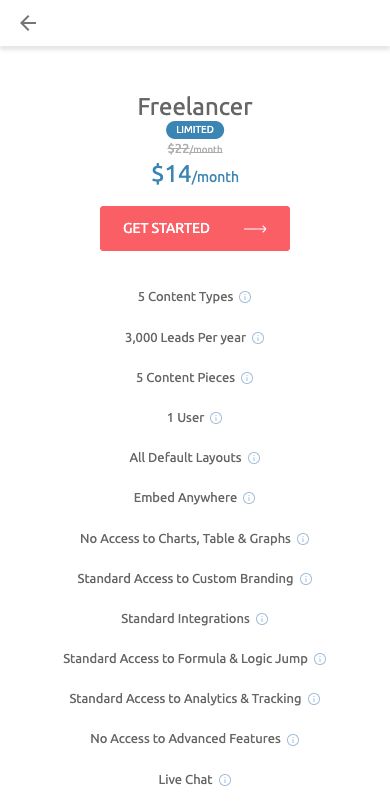
| Outgrow | Several interactive-content formats | Quiz, calculation or recommendation workflow | Freelancer Limited annual view: 3,000 leads per year and 5 content pieces. Confirm content-type access. |
A knowledge check, a marketing category and a product recommendation all use different criteria. So compare the supported logic and the selected plan around the result you actually want.
Interact
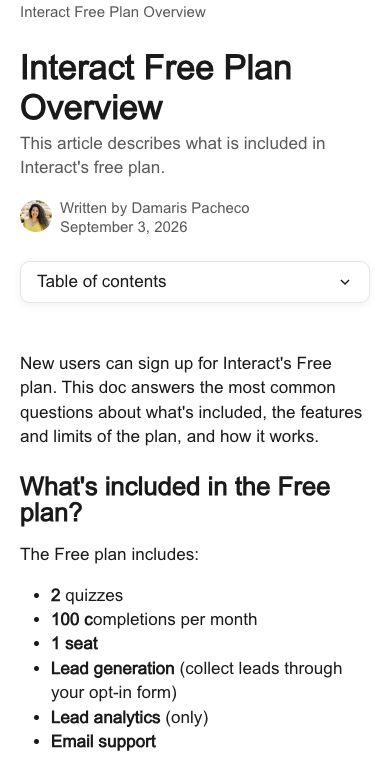
Interact’s Free plan lists 2 quizzes, 1 user, 100 completions per billing cycle and lead capture, with Interact branding and no integrations. Its help page includes lead-only analytics, but the pricing card says no analytics. Those two sources conflict, so confirm the reporting in your selected account before you build a measurement process around it.
Keep this in mind about completions. A completion counts when someone reaches the result, whether or not they submit an email address. The Free plan help says quizzes stop at 100 completions until the next billing cycle, and that reset follows your signup date, not the first day of the calendar month.
So if you only count email addresses, you’ll understate the resource you’re using. Track completions instead.
Paid plans have different email-lead allowances, plus plan-dependent branching, integration and branding features. Lite displayed $27 per month paid annually. That figure is not a verified month-to-month billing quote.
Public pages also gave conflicting trial descriptions. Confirm the selected terms before you hand over billing details. With that caveat, Interact is my first direction for a result-based lead magnet with suitable email follow-up.
Typeform
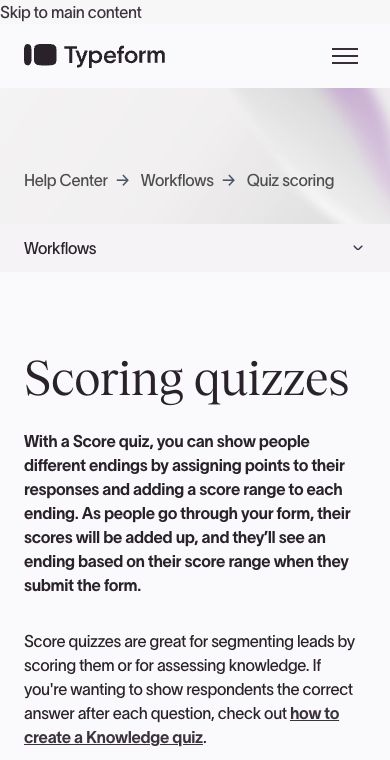
Typeform supports score quizzes, outcome quizzes and branching in its public product and support material. Not every question type supports the same logic, though. Check compatibility before you design the answer-to-result mapping.
Response limits apply across all forms in the account. Unused responses don’t carry over, and deleting an answer doesn’t restore the monthly allowance.
The response documentation says forms enter Private mode once the limit is reached, until the next period or an appropriate upgrade. Review add-ons and automatic-upgrade terms for the arrangement you pick.
My take: look closer at Typeform when the questionnaire and the ending logic are the main job. Judge the result and follow-up separately from how pretty the form looks.
Outgrow
Outgrow describes quizzes, calculators, assessments and other interactive formats. It’s worth reviewing the wider toolkit when a category quiz alone doesn’t give the visitor the information they need.
Plans separate content types, active content, leads and other resources. The entry package doesn’t automatically include every recommendation format, integration or branding option.
Under the annual billing selection, Outgrow’s Freelancer Limited detail panel displayed $14 per month, 3,000 leads per year, 5 content types, 5 content pieces and 1 user. That monthly equivalent totals $168 for a year before taxes or separate services. An annual lead total doesn’t establish a monthly quota, so confirm the selected commitment and the exact content types before buying.
Ask what happens once a lead or traffic allowance is exceeded. Get the selected terms in hand before you treat the subscription as an unlimited fixed-price service. No Outgrow campaign, CRM connection or conversion improvement was tested for this guide.
Define the useful result before the questions
Describe what the person should understand after finishing the quiz. A shopping exercise might explain relevant product features. A knowledge check grades understanding against a reviewed answer key, while a marketing category groups ordinary preferences or situations.
Keep the promised result useful even without an email address. An unexplained category label followed by a purchase button gives the person almost nothing.
Here’s the move for a fictional product exercise. Write the result explanation first. Identify the verified feature differences and the details that still need a conversation, then include only the questions that serve those distinctions.
State the commercial context. If the quiz recommends your own products or services, don’t present the result as an independent market evaluation.
Choose the next action for each result. It should fit the information supplied and the process your business has ready. Avoid dumping every answer pattern into one generic campaign.
Record the approved result descriptions next to the logic specification. A later product change needs a review of both the explanation and the answer mapping.
Keep scores and categories proportionate to the evidence
A knowledge score compares answers with criteria. A marketing category groups preferences. A recommendation matches requirements with an offer, and none of them automatically counts as a validated assessment of a person.
Don’t describe a simple marketing category as a scientifically validated personality test. A generic builder also doesn’t supply medical diagnosis or eligibility decisions for high-impact services.
Use properly qualified processes and people for consequential medical, legal, financial and other specialist decisions. Scoring features don’t provide the required validation.
Keep the result language within the answers and verified information. Explain the relevant preference without making claims about the person’s intelligence, health, finances or future.
For a fictional shopping quiz, a result about preferred product features should stay about those features. The same answers don’t justify an unrelated judgment about the buyer.
No real person was assessed and no specialist assessment was validated for this comparison.
Write an understandable logic specification
Document how each answer affects the result. For points, record the intended ranges and their purpose. For categories, explain how answers connect to endings.
Make the specification readable outside the builder account. Someone needs to understand the rules when the offer changes or a weird result shows up.
I like keeping this spec in a shared doc. Google Workspace works well because your logic sheet, review notes and product facts can live in one shared folder your team can edit and comment on.
Define ties, skipped questions and uncertain answers. A fallback should explain the unresolved information instead of forcing an unsupported match.
For a fictional answer map, label each result and the question that affects it. Review conflicting combinations before you implement the rules. The example is a planning method, not tested logic in any provider.
Use a review sheet with the proposed answer combination, expected ending and the reason for the route. Leave a space for the observed ending during your authorized test. Record any mismatch beside the relevant rule, then assign the fix. This separates the written intention from the configured behavior, so you aren’t relying on memory of a preview.
Include an answer combination that needs more information. The ending should explain the unresolved requirement and the right contact route. Avoid declaring a complete product match when the questionnaire lacks an important fact.
The reviewer needs the approved product information and the result explanation together before confirming the route. That pairing is what stops a wrong recommendation from going live.
Keep the test cases fictional and within the approved scope. A basic marketing evaluation doesn’t need a real person’s private health, financial or employment information. If an example introduces a consequential eligibility decision, pull it out of the marketing workflow and get the appropriate specialist process.
Review the ending after a content update, not only after changing a score. A revised product description or linked offer changes what the visitor receives. Record the approved version and repeat the relevant checks before you launch the revision.
Keep wording and routing aligned. A question asking for a preference shouldn’t quietly drive an unrelated claim or consequential decision.
Preserve the approved version and the reason for each change. A screenshot of the final result alone doesn’t explain how the questionnaire got there.
Collect the minimum information needed
Start with the answers that support the promised result. Cut questions with no clear purpose. A longer questionnaire means more review and more data-handling work.
Use ordinary preferences or requirements when they’re enough for the task. Don’t ask for sensitive details just because the builder offers another field type.
The FTC’s guide to protecting personal information makes the same point for businesses: keep only what you need. It’s a good read before you add fields.
Explain how you handle answers and contact information. Record the receiving systems, authorized users and appropriate retention process for review.
Separate delivery of a requested result from permission for ongoing marketing. Review the requirements that apply to your audience with appropriate professional help.
A fictional preference quiz needs only the information used in its explanation. Real customer records aren’t necessary for a basic demo. No private answer set or contact list was uploaded for this guide.
Resolve unknown data-handling responsibilities before launch. A friendly form layout doesn’t complete the privacy work behind collection.
Explain the email request before the person starts
If an email address is required to deliver the result, say so before someone spends time answering. Don’t promise an instant result and then spring a different requirement at the end.
Keep the result specific enough to reward the person’s attention. Explain the relevant answers, the recommendation limits and a useful next action.
Give the person a clear choice about further communication. A big list of confused signups is a poor foundation for a real relationship.
Review the message that follows submission. The delivery email should match the promise on the first screen. Promotional follow-up needs its own approved purpose and the permissions that apply, and the FTC’s CAN-SPAM compliance guide is a solid starting point for US commercial email.
For a store, Omnisend is an email platform I’d compare for the follow-up side because it’s built for ecommerce email and automation. Confirm that the quiz builder you pick can actually pass the result field into it.
For a fictional resource-delivery workflow, record the sending service, expected content and responsible owner. The spec helps you tell an undelivered result apart from a separate promotional campaign.
No email campaign or customer message was sent as part of this comparison.
Map recommendations to verified product information
Use verified dimensions, compatibility, materials and supported use when matching products. An AI-generated guess is not enough support for a buying claim.
A short quiz for an expensive or specialized product usually works as the start of a conversation. Identify which details need a person to review the requirements. You see this in high-ticket niches, where bigger purchases come with real fit and use questions.
Don’t promise suitability, performance or delivery just because a score produced a match. The catalog and fulfillment arrangement must back up the explanation.
When the catalog changes, review linked offers and result rules together. An unavailable product or outdated feature description changes how useful the recommendation is.
If your store runs on Shopify, which is what my team uses for client builds, check how the quiz embeds on product and collection pages before you commit. The platform won’t fix a weak result, but it does decide where the quiz lives.
My supplier research guide covers the commercial verification behind an offer. Supplier Paradise supplies research leads, not proof of approved relationships or delivery commitments.
Keep the approved product facts with the result specification. A later editor should be able to see the basis for each recommendation without rebuilding it from several promo pages.
Specify the integration and follow-up owner
Identify the information passed to the email platform or CRM. A contact address, a result category and a consent record all serve different purposes.
Review the selected connector’s field support. A product page naming your CRM doesn’t prove the result reaches the right field in your account.
For a fictional lead handoff, list where the email and category go, then assign the person handling the next conversation. Include an authorized backup for absences.
Check who controls messaging and opt-outs. Two apps shouldn’t send overlapping sequences just because nobody owns the communication.
Define how duplicate contacts and repeated answers get handled. A new response doesn’t necessarily mean a new customer. Put the rule in the implementation notes.
A record landing in a database is only one part of the handoff. The next action needs a responsible owner and enough context for an accurate reply.
Review the published experience and result paths
Check the quiz inside the final website. A provider preview and an embedded page have different surroundings. Review the first screen, answer controls and ending at the intended size.
If you embed on a WordPress site, your hosting affects load time and stability too. SiteGround is a host I’d compare because it offers managed WordPress hosting with support, but test the embedded quiz on your own setup either way.
Keep important text readable and labels descriptive. Essential information shouldn’t depend on mouse hovering or an unexplained decorative image.
Review keyboard access, focus and relevant error messages for the selected implementation. The W3C explanation of the WCAG keyboard success criterion is the reference I’d use. A good-looking template doesn’t prove accessible configuration.
Prepare fictional answer combinations that cover each intended result. Include ties, incomplete answers and requirements outside the catalog. Compare the displayed ending with the written rules.
For educational material, use a qualified reviewer for the answer key. For a product result, check the feature mapping and unresolved requirements. Keep the result within the reviewer’s expertise.
These checks are proposed implementation work, not device or logic tests performed for this provider comparison.
Best quiz builders: compare the resource boundary
Read each allowance by resource. Completions, responses, email leads, visits, published quizzes, users and integrations are separate limits.
Estimate activity with visible assumptions. If lots of visitors finish the quiz without opting in, a completion or response allowance matters before an email-lead limit does.
Confirm what happens at the boundary. A quiz pause, required upgrade or extra charge needs thought before traffic hits the live campaign.
Compare the full commitment with the displayed monthly equivalent. Review the quota period and optional services next to the annual total.
A hypothetical $30 monthly software allowance totals $360 over a year before design, review and separate services. That calculation is not a provider quote or proof of returns.
Include maintenance, privacy handling and follow-up in the project budget. Paying the subscription doesn’t assign owners or verify the question logic.
Measure the workflow without a conversion promise
Keep starts, completions, opt-ins and relevant conversations separate. Each event answers a different question. A big email count doesn’t prove a useful result or real sales demand.
Investigate confusing questions and unexpected routes. Some visitors will decide the offer isn’t for them, and that’s fine. An honest description helps the business see that difference.
For a change comparison, record what you changed and how you evaluated it. A few unexplained visits don’t establish a winning headline.
Check that the audience, offer and period are consistent before you interpret a result. Preserve uncertainty about missing data or overlapping campaigns.
A provider’s attribution dashboard doesn’t prove the quiz caused every later sale. This guide includes no measured conversion improvement or campaign revenue.
Use evidence from your own authorized setup for performance claims. Keep provider examples separate from the results your business verified.
Review AI suggestions and the wider store plan
AI assistance helps with brainstorming and drafting, but it doesn’t establish correct facts or answer keys. Check claims against appropriate sources and the approved specification.
Remove an unsupported specialist judgment instead of polishing the wording. Don’t upload unnecessary sensitive records just to personalize a demo.
My high-ticket dropshipping guide explains the retail model behind the offers I teach. A quiz supports a buying conversation, but it doesn’t build the catalog or the business.
The niches list gives you categories to research. Product recommendations still need verified information about the offer you choose.
The business foundation checklist frames ownership and administration. A quiz builder doesn’t complete the entity, privacy or legal-review work.
I run my own business through a Wyoming LLC. If you’re setting one up, Northwest Registered Agent is a formation service I’d look at because it includes registered agent service with the filing. This is educational, not legal advice.
Frequently asked questions
Are completions the same as email leads? No. A quiz completion doesn’t automatically produce a lead. Check which resource your selected plan counts.
Does every Typeform have the full account allowance? No. Current documentation applies response limits across all forms in the account.
Does a marketing score diagnose a person? No. A generic builder doesn’t establish a validated specialist assessment.
Does a quiz guarantee sales? No. The audience, offer, result and follow-up all need evaluation. This comparison includes no performance test.
Should AI-generated questions be published immediately? No. Review facts, logic, result wording and the implementation before launch.
Final take
So with that said, here’s how I’d decide. Start with Interact if you want a result-based lead magnet, Typeform if the questionnaire logic is the main job, and Outgrow if you need calculators or other formats next to the quiz. Then read the resource each plan counts before traffic shows up. Plan details change, so recheck them on the day you buy.
The bigger lesson is that a quiz is only as good as the result and the follow-up behind it. Write the result first. Keep the data you collect small, assign an owner for the next conversation and test every result path in a fictional run before launch.
None of this guarantees leads or sales, and I won’t pretend it does. What it does is give your visitors something useful and give you a cleaner handoff into real conversations. It takes some setup work, but that work is what separates a useful quiz from a gimmick.
If you’re building a store and want a quiz to help buyers pick the right high-ticket product, the products and suppliers come first. My free high-ticket dropshipping mini course walks through that foundation. Go check that out, then come back and build the quiz around real product facts.
Related guides
- CRM software for ecommerce
- Email software for affiliate marketing
- AI content tools
- Online course platforms
- Small-business software

Trevor Fenner is the founder of Ecommerce Paradise. His main projects are Ecommerce Paradise, Supplier Paradise, and Review Paradise, which is currently in development. TrevorFenner.com publishes research-based reviews and practical guides to online business tools and remote-work services, with clear affiliate disclosures.